Banknote Materials: The Evolution of Currency Substrates and Security
From the ancient mulberry bark of early Chinese currency to the high-tech polymers used today, the materials used to print money have evolved to meet two primary goals: durability and security. The physical composition of a banknote is not merely a matter of convenience but a sophisticated defense mechanism against counterfeiting and the wear and tear of daily circulation.
Key Facts
- Standard Paper: Most traditional banknotes use cotton paper (80-90 g/m²), often blended with linen or abaca fibers.
- Polymer Shift: Australia pioneered the first biaxially-oriented polypropylene banknotes in 1988.
- Lifespan: The average life of a standard paper banknote is approximately two years.
- Security Tech: Modern notes utilize windowed threads, holographic foils, and Kinegrams to prevent forgery.
- Alternative Materials: Historically, currency has been printed on silk, leather, wood, and even playing cards during crises.
The Science of Banknote Paper
Unlike standard writing paper, banknote paper is engineered for resilience. It is typically infused with polyvinyl alcohol or gelatin instead of water to increase strength. To prevent forgery, this paper is designed not to glow under ultraviolet light, a common characteristic of ordinary commercial paper.
The manufacturing process often employs the mould-made method, which allows for the integration of security features during the forming stage. One such feature is the security thread—a complex component containing magnetic, metallic, fluorescent, and microprint elements. When combined with watermarking, these threads can be "windowed," meaning they surface periodically on one side of the note.
Advanced Coatings and Hybrids
To extend the life of currency, manufacturers apply varnishes and coatings that prevent dirt accumulation. Some modern currencies use a hybrid substrate, featuring a paper core sandwiched between thin outer layers of plastic film. Additionally, holographic foils are often applied over "windows" in the paper, such as the portrait windows found in the Europa series of euro banknotes.
The History of Counterfeiting and Security
The rise of paper money in England triggered a surge in counterfeiting, leading to a historical "search for the inimitable banknote." Early deterrents were severe, including the death penalty for forgers, but technical innovation eventually became the primary defense.
Early Printing Techniques
In the 18th century, banknotes were primarily single-sided and produced via intaglio printing. This process involved hand-engraving a copper plate and using high pressure to force paper into the ink-filled lines, creating a distinct texture that was difficult to replicate.
Watermarking—the process of sewing a wire frame into the paper mould—was introduced to banknotes in 1697 by Rice Watkins. By 1801, William Brewer improved this by introducing wavy lines instead of straight ones, significantly reducing the number of successful forgeries.
Economic Crisis and Hyperinflation
The ease of printing paper money has historically tempted governments to issue currency not backed by precious metals, often leading to hyperinflation. Notable examples include the Continental Currency of the American Revolution, the French Assignats, and the devaluation of the Yugoslav dinar in the 1990s.
The Rise of Polymer Banknotes
While early attempts at plastic money in Costa Rica and Haiti (using Tyvek and Bradvek) failed due to ink durability issues, Australia successfully launched biaxially-oriented polypropylene notes in 1988. By 1996, Australia had fully replaced its paper currency with polymer.
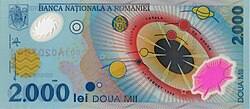
Polymer notes offer superior durability and allow for the integration of optically variable devices, which are nearly impossible to reproduce. Today, dozens of countries, including Canada, the UK, and Vietnam, have adopted polymer or hybrid paper-polymer substrates.
![Many currencies, such as the Indonesian rupiah, vary the sizes of their banknotes by denomination. This is done so that they may be told apart through touch alone.[citation needed]](/images/a8/46/a846c41124c6d759d8bd9011264a8b06cf893b70e9aac569720db16974f94a5e.jpg)
Unconventional Materials and Orientations
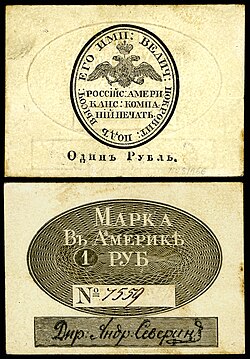
Throughout history, "emergency money" (Notgeld) has appeared in various forms. During the 1923 German fiscal crisis, notes were printed on silk, velvet, linen, and even wood. Other historical examples include sealskin banknotes used during the Russian administration of Alaska and playing cards used as currency in early 19th-century France and Canada.
Vertical Currency Design
While most money is horizontal, some nations have adopted a vertical orientation. This shift is based on studies suggesting that people handle money vertically, particularly when using ATMs. Countries such as Switzerland, Bermuda, and Venezuela have utilized this layout, and the 2018 Canadian $10 bill is a prominent modern example.
Summary of Banknote Substrates
| Material | Key Characteristics | Primary Advantage | Example |
|---|---|---|---|
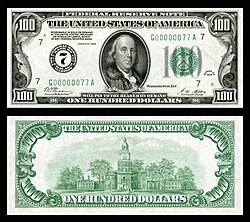
| Cotton/Linen Blend | 80-90 g/m², infused with PVA/gelatin | Resilience and UV stability | US Dollar |
| Polymer | Biaxially-oriented polypropylene | Extreme durability, high security | Australian Dollar |
| Hybrid | Paper core with plastic outer layers | Balance of feel and longevity | Bulgarian Lev (2005) |
| Alternative | Silk, leather, wood, or fabric | Emergency availability | German Notgeld (1923) |
Frequently Asked Questions
Why aren't banknotes made of regular paper?
Regular paper is too fragile for circulation and contains agents that glow under UV light, making it easy to counterfeit. Banknote paper uses cotton, linen, and polyvinyl alcohol to ensure it can withstand wear and tear for an average of two years.
What is a windowed security thread?
A windowed thread is a security component woven into the paper that periodically surfaces on one side of the note. It often contains complex magnetic, metallic, and microprint elements to prevent forgery.
What are the benefits of polymer banknotes over paper?
Polymer banknotes are significantly more durable and allow for advanced security features, such as transparent windows and optically variable devices, which are much harder for counterfeiters to replicate than traditional paper features.
Why do some countries use vertical banknotes?
Vertical orientation is designed to align with how people naturally handle money, especially during transactions and when withdrawing cash from ATMs.
What is intaglio printing?
Intaglio printing is a technique where an image is engraved into a metal plate. Ink is applied to the plate, and the paper is pressed into the grooves under high pressure, creating a raised ink texture that is difficult to copy.