Balance of Trade: Mechanics, Economic Theories, and Global Impact
The balance of trade is a fundamental economic metric representing the difference between the monetary value of a nation's exports and imports of goods over a specific period. While some analyses include services, the official International Monetary Fund (IMF) definition focuses exclusively on physical goods. Essentially, it measures the flow of trade rather than a static state of equilibrium.
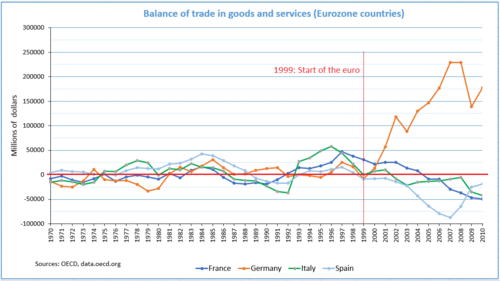
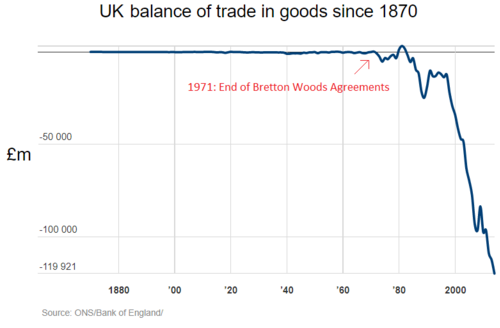
When a country exports more than it imports, it achieves a trade surplus (a positive balance). Conversely, when imports exceed exports, the result is a trade deficit (a negative balance). As of 2016, approximately 60 out of 200 countries maintained a trade surplus.
Key Facts
- Top Surplus Nations (2016): China ($823 billion), Germany ($226 billion), and Singapore ($154 billion).
- Top Deficit Nations (2016): United States ($1.15 trillion), United Kingdom ($271 billion), and India ($241 billion).
- Current Account: The balance of trade is a component of the current account, which also tracks international aid and net international investment income.
- Economic Consensus: Most modern economists reject the notion that a trade deficit is inherently detrimental to a nation's economy.
Factors Influencing Trade Balance
Several variables determine whether a nation leans toward a surplus or a deficit. These include the cost and availability of raw materials and intermediate inputs, as well as movements in currency exchange rates. Trade is also shaped by policy decisions, such as multilateral or bilateral taxes, tariffs, and non-tariff barriers—including health, safety, and environmental standards.
Additionally, the availability of foreign exchange to pay for imports and the domestic price of manufactured goods (which is influenced by supply responsiveness) play critical roles in shaping the final balance.
Historical Perspectives and Policy Approaches
The concept of maintaining a positive trade balance is centuries old. In 1549, the Discourse of the Common Wealth of this Realm of England warned against buying more from foreigners than selling to them to avoid impoverishment. This line of thinking was further systematized by Thomas Mun in 1630.
In modern times, different nations adopt varying philosophies. Some, like China, have been described as pursuing mercantilism—an economic policy designed to maximize exports. Others, such as Russia, have utilized protectionism, viewing international trade as a zero-sum game where surplus countries grow richer at the expense of those in deficit.
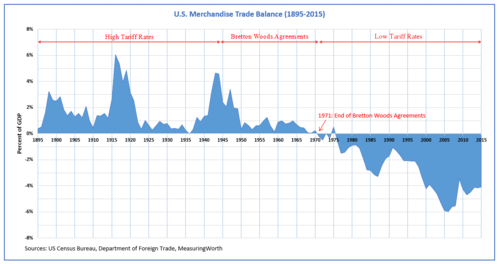
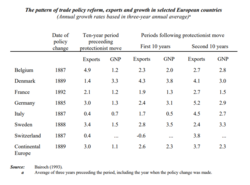
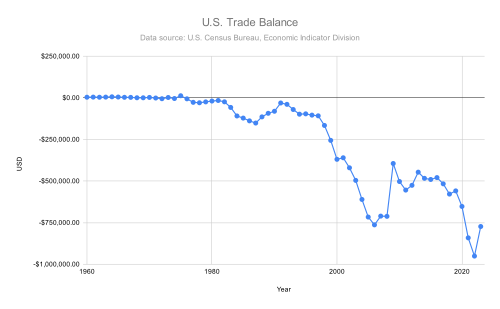
The United States provides a complex example; since the mid-1980s, it has seen a growing deficit in tradeable goods, particularly with Asian nations like China and Japan. However, the U.S. maintains surpluses with other partners, such as Australia. Interestingly, a 2018 National Bureau of Economic Research paper found that imposing tariffs had little actual effect on the overall trade balance across 151 countries studied between 1963 and 2014.
Economic Theories on Trade Imbalances
Keynesian Theory
John Maynard Keynes viewed large trade imbalances as a threat to global prosperity. He argued that countries with surpluses exert a "negative externality" on their partners, weakening global aggregate demand. To solve this, he proposed the Keynes Plan, which suggested an International Clearing Union and a global currency called the bancor. This system would treat debtor and creditor nations similarly, incentivizing surplus nations to reduce their excesses to clear global deficits.
Monetarist Theory
In contrast, monetarists like Milton Friedman argued that trade deficits are not necessarily harmful. Friedman suggested that deficits are often matched by inflows of foreign investment. He posited that currency values naturally adjust to correct imbalances: high exports increase currency value, which eventually reduces exports, while imports do the opposite.
This echoes the 19th-century view of Frédéric Bastiat, who argued that a trade deficit could actually be a manifestation of profit. Bastiat used a reductio ad absurdum argument to suggest that a growing, successful economy might naturally result in greater trade deficits.
Comparing Trade Metrics
It is essential to distinguish between the balance of trade and the broader balance of payments to avoid statistical confusion.
| Feature | Balance of Trade | Balance of Payments |
|---|---|---|
| Scope | Visible imports and exports (merchandise) | All revenue and capital items (visible and non-visible) |
| Components | Goods only (per IMF) | Includes trade balance, investment, and transfers |
| Terminology | Surplus (favourable) or Deficit (unfavourable) | Comprehensive national accounting |
Frequently Asked Questions
Is a trade deficit always a sign of a weak economy?
No. Many economists, including those from the monetarist school, argue that a trade deficit is not inherently bad and can be matched by foreign investment inflows, reflecting a successful, growing economy.
What is the difference between the balance of trade and the current account?
The balance of trade is a subset of the current account. While the balance of trade focuses on goods, the current account also includes income from net international investments and international aid.
Why do global trade statistics sometimes not add up?
When adding up all national data, exports often exceed imports by about 1%. This discrepancy is generally attributed to smuggling, tax evasion, money laundering, and data collection errors, even among developed nations.
How do tariffs affect the balance of trade?
While often used as a tool to reduce deficits, research (such as the 2018 NBER paper) suggests that the imposition of tariffs has had little significant effect on the actual trade balance of nations.
What is the "bancor" proposed by Keynes?
The bancor was a proposed global currency to be used as a unit of account between nations. It was intended to help regulate international trade and eliminate imbalances by penalizing excessive surpluses.