Automated Species Identification: Bridging Taxonomy and Artificial Intelligence
For centuries, systematists have dreamed of a way to instantly identify biological objects—whether a single insect or a complex plant species—without relying solely on manual expertise. This vision, once the realm of science fiction, is becoming a reality through automated species identification. By leveraging digital technology and artificial intelligence (AI), the deep expertise of taxonomists is now being scaled to assist ecologists, parataxonomists, and citizen scientists worldwide.
Most modern automated systems rely on image-based classifiers. These systems are trained on a dataset of precisely identified images; once the classifier is exposed to sufficient data, it can recognize those species in previously unseen photographs.
Key Facts
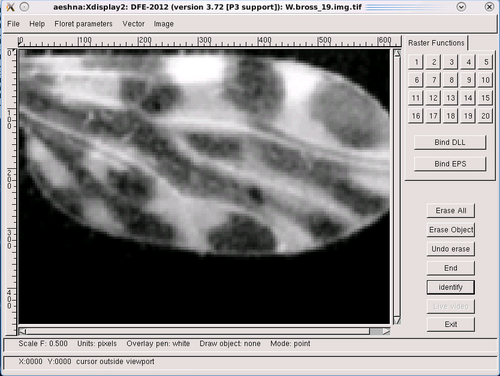
- Core Technology: Systems primarily use computer vision to analyze shape, texture, color, and specific biological markers like wing venation.
- Training Process: Classifiers require a set of expert-validated images to learn the distinguishing characteristics of a species.
- Application Areas: Used in pest surveillance, biodiversity conservation, and citizen science apps.
- Major Challenges: Small training sets for rare species, scaling to thousands of taxa, and the inability of some systems to recognize "novel" (untrained) species.
- Hybrid Approach: Advanced systems can flag uncertain identifications for review by human specialists.
The Evolution of Biological Identification
Early efforts in the 1950s and '60s focused on multivariate biometric methods to discriminate between groups. However, practical implementation remained slow for decades. While some researchers, such as Dan Janzen, initially emphasized DNA-based identification, recent leaps in computer architecture and software design have made image-based identification a powerful contemporary tool.
Morphological Analysis and Its Hurdles
Research into morphological characters—the physical structures of organisms—has shown success rates between 40% and 100%. Studies have focused on cells, pollen, wings, and genitalia. However, four fundamental problems persist:
- Training Set Size: Many species have only 5–10 available specimens, making it hard to train AI for rare species.
- Error Analysis: There is insufficient study on how to handle and systematize identification errors.
- Scaling: Many studies are limited to fewer than 200 species.
- Novel Species: Systems often force a novel observation into a known category rather than identifying it as a new species.
Progress in Plant and Insect Identification
Between 2005 and 2015, computer vision approaches significantly advanced plant identification. Most studies focused on leaves because they are easier to collect and available year-round, analyzing features such as venation (the arrangement of veins) and margin (the edge of the leaf). While most datasets remained under 250 species, some have now expanded to over 20,000.
In the realm of entomology, 2022 saw the development of automated insect surveillance using electronic traps (e-traps). Because e-traps provide a standardized environment—controlling for illumination, view angle, and size—they are more effective than "free-view" systems for monitoring pest outbreaks or invasive species, such as fruit flies.

Addressing the Taxonomic Impediment
The world is facing a critical shortage of specialists with the synoptic knowledge required to identify biodiversity. This "taxonomic impediment" affects not only pure research in ecology and climatology but also commercial industries like agriculture and biostratigraphy. Inconsistent identifications often plague technical literature due to insufficient training, poor original descriptions, or differing opinions on group concepts.
Automated systems offer a way to reduce the subjectivity of qualitative criteria. By organizing systems around distributed computing and authoritative training collections, routine identifications of common taxa can be handled by AI. This allows human experts to focus their time on complex cases referred to them by the algorithm.
Current Tools and Implementations
| System/Project | Focus Area | Key Feature |
|---|---|---|
| iNaturalist | General Biodiversity | Combines AI with a social network of naturalists. |
| Naturalis Biodiversity Center | Multi-taxa / Museum | AI models for butterflies, fossils, and animal sounds. |
| Pl@ntNet | Plants | Machine-learning based app and website. |
| Leaf Snap | North American Trees | Visual recognition of leaf photographs. |
| Plant.id | Plants, Fungi, Lichens | Neural network trained via FlowerChecker app. |
| Google Photos | General Species | Automatic identification within photo libraries. |
Frequently Asked Questions
How does AI learn to identify a species?
AI uses a classifier trained on a dataset of images that have been verified by expert taxonomists. The system analyzes pixels to find patterns in shape, color, and texture that are unique to that species.
Why are leaves used more often than flowers for plant AI?
Leaves are generally easier to collect and photograph, and they are available for a larger portion of the year compared to flowers, which are often seasonal.
Can automated systems identify a species they haven't been trained on?
Generally, no. Most current systems are restricted to their training sets and may incorrectly classify a novel species as one of the known species they were trained to recognize.
What is the advantage of using electronic traps for insect identification?
Electronic traps provide a standardized setting. By controlling the lighting, angle, and distance of the insect, the AI can achieve much higher accuracy than it would with random, "free-view" photographs.
How do these systems help human taxonomists?
They handle the routine identification of common species, freeing specialists to deal with rare or complex cases. Additionally, analyzing how an AI identifies a species can help humans discover new, more reliable taxonomic characters.