Austro-Prussian War: The Conflict That Reshaped Central Europe
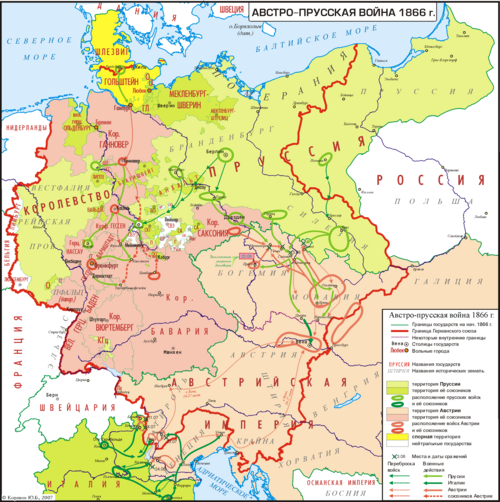
The Austro-Prussian War, fought between June 14 and July 22, 1866, was a pivotal struggle for supremacy in Central Europe. Often referred to as the Seven Weeks' War, this conflict pitted the Kingdom of Prussia and its allies against the Austrian Empire and several smaller German states. More than just a territorial dispute, it was the culmination of a long-standing rivalry between the two great German powers, ultimately deciding which state would lead the unification of the German people.
The war was characterized by rapid mobilization, the introduction of revolutionary weaponry, and the strategic brilliance of Prussian leadership. Its conclusion not only excluded Austria from German national politics but also paved the way for the creation of the German Empire.
Key Facts
- Duration: 1 month and 8 days (June 14 – July 22, 1866).
- Outcome: Decisive victory for Prussia and Italy.
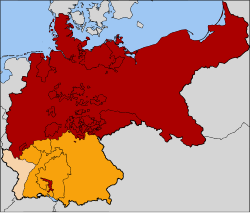
- Major Result: Dissolution of the German Confederation and the formation of the North German Confederation.
- Territorial Change: Italy annexed Venetia and part of Friuli.
- Strategic Shift: Austria was excluded from German affairs, leading to the formation of Austria-Hungary.
The Roots of Conflict
The Struggle for Hegemony
For centuries, Central Europe consisted of a fragmented landscape of medium-sized states and tiny entities under the nominal rule of the Holy Roman Empire. The Habsburg family of Austria dominated this structure until the empire's abolition in 1806. Following the Napoleonic era, the German states were reorganized into the German Confederation, a loose association led by Austria.
However, Prussia emerged as a formidable challenger. By the mid-19th century, Prussia had contested Austrian supremacy, seeking to lead a more unified German state. This rivalry reached a boiling point over the administration of Schleswig-Holstein, territories jointly occupied by both powers after the Second Schleswig War in 1864.
Bismarck's Strategic Plot
Prussian Minister President Otto von Bismarck orchestrated the path to war with clinical precision. To ensure Austria would be fighting on two fronts, Bismarck formed an alliance with Italy on April 8, 1866. This forced Austria to divert significant military resources to its southern border, weakening its position against the Prussian advance in the north.
Military Factors and Technological Edge
Mobilization and Logistics
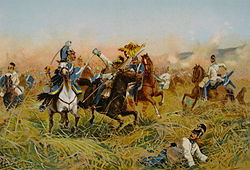
One of Prussia's greatest advantages was its superior railway network. While Austria relied on a limited rail system, Prussia utilized five different lines to move and concentrate its forces. General Helmuth von Moltke noted that Prussia could assemble 285,000 men in twenty-five days, whereas Austria required forty-five days to assemble 200,000.
Armaments and Tactics
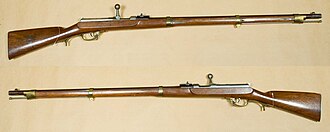
The war saw a clash of differing military technologies. The Austrians possessed superior breech-loading rifled cannons (the Lenk system), but they often failed to use them to their full potential. Prussia, conversely, utilized the Dreyse needle gun, a breech-loading rifle that allowed soldiers to fire more rapidly than their opponents.
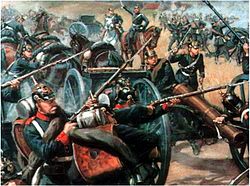
While Prussia also introduced the technologically advanced C64 field gun, tactical reluctance among the high command meant many units continued to use older smooth-bore muzzle loaders. Despite this, the combination of rapid movement and superior infantry firepower gave Prussia a decisive edge.
Course of the War and Major Engagements
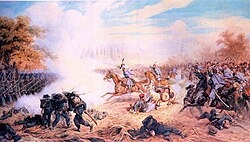
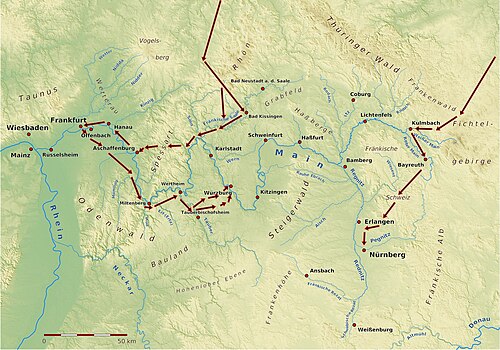
The conflict began in earnest on June 9, when Prussia invaded Holstein. By June 15, Prussian forces had pushed into Hanover, Saxony, and the Electorate of Hesse. Italy declared war on Austria on June 20, opening the southern front.
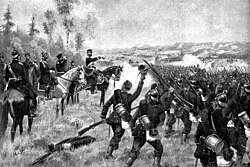
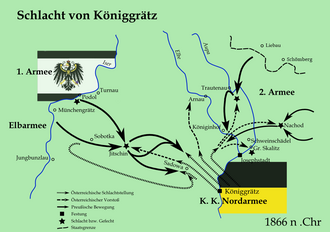
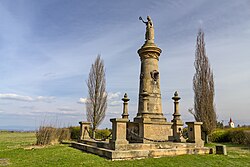
The decisive encounter was the Battle of Königgrätz, where Prussian strategic maneuvers and firepower crushed the Austrian army. This victory effectively ended Austrian hopes of maintaining leadership over the German states.
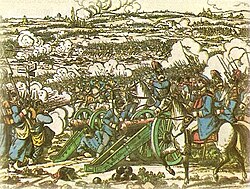
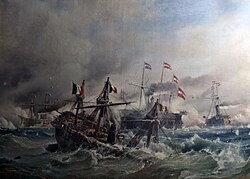
Other significant clashes included the Battle of Nachod and the Battle of Langensalza. While Austria found success at sea during the naval Battle of Lissa, these victories could not offset the catastrophic losses on land.
Aftermath and Global Consequences
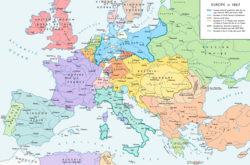
The war ended quickly, leaving a transformed European map. The German Confederation was dissolved, and the North German Confederation was established under Prussian leadership. This new entity eventually absorbed the southern Catholic states (Bavaria, Baden, and Württemberg) to form the German Empire in 1871.
For Austria, the defeat led to internal restructuring and the eventual creation of the dual monarchy of Austria-Hungary. Italy successfully annexed Venetia and part of Friuli, moving closer to its own goal of national unification.
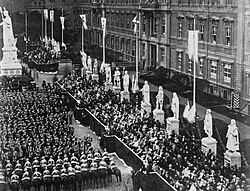
The reception of the returning Prussian troops in Berlin on September 21, 1866, signaled the dawn of a new era where Prussia stood as the dominant power in Central Europe.
Summary of War Statistics
| Faction | Total Strength | Battle Deaths | Wounded | Captured/Missing |
|---|---|---|---|---|
| Prussia | 437,262 | 11,765 | ~25,000 | ~2,000 |
| Italy | 200,000 | 2,314 | ~4,500 | ~5,500 |
| Austria | 407,223 | 24,431 | ~40,000 | ~52,000 |
| Other German States | 115,000+ | ~10,000 | ~12,000 | ~23,000 |
Frequently Asked Questions
What was the primary cause of the Austro-Prussian War?
The immediate cause was a dispute over the joint administration of Schleswig-Holstein, which both Prussia and Austria had conquered from Denmark in 1864. However, the deeper cause was the long-term rivalry for leadership among the German-speaking states.
How did railways influence the outcome of the war?
Prussia's more extensive and efficient railway network allowed it to mobilize and concentrate its army much faster than Austria. This logistical advantage enabled the Prussian army to strike quickly and maintain supply lines more effectively.
What was the significance of the Dreyse needle gun?
The Dreyse needle gun was a breech-loading rifle that gave Prussian infantry a significant advantage in rate of fire over the Austrian forces, contributing to the decisive Prussian victories on the battlefield.
What happened to the German Confederation after the war?
The German Confederation was dissolved. In its place, Prussia formed the North German Confederation, which excluded Austria and consolidated Prussian control over the northern German states.
Did Italy benefit from the conflict?
Yes, Italy allied with Prussia to divert Austrian forces. As a result of the Italo-Prussian victory, Italy was able to completely annex Venetia and a portion of Friuli.