Australian National University Governance and Academic Structure
The Australian National University (ANU) operates through a sophisticated governance framework and a multidisciplinary academic structure designed to foster world-class research and teaching. From its high-level administrative oversight to its specialized constituent colleges, the university is organized to address complex global challenges across the arts, sciences, and public policy.
The university's physical and intellectual landscape is reflected in its diverse facilities, ranging from specialized music halls to cutting-edge medical research centers.

University Governance
ANU is governed by a 15-member University Council. This body provides strategic oversight and is led by the Chancellor and the Vice-Chancellor.
The leadership has seen notable figures in recent years. Gareth Evans, a former Australian Foreign Minister, served as Chancellor from 2010 until December 2019, succeeded by fellow former Foreign Minister Julie Bishop in January 2020. The role of Vice-Chancellor was held by Nobel Laureate astrophysicist Brian Schmidt from January 1, 2016, to January 1, 2024, who was succeeded by Distinguished Professor and cultural anthropologist Genevieve Bell.
Academic Organization: The Constituent Colleges
In 2006, ANU underwent a major reorganization to establish seven Colleges, each integrating teaching and research. Further refinements to the names and internal school structures were implemented in 2017.
Arts, Humanities and Social Sciences
The College of Arts and Social Sciences is split into two primary divisions: the Research School of Social Sciences (RSSS) and the Research School of Humanities and the Arts (RSHA). The RSSS focuses on disciplines such as History, Philosophy, Sociology, Politics & International Relations, Demography, and European and Arab and Islamic Studies. It also hosts the Australian National Centre for Latin and American Studies and the Centre for Aboriginal Economic Policy Research.
The RSHA manages schools for Archaeology and Anthropology, Art & Design, and Literature, Languages and Linguistics. This division also includes the ANU School of Music and the Australian Studies Institute.
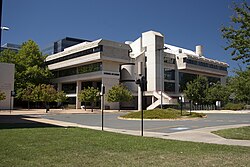
The School of Philosophy is particularly prominent, housing the ANU Centre for Consciousness, the ANU Centre for Philosophy of the Sciences, and the ANU Centre for Moral, Social and Political Theory, led by president Nicholas Southwood.
Asia and the Pacific
As one of the largest collections of experts in the English-speaking world for these fields, the College of Asia and the Pacific consists of four academic schools:
- Crawford School of Public Policy: A research-intensive school focusing on public policy.
- School of Culture, History and Language: Dedicated to Asia-Pacific languages and peoples.
- Coral Bell School of Asia Pacific Affairs: Focused on international affairs and politics.
- School of Regulation and Global Governance (RegNet): Specializing in governance and regulation.
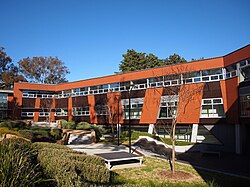
The college also maintains regional institutes for various nations, including China, Indonesia, Japan, Korea, Malaysia, Mongolia, Myanmar, and South Asia, and is affiliated with Indiana University's Pan Asia Institute.
Business and Economics
The College of Business and Economics provides research and teaching across four specialized research schools: Management; Finance, Actuarial Studies and Statistics; Accounting; and Economics. The college holds professional accreditations from various bodies, including CPA Australia, the Institute of Chartered Accountants Australia, and the Chartered Financial Analyst Institute.
Systems and Society
This college examines the interfaces between technology, the physical world, and social systems. It comprises six units: the School of Computing, School of Cybernetics, School of Engineering, Mathematical Sciences Institute, Fenner School of Environment & Society, and the Australian National Centre for the Public Awareness of Science.
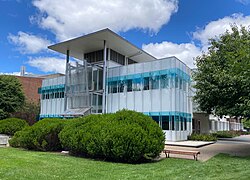
The college is home to the National Computational Infrastructure National Facility and was a co-founder of NICTA, Australia's primary ICT research center.
Law, Governance and Policy
Comprising the ANU Law School and the ANU School of Legal Practice, this college is the 7th oldest law school in Australia. It offers professional LL.B. and J.D. degrees and was ranked 12th globally by the 2018 QS Rankings. Students have opportunities for international practice in Geneva.
Science and Medicine
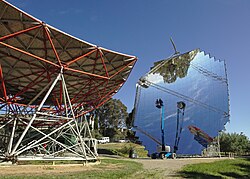
The College of Science and Medicine includes research schools for Biology, Chemistry, Earth Sciences, Physics, and Astronomy & Astrophysics. The university has a long history of nuclear physics research, having operated eight particle accelerators over time, including the current 14UD and LINAS accelerators.
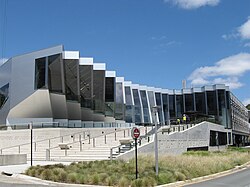
The college also encompasses the ANU Medical School, the National Centre for Epidemiology and Population Health, the Research School of Psychology, and the John Curtin School of Medical Research (JCSMR). Established in 1948 by Howard Florey, JCSMR has been associated with three Nobel Prizes (John Eccles in 1963, and Peter Doherty and Rolf M. Zinkernagel in 1996).
Key Facts
- Endowment: Recorded at A$1.8 billion at the end of 2018.
- Governance: Managed by a 15-member University Council.
- Nobel Legacy: Research at JCSMR and by faculty (like Brian Schmidt) has led to multiple Nobel Prizes.
- Law Ranking: Ranked 2nd in Australia and 12th globally (2018 QS Rankings).
- Specialization: One of the world's largest English-speaking hubs for Asia-Pacific studies.
| College | Primary Focus Areas | Notable Schools/Centres |
|---|---|---|
| Arts, Humanities and Social Sciences | Social sciences, arts, philosophy, music | RSHA, RSSS, School of Music |
| Asia and the Pacific | Regional studies, public policy, governance | Crawford School, Coral Bell School |
| Business and Economics | Finance, accounting, economics, management | Research School of Economics |
| Systems and Society | Computing, engineering, cybernetics, environment | School of Computing, Fenner School |
| Law, Governance and Policy | Legal research, professional law degrees | ANU Law School |
| Science and Medicine | Physical sciences, medicine, psychology | JCSMR, Research School of Physics |
Frequently Asked Questions
Who currently leads the Australian National University?
As of January 2024, the university is led by Chancellor Julie Bishop and Vice-Chancellor Genevieve Bell.
What is the significance of the John Curtin School of Medical Research?
Established in 1948 by Nobel laureate Howard Florey, the JCSMR is a premier medical research facility where work has led to three Nobel Prizes in 1963 and 1996.
How is the university's academic structure organized?
The university is organized into seven constituent colleges that integrate both teaching and research, a structure established in 2006 and refined in 2017.
What professional accreditations does the College of Business and Economics hold?
The college is accredited by several professional bodies, including CPA Australia, the Institute of Chartered Accountants Australia, the Actuaries Institute Australia, and the Statistical Society of Australia Inc.
What are the law degree options at ANU?
The College of Law, Governance and Policy offers professional LL.B. and J.D. degrees.