Australian National Flag: A Comprehensive History of Design and Evolution
The story of the Australian flag is a reflection of the nation's journey from a collection of British colonies to a sovereign Commonwealth. From the first hoisting of the Union Jack on Australian soil to the modern debates over national identity, the flag has evolved through competitions, legislative acts, and shifting cultural perspectives.
Early Colonial Flags and the Union Jack
The Union Jack, representing the British Empire, first arrived in Australia on April 29, 1770, with Lieutenant James Cook at Botany Bay. Later, on February 7, 1788, Captain Arthur Phillip raised the flag to proclaim the Colony of New South Wales. The version used at the time was the 1606 design, which lacked the Saint Patrick's Saltire; this element was added following the Acts of Union 1801 between Great Britain and Ireland.
As a distinct Australian consciousness grew during the 19th century, various unofficial flags emerged. Early designs often featured the Southern Cross—a constellation visible in the Southern Hemisphere. Notable examples include the National Colonial Flag (1823–1824) and the Federation Flag (1831), both designed by Captain John Nicholson. Other culturally significant banners include the Eureka Flag of 1854 and the Murray River Flag, which represents the four major rivers flowing into the Murray River.
The Anti-Transportation League Flag of 1851 is one of the oldest to depict the Southern Cross stars in their actual celestial arrangement, though it lacked the Commonwealth Star found in today's design.
The 1901 Federal Flag Design Competition
With the approach of Federation on January 1, 1901, the need for an official federal flag became urgent. Following a request from the British government, the new Commonwealth Government launched an official competition in April 1901. This contest, which merged with an earlier initiative by the Review of Reviews, attracted a staggering 32,823 entries.
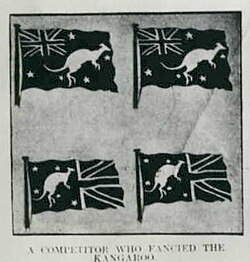
The judging criteria focused on originality, utility, cost of manufacture, compliance with heraldry, and historical relevance. While some entries featured indigenous animals—including a six-tailed kangaroo—the judges ultimately selected five nearly identical designs. The winners, who shared a £200 prize, included a 14-year-old schoolboy, an optician's apprentice, an architect, an artist, and a ship's officer.
![Etching of Melbourne Herald proposed flag, 1901[55]](/images/42/e2/42e2b8c4a2254fa19dcf6508b61f7618ddf0cb8eeaf559680a299ab56ed20c36.png)
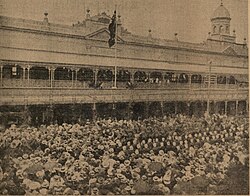
The original winning design differed slightly from the current flag: the Commonwealth Star had only six points, and the stars of the Southern Cross varied in points based on their actual brightness in the sky. On September 3, 1901, the flag was unfurled for the first time at the Royal Exhibition Building in Melbourne, a date now celebrated as Australian National Flag Day.
Refining the Design
The design faced early criticism for being "too Victorian," as it closely resembled the Victorian colonial flag. Despite objections from some government officials who preferred the Federation Flag, King Edward VII officially approved the design on February 11, 1903. The final version standardized the Southern Cross stars to seven points (except for the smallest). The last major change occurred in 1908, when a seventh point was added to the Commonwealth Star to represent the territories and any future states.
Blue Ensign vs. Red Ensign
For decades, Australia utilized two primary versions of the flag: the Blue Ensign (for official and naval use) and the Red Ensign (for merchant shipping and private use). Until the mid-20th century, the Red Ensign was the most common flag flown by private citizens on land.
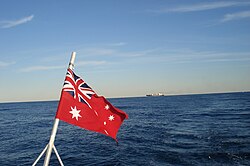
Confusion over which flag the public should use persisted until the Flags Act 1953. This legislation formally designated the Blue Ensign as the Australian National Flag and the Red Ensign as the merchant shipping flag.
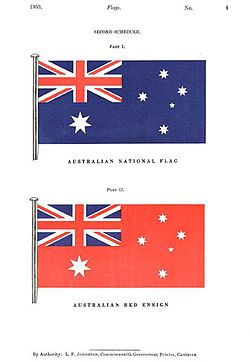
| Feature | Blue Ensign | Red Ensign |
|---|---|---|
| Primary Use | Government, Naval, and National | Merchant Shipping and Private (historically) |
| Legal Status | Official National Flag (since 1953) | Merchant Marine Flag |
| Modern Context | Flown on public buildings and schools | Flown on commercial ships and Anzac Day |
The Status of the Union Jack
The transition from the Union Jack to the Australian flag was gradual. While the Blue Ensign began replacing the Union Jack at official events as early as 1904, the Department of Defence initially resisted the change. It wasn't until 1908 that the "Australian Ensign" replaced the Union Jack at all military establishments.
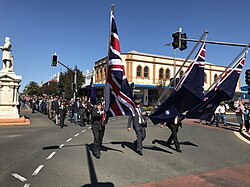
The Flags Act 1953 gave the Australian flag statutory priority over the Union Jack for the first time, though it preserved the right of individuals to continue flying the Union Jack. By the mid-1980s, the government ceased providing guidance on how to display the two flags together, signaling a shift toward the Australian flag as the primary national symbol.
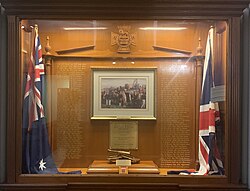
Modern Debates and Legislation
In the 1980s and 1990s, debate intensified regarding the presence of the Union Jack in the flag's canton. Groups like Ausflag advocated for a change to reflect a more independent identity, while the Australian National Flag Association (ANFA) campaigned to retain the existing design.
Under the Howard government in the late 1990s, the flag was more heavily promoted. An amendment to the Flags Act 1953 was passed, requiring a plebiscite (a direct vote by the electorate) before any change to the flag could be made. Additionally, federal funding for schools was linked to the installation of a flagpole and the flying of the Australian flag.
Key Facts
- First Hoisting: The Union Jack was first raised in Australia on April 29, 1770.
- Design Competition: The 1901 competition received 32,823 entries.
- Commonwealth Star: The seventh point was added in 1908 to represent territories and future states.
- National Flag Day: Celebrated on September 3, marking the first time the flag flew in 1901.
- Legal Framework: The Flags Act 1953 officially designated the Blue Ensign as the National Flag.
- Change Requirement: A plebiscite is legally required to change the current flag.
Frequently Asked Questions
Why does the Australian flag have a Union Jack in the corner?
The Union Jack is located in the canton to acknowledge Australia's historical ties to Great Britain and its origins as a collection of British colonies.
What is the significance of the seven-pointed star?
The Commonwealth Star features seven points: six represent the original six states, and the seventh represents Australia's territories and any future states.
What is the difference between the Blue and Red Ensigns?
The Blue Ensign is the official National Flag used by the government and the public. The Red Ensign is specifically designated for the merchant marine and commercial shipping.
When was the current design officially approved?
King Edward VII officially approved the design on February 11, 1903, though it was slightly modified in 1908 to include the seventh point on the Commonwealth Star.
Can the Australian flag be changed easily?
No. Under an amendment to the Flags Act 1953, a plebiscite must be held before the national flag can be changed.