Australian Census History: From Colonial Musters to Digital Data
The process of counting the people of Australia has evolved from rudimentary colonial lists to one of the most complex logistical operations in the nation's history. What began as a tool for British colonial administration has transformed into a sophisticated data-gathering exercise managed by the Australian Bureau of Statistics (ABS), providing critical insights into the nation's growth, diversity, and social changes.
The Colonial Era (1828–1900)
Before formal censuses, the government relied on "musters," which were gatherings of white immigrants for counting purposes. The first official census took place in November 1828 in New South Wales. At that time, the white population totaled 36,598, consisting of 20,870 settlers and 15,728 convicts. Notably, Indigenous Australians were not included in this count.
By 1881, colonial statisticians sought better compatibility between different colonies to align with a broader census of the British Empire. Despite this, the lack of uniform questions created difficulties for those attempting to compile Australia-wide data. By this time, the counted population had grown to 2,231,531.
| Region | 1881 Population | 1891 Population |
|---|---|---|
| New South Wales | 741,412 | 1,153,170 |
| Victoria | 858,605 | 1,158,372 |
| Queensland | 211,040 | 400,395 |
| Tasmania | 114,790 | 151,150 |
| South Australia* | 286,211 | 324,721 |
| Western Australia | 29,561 | 53,177 |
| Total Australia | 2,231,531 | 3,240,985 |
*Includes Northern Territory figures.
Federation and the First National Censuses
The 1901 census marked a turning point as Australia moved toward Federation (the unification of separate colonies into a single commonwealth). While still collected by states separately, a uniform schedule was adopted for the first time. By 1911, the Commonwealth Bureau of Census and Statistics developed the first truly national census.
The 1911 operation was a massive manual undertaking. Over 4 million cards were sorted and counted by hand. Field collectors faced extreme environmental challenges, including droughts in Western Australia that left horses without feed and flooding in Queensland that stranded staff.
Scientific Breakthroughs and Technological Shifts
Census data has occasionally served purposes beyond simple population counts. In the early 20th century, census questions regarding deaf-mutism (the inability to hear or speak) revealed an abnormal spike in specific age groups. In 1951, statistician Oliver Lancaster linked these peaks to a rubella outbreak in 1898 and 1899, firmly establishing the global link between rubella and congenital birth defects.
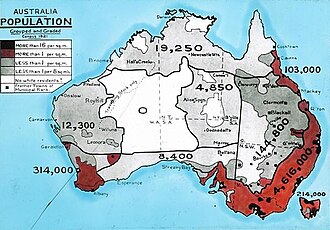
Technological advancements accelerated in 1921 with the introduction of automatic machine tabulation. Using electric sorting and tabulating machines devised by Herman Hollerith, the ABS could process individual, dwelling, and family information via punched cards.
The Modern Era: Expansion and Digitalization
From 1961 onwards, the census was conducted every five years. The 1971 census saw a redesign of the "race" question following the 1967 referendum that removed section 127 from the Constitution, allowing for better identification of Indigenous Australian groups.
The 21st century brought the eCensus, first introduced in 2006. This allowed households to lodge forms online, with the Australian Capital Territory leading the way in adoption. By 2011, the census had become the largest logistical peacetime operation in Australian history, employing 43,000 field staff.
The 2016 Digital Transition and Controversy
The 2016 census attempted a "digital by default" approach, encouraging citizens to "Get online on August 9." However, the event was marred by technical failures. A series of denial-of-service (DDoS) attacks and a subsequent software failure led to the shutdown of the online system at 7:30 pm AEST on census night.
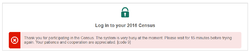
Despite the outage and privacy concerns regarding the retention of names and addresses, the ABS reported a preliminary response rate of over 96%.
Recent Developments (2021–2026)
The 2021 Census achieved a dwelling response rate of 96.1%, with the Statistical Independent Assurance Panel confirming the data was fit-for-purpose. The most recent evolution occurred in the 2026 Census, which expanded social data collection to include questions on gender identity and sexual orientation for those aged 16 and over, alongside updates to ancestry and parental birth data.
Key Facts
- First Census: Held in November 1828 in New South Wales.
- First National Census: Conducted in 1911 by the Commonwealth Bureau of Census and Statistics.
- Medical Impact: Census data from 1911, 1921, and 1933 helped prove the link between rubella and congenital defects.
- Digital Shift: The eCensus was first introduced in 2006; 2016 was the first "digital by default" census.
- Recent Inclusion: The 2026 Census introduced questions on sexual orientation and gender identity.
Frequently Asked Questions
Who was excluded from the early Australian censuses?
Indigenous Australians were not counted in the first census of 1828, and those of more than 50 percent Aboriginal descent were excluded from the 1911 and 1921 counts.
What caused the 2016 census website failure?
The website suffered four denial-of-service attacks, and a software failure prevented the system from blocking these attacks, leading to a router failure and the subsequent shutdown of the system.
How did the 1921 census change data processing?
The 1921 census introduced automatic machine tabulation using punched cards and electric sorting/tabulating machines, replacing the entirely manual hand-counting used in 1911.
What new data is collected in the 2026 Census?
The 2026 Census is the first to include optional questions regarding gender identity and sexual orientation for citizens aged 16 and over, as well as updated questions on ancestry and parental birth.