Auldearn: A Historic Highland Village in Scotland
Nestled east of the River Nairn in the Highland council area of Scotland, Auldearn (Scottish Gaelic: Allt Èireann) is a village that seamlessly blends ancient royal heritage with modern growth. Named after the 12th-century castle of Eren (Old Eren) built by William the Lion, the village has evolved from a strategic royal site into a thriving community.
In recent years, Auldearn has become an expanding area, experiencing significant development over the last decade. Despite this growth, it maintains a close-knit atmosphere, centered around the Rose Gardens—a small community space where residents of all ages gather.
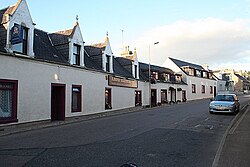
Key Facts
- Population: 720 (as of 2020).
- Location: Highland council area, Scotland, near the town of Nairn.
- Historical Significance: Site of a 17th-century battle and a royal motte.
- Key Landmark: The Doocot, a 17th-century pigeon loft managed by the National Trust for Scotland.
- Military Link: Long-standing recruitment ties to the Royal Regiment of Scotland.
A Journey Through History
Military Conflicts and Royal Roots
Auldearn's landscape is marked by its military past. The village is home to Castle Hill, a motte (an artificial mound used as a base for a castle) of a former royal fortress that offers panoramic views of the surrounding countryside. In May 1645, the area was the site of the Battle of Auldearn. During this conflict, the Royalists under Montrose emerged victorious, with Clan Donald playing a pivotal role. The Covenanters were supported by the MacLennans under their chief, Ruaridh.
Folklore and Witchcraft
The village is also linked to one of Scotland's most famous witchcraft trials. In 1662, a local woman named Isobel Gowdie was tried for witchcraft. Her detailed confessions provided a rare glimpse into the intersection of Christian beliefs and folk traditions, as she described meetings with the King and Queen of Elfhane and an initiation by the devil at Auldearn Kirk. While it is assumed she was executed, no official record of the event exists.
Defense and Recruitment
Military tradition continued into the 20th century. Following the 1908 formation of the Territorial Force, the town became a recruiting ground for the 4th Battalion, The Queen's Own Cameron Highlanders. Today, the 4th (Highlanders) Battalion, The Royal Regiment of Scotland, continues to recruit from the area.
Additionally, the village outskirts once housed a Post Office repeater station. This facility was one of only two in the Highlands deemed of "key importance to national defence" and served as a critical link in the A.D.G.B., likely connecting to the RAF Sector Operations Centre at Raigmore.
Local Landmarks and Points of Interest
The Rose Gardens
Located in the heart of the village, the Rose Gardens serve as a central square. Refurbished in 2003, the area features flowerbeds, benches, and a small shelter for public use.
The Doocot
Perched atop Castle Hill is the Doocot (or Dovecot), a 17th-century pigeon loft. This structure contains hundreds of nesting recesses and was historically used by the Dunbar family of Boath to ensure a food supply during scarce winter months. It is currently preserved by the National Trust for Scotland.
Agriculture and Modern Controversy
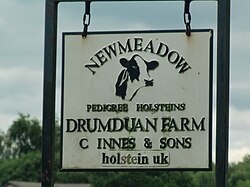
Auldearn is home to the Newmeadow herd at Drumduan Farm, the largest Holstein cattle herd in the Highlands. In 2010, the farm became the center of a controversy when it was reported that meat from a bull—grown from the embryo of a cow cloned in the United States—had entered the food chain.
Village Overview
| Category | Details |
|---|---|
| Postcode District | IV12 |
| Dialling Code | 01667 |
| Council Area | Highland |
| OS Grid Reference | NH915555 |
| Amenities | One hotel, one pub, and a primary school |
Frequently Asked Questions
What is the origin of the name Auldearn?
The village takes its name from the castle of Eren (Old Eren), which was built in the 12th century by William the Lion.
What is the Doocot and who manages it?
The Doocot is a 17th-century pigeon loft located on Castle Hill that was used for winter food storage. It is now managed by the National Trust for Scotland.
Who was Isobel Gowdie?
Isobel Gowdie was a local woman tried for witchcraft in 1662, known for her detailed confessions regarding covens and folk beliefs.
What happened to the village shop and post office?
The village shop and post office were removed in 2021.
What was the significance of the Post Office repeater station?
It was one of only two stations in the Highland area classified as being of key importance to national defence, serving as a vital communication link.