Atmospheric Entry: The Science of Surviving Planetary Descent
When an object moves from the vacuum of outer space into the gases of a planet, dwarf planet, or natural satellite, it undergoes atmospheric entry. This transition is one of the most violent and technically demanding phases of spaceflight. Whether it is an uncontrolled descent of space debris or a highly precise, controlled reentry of a crewed spacecraft, the physics involved are extreme.
To manage these transitions, engineers use Entry, Descent, and Landing (EDL) methods. These processes are designed to dissipate the massive kinetic energy an object possesses as it travels through space, converting that speed into heat and drag to ensure a safe arrival at the surface.
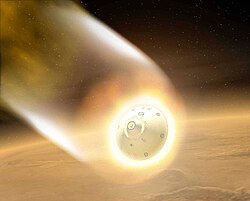
The Physics of Reentry: Heat and Drag
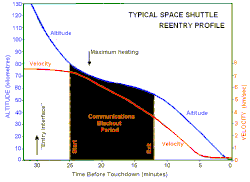
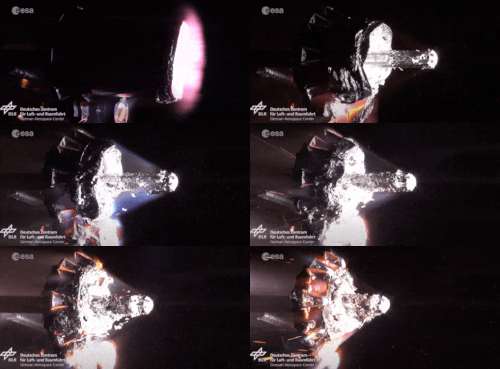
As a vehicle enters an atmosphere, it encounters atmospheric drag, which exerts significant mechanical stress on the structure. More critically, the vehicle experiences intense aerodynamic heating. This heating is primarily caused by the compression of air in front of the object rather than simple friction. For objects moving at hypersonic speeds, this can lead to ablation—the loss of mass as the surface material burns away—or even the complete disintegration of the object if its compressive strength is insufficient.
Speeds during reentry vary wildly depending on the mission. While objects from low Earth orbit may enter at approximately 7.8 km/s, the Stardust probe reached staggering speeds of roughly 12.5 km/s. Because using retrorockets to slow down for the entire duration is impractical, the atmosphere itself must act as the primary brake.
Key Facts
- Entry Speeds: Range from 7.8 km/s (Low Earth Orbit) to 12.5 km/s (Stardust probe).
- Primary Heating Cause: Compression of air in front of the vehicle.
- EDL: Stands for Entry, Descent, and Landing.
- Peak Heating Altitudes: Typically occurs between 65 and 35 kilometers.
- Ablation: A process where a heat shield loses mass to dissipate heat.
Entry Vehicle Geometry and Shapes
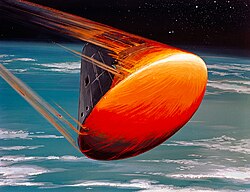
The shape of a reentry vehicle (RV) is critical to its stability and thermal management. Engineers select geometries based on the specific mission requirements and the expected heat flux.
Sphere and Sphere-Cone
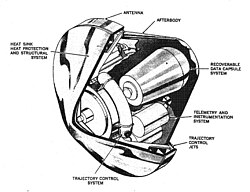
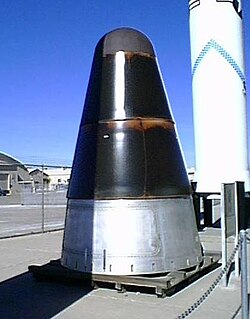
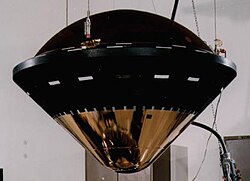
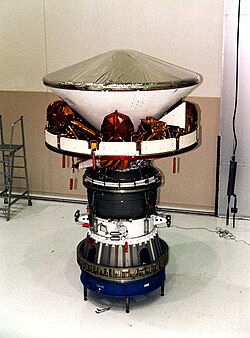
The sphere-cone has become a preferred geometry for modern Intercontinental Ballistic Missile (ICBM) reentry vehicles. Historically, the Mk-6 RV utilized a nylon phenolic ablative shield, which allowed for a less blunt design. However, modern advances have allowed for even smaller, more efficient sphere-cone shapes with half-angles typically between 10° and 11°.
Biconic and Non-Axisymmetric Shapes
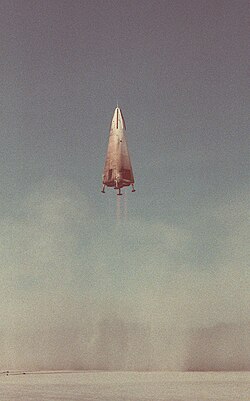
Biconic shapes and non-axisymmetric designs offer different aerodynamic profiles, often used to provide more control or specific lift characteristics during the descent phase.
Thermal Protection Systems (TPS)
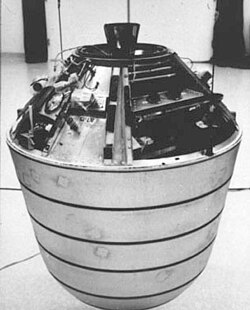
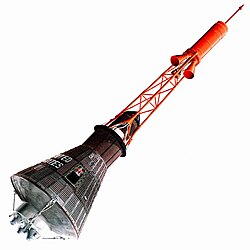
To survive the intense heat, spacecraft must be equipped with a Thermal Protection System (TPS). These systems generally fall into two categories: ablative and radiatively cooled.
Ablative Heat Shields
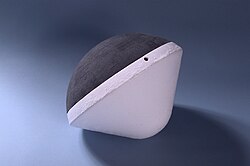
Ablative shields work by intentionally charring and eroding, carrying heat away from the spacecraft through mass loss. A landmark material in this category is PICA (Phenolic-Impregnated Carbon Ablator), patented by NASA Ames Research Center. PICA was essential for the Stardust mission, which remains the fastest man-made object to ever reenter Earth's atmosphere.

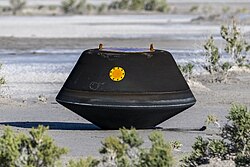
SpaceX later developed PICA-X, an improved version that is ten times less expensive to manufacture than the original NASA version, making it a cornerstone for the Dragon space capsule.
Radiatively Cooled Systems
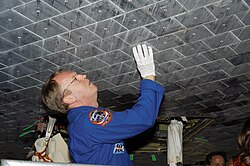
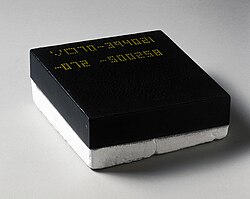
Some vehicles use passively cooled systems that radiate heat back into space. Reinforced Carbon–Carbon (RCC) is a common material for these applications, used on the nose cone and wing leading edges of the Space Shuttle. While highly refractory, RCC can be expensive and lacks high impact resistance.
Advanced and Inflatable Technologies
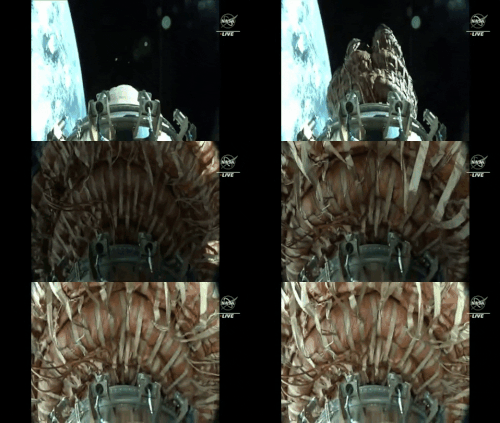
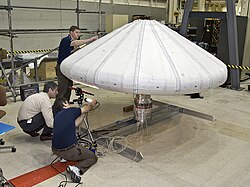
Modern aerospace engineering is moving toward more versatile solutions, such as inflatable heat shields. NASA's LOFTID (Low-Earth Orbit Flight Test of an Inflatable Decelerator) demonstrated this capability in 2022, successfully inflating in orbit and reentering at speeds exceeding Mach 25.
| Technology Type | Mechanism | Example Application |
|---|---|---|
| Ablative | Mass loss through charring | Apollo, Stardust, Dragon |
| Radiative | Heat radiation from surface | Space Shuttle (RCC) |
| Inflatable | Increased surface area for drag | LOFTID |
Design Considerations and Risks
Designing a reentry vehicle requires balancing four critical parameters:
- Peak heat flux: The maximum rate of heat transfer.
- Heat load: The total thermal energy absorbed.
- Peak deceleration: The maximum G-force experienced.
- Peak dynamic pressure: The maximum pressure exerted by the atmosphere.
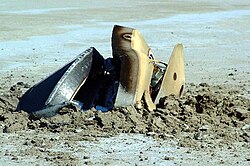
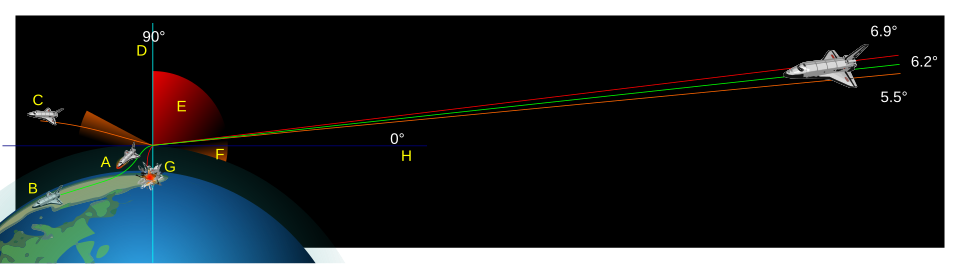
Despite rigorous testing, atmospheric entry remains high-risk. Uncontrolled entries of space debris or failed protective systems can lead to catastrophic disasters, as seen in historical accidents involving spacecraft like the Space Shuttle Columbia.
Frequently Asked Questions

What is the difference between controlled and uncontrolled entry?
Controlled entry (or reentry) involves a spacecraft that can be navigated along a predetermined course, such as a crewed capsule. Uncontrolled entry refers to objects like space debris, bolides, or astronomical objects that follow a natural, unsteered path.
Why do spacecraft use ablative shields?
Ablative shields are used because they are highly effective at managing extreme heat by sacrificing material. As the shield burns away, it carries the thermal energy away from the vehicle's structure.
What causes the "blackout" during reentry?
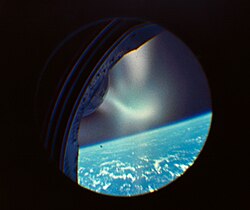
During reentry, the intense heat creates a layer of ionized gas (plasma) around the vehicle. This plasma can interfere with radio waves, leading to an ionization blackout where communication is temporarily lost.
How does the shape of a vehicle affect its reentry?
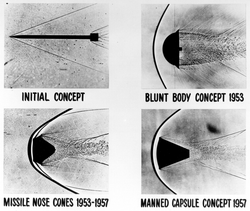
The shape determines the aerodynamic drag and how the shock layer forms. For example, blunt bodies create a shock wave that pushes the most intense heat away from the vehicle surface, while specific shapes like biconics can provide better stability or lift.
Can an inflatable heat shield actually work?
Yes. Technologies like NASA's LOFTID have successfully demonstrated that inflatable decelerators can expand in orbit to provide a larger surface area, increasing drag and allowing for safer descent in various planetary atmospheres.