Atlanta Transit Company: The Bridge to Modern Mass Transit
Before the arrival of modern rail systems, the city of Atlanta navigated a turbulent transition in public transportation. The Atlanta Transit Company (ATC) served as a critical intermediary, stepping in during a period of financial decline and labor unrest to maintain the city's mobility before the eventual rise of MARTA.
The Decline of Georgia Power's Transit Era
By the 1920s, the Georgia Railway and Power Company (the predecessor to today's Georgia Power, a subsidiary of Southern Company) began experiencing significant financial losses from its transit operations. Despite commissioning a study from Beeler in 1926, the company struggled to reverse its fortunes.
The late 1940s marked a period of sharp decline in ridership. In 1946, the system saw 125 million riders; however, this number plummeted to 100 million in 1948 and further dropped to 86 million by 1949, representing double-digit percentage losses over just a few years.
This decline culminated in April 1949, when Georgia Power operated the final streetcar on Atlanta's original network. The situation worsened in May 1950 when drivers initiated a strike, leading to a five-week work stoppage.
The Formation of the Atlanta Transit Company
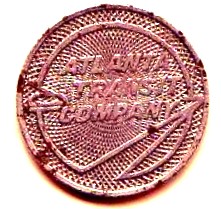
As Georgia Power sought a buyer to exit the troubled transit business, a group of determined businessmen stepped forward. Clement Evans, Granger Hansell, and Inman Brandon, joined by Leland Anderson of Columbus, Georgia, formed the Atlanta Transit Company (ATC). On June 23, 1950, the ATC purchased the transportation properties, effectively ending the strike as more than 1,300 employees joined the new organization.
Leland Anderson assumed the role of president, and in September 1950, Jackson Dick, a vice president from Georgia Power, joined the company as chairman of the board.
Operations and Fleet Evolution
The ATC operated a mixed fleet consisting of diesel transit buses and trolleybuses—also known as trackless trolleys, which are electric buses that draw power from overhead wires. To modernize the city's infrastructure and remove the overhead wiring, the trolleybus system was phased out by 1963.
The workforce, comprising drivers and mechanics, was represented by the Amalgamated Street Car Union Local 732. To boost morale and public relations, the company launched a promotional campaign called "Orchids for Operators," allowing passengers to nominate courteous and helpful employees for recognition.
The Transition to MARTA
The landscape of Atlanta's transit shifted again in 1965 with the formation of MARTA (Metropolitan Atlanta Rapid Transit Authority), which began planning a comprehensive rapid transit system. By 1972, with planning largely complete and the support of Fulton and DeKalb counties, MARTA moved to consolidate transit services.
MARTA purchased the Atlanta Transit Company for US$ 13 million, establishing itself as the sole mass transit entity in the region.
Key Facts
- Founded: June 23, 1950, following a purchase of Georgia Power's transit properties.
- Ridership Drop: Fell from 125 million (1946) to 86 million (1949).
- Fleet: Operated both diesel buses and trolleybuses (phased out in 1963).
- Labor: Employees were members of Amalgamated Street Car Union Local 732.
- Acquisition: Purchased by MARTA in 1972 for US$ 13 million.
| Era/Entity | Key Event | Year |
|---|---|---|
| Georgia Power | Last original streetcar run | 1949 |
| ATC | Company formed and properties purchased | 1950 |
| ATC | Trolleybus system phased out | 1963 |
| MARTA | Purchase of ATC for $13 million | 1972 |
Frequently Asked Questions
Why was the Atlanta Transit Company formed?
The ATC was formed by a group of businessmen to purchase the failing transit properties of Georgia Power during a driver strike in 1950, ensuring the city's transportation services continued.
What happened to the streetcars in Atlanta?
The original streetcar network ended in April 1949, operated by Georgia Power, before the transition to the ATC's bus-based system.
What were trolleybuses?
Trolleybuses, or trackless trolleys, were electric buses that relied on overhead wires for power. They were used by the ATC until they were phased out in 1963.
What was the "Orchids for Operators" program?
It was a promotional drive by the ATC that allowed customers to nominate helpful or courteous employees for an honor.
How did the ATC eventually end?
The ATC ceased to exist as an independent entity in 1972 when it was purchased by MARTA for US$ 13 million to create a unified mass transit system.