Televisión Pública Argentina: The History and Evolution of Argentina's National Broadcaster
Televisión Pública Argentina (often abbreviated as TVP) serves as the national public broadcaster of Argentina. With a legacy spanning over seven decades, it holds the distinction of being the first television station in the country. From its humble beginnings in 1951 to its current status as a high-definition digital network, TV Pública has mirrored the political and technological shifts of the Argentine nation.
Key Facts
- Founded: October 17, 1951.
- Callsign: LS 82 TV Canal 7.
- Ownership: Government of Argentina (Jefatura de Gabinete de Ministros) via Radio y Televisión Argentina S.A.
- Broadcast Format: 1080i HDTV (downscaled to 576i for SD).
- Digital Standard: ISDB-T (Japanese-Brazilian standard).
- Headquarters: Buenos Aires, Argentina.
Foundations and Early Years (1951–1978)
The birth of Argentine television was driven by businessman Jaime Yankelevich, operator of LR3 Radio Belgrano. With the approval of the Perón family—specifically Eva Perón, who sought to televise the acts of Loyalty Day—Yankelevich imported Bell equipment and DuMont cameras from the United States. The first antenna was mounted on the MOP Building, and test transmissions began on September 24, 1951, with announcer Fito Salinas.
The station officially signed on as LR3 Radio Belgrano TV on October 17, 1951. The inaugural broadcast was a remote transmission from Plaza de Mayo, viewed by approximately 2,500 televisions across the country. In 1957, the studios relocated to the Alas Building, and by 1961, the television entity separated from the radio station, adopting the callsign LS 82 TV.
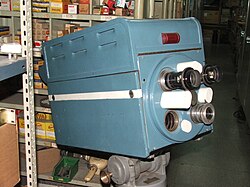
The Era of Color and ATC (1978–2000)
The 1978 FIFA World Cup acted as a catalyst for technological modernization. To broadcast the event globally in color, the government established Argentina 78 Televisora (A78TV) on Avenida Figueroa Alcorta. This facility was Argentina's first dedicated television center featuring soundproofed studios and Bosch Fernseh color equipment.
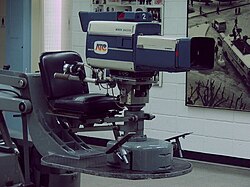
While the facility was state-of-the-art, only the final match between Argentina and the Netherlands was broadcast in color domestically using the PAL-N standard. In 1979, the station rebranded as Argentina Televisora Color (ATC). During the early 1980s, ATC briefly led national ratings and played a central role in the 1982 Falklands War coverage, utilizing satellite broadcasts to reach other South American countries and the United States.
The 1990s brought instability. Aging equipment and political shifts under Carlos Menem led to a brief, nationalist rebranding in 1996 as ATeCE (a play on the phrase "attach yourself to Argentina"), which lasted only five months before returning to its previous identity.
Transition to TV Pública and Digitalization (2000–2023)
At the turn of the millennium, the station moved away from the ATC brand and returned to being known as Canal 7. In 2009, the managing entity became Radio y Televisión Argentina Sociedad del Estado. Under the direction of Rosario Lufrano in 2006, the channel rebranded as TV Pública, shifting its focus toward cultural and educational programming and replacing the legacy Bosch equipment with high-definition (HD) technology.
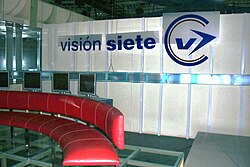
A major milestone occurred in April 2010 with the launch of the digital signal on UHF channel 23 using the ISDB-T standard, making it the first digital signal in Argentina. The network was renamed TV Pública Digital. On April 18, 2016, for its 65th anniversary, it adopted its current name: Televisión Pública Argentina.
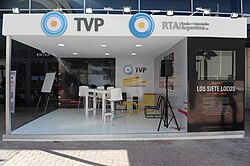
Current Status and Political Climate
Since December 2023, the network has faced uncertainty under the presidency of Javier Milei. The administration has characterized public media as a "propaganda mechanism" and has proposed the privatization or closure of the network. These intentions have drawn criticism from organizations like Reporters Without Borders, which expressed concerns regarding media pluralism and diversity.
Programming and Coverage
Televisión Pública Argentina maintains a diverse schedule emphasizing culture, education, and news via Televisión Pública Noticias. It is particularly noted for its sports coverage, including the Olympic Games, FIFA World Cups, and various national football championships.
| Feature | Detail |
|---|---|
| Primary Language | Spanish |
| Digital Channels | 23.1 (HD), 23.31 (SD) |
| Analog Channel | Channel 7 (VHF) |
| Sister Channels | Encuentro, Pakapaka, DeporTV, CINE.AR, TEC, Aunar |
| Key Sports Rights | FIFA World Cup, Olympic Games, Copa América |
Frequently Asked Questions
When did television first start in Argentina?
Television began in Argentina on October 17, 1951, with the first broadcast of LR3 Radio Belgrano TV from Plaza de Mayo.
What is the significance of the A78TV center?
A78TV was the first dedicated television production center in Argentina, built specifically to provide color broadcasting capabilities for the 1978 FIFA World Cup.
What digital standard does TV Pública use?
TV Pública uses the ISDB-T standard, which is the same digital television standard utilized in Japan and Brazil.
Who currently owns the network?
The network is owned by the Government of Argentina through the Jefatura de Gabinete de Ministros and managed by Radio y Televisión Argentina S.A.
What are some of the sister channels of TV Pública?
Its sister channels include Encuentro, Pakapaka, DeporTV, CINE.AR, TEC, and Aunar.