Astle's International Cricket Career: A Legacy of Resilience and Records
The journey of Astle in international cricket is a story of dramatic peaks and challenging troughs. From his early days as a promising opener to setting world records in Test cricket, Astle became a cornerstone of the New Zealand national team, known for his ability to anchor an innings and deliver match-winning performances in both One-Day Internationals (ODIs) and Test matches.
Key Facts
- Fastest Double Century: Recorded the fastest double-century in Test history at the time, reaching 200 runs in 153 balls.
- ODI Success: Surpassed Martin Crowe's record for the most one-day hundreds for New Zealand during the 1997 Pepsi Independence Cup.
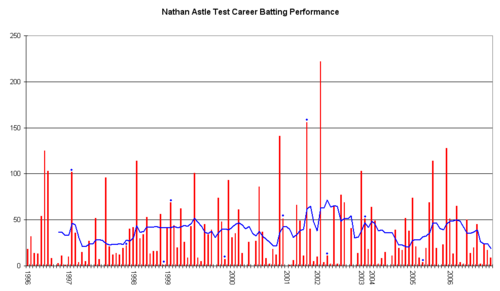
- Test High Score: Achieved a career-best Test score of 222 against England.
- Award Winner: Recipient of the 2005–2006 Walter Hadlee Trophy for Best New Zealand ODI batsman.
- World Cup Experience: Participated in three World Cups, with a standout performance in the 2003 edition.
The Early Years and Breakthroughs
Astle entered the international scene in 1995, debuting in the ODI series against the West Indies. His early impact was felt during a series against Sri Lanka, where a score of 95 helped New Zealand break a 13-match losing streak. Under the guidance of coach Glenn Turner, Astle transitioned into an opening batsman for ODIs.
His first major milestone came during a five-match series in India. After four scoreless matches, he delivered a stunning 114 off 128 balls in the final game, earning the "man of the match" award. He continued this momentum into 1996, scoring a century in his Test debut against Zimbabwe at Trust Bank Park, Hamilton, and averaging 56.00 across the series.
During the 1996 Cricket World Cup, Astle scored a century in the opening match against England. However, this high point was followed by a struggle for form, as he finished the tournament with 111 runs at an average of 18.5.
Establishing Dominance in Tests and ODIs
Following the 1996 World Cup, Astle found his footing in Test cricket during a tour of the West Indies. At Kensington Oval, he scored 54 and 125 in a single match, including a then-record 144-run fifth-wicket partnership with Justin Vaughan. He followed this with a century (103) in the second Test, securing a draw for New Zealand.
In 1997, Astle demonstrated his versatility during the Pepsi Independence Cup. He scored 117 and took a career-best 4 for 43 runs against Pakistan, earning "man of the match" honors. By the end of the tournament, he was the fourth-most prolific run-scorer with 218 runs at an average of 72.66 and had broken Martin Crowe's record for the most ODI centuries for New Zealand.
His consistency peaked during a home series against Zimbabwe, where he scored 351 runs, including a century and four consecutive scores over 60, earning him the "man of the series" title.
The 1999 World Cup and the Road to a World Record
Despite his previous success, the 1999 Cricket World Cup in England proved difficult, with Astle managing only 79 runs across nine matches at an average of 8.77. However, he rebounded in Test series against England, cementing his role as a key player for the national side.
The early 2000s saw a mix of struggles and brilliance. After a poor Test series against South Africa, he returned strongly in ODIs against Pakistan, scoring 119 in the final match and sharing a record 193-run opening stand with Stephen Fleming.
In the 2001–02 Trans-Tasman Trophy against Australia, Astle scored a valiant 156 not out in the third Test and achieved a career-best First-class score of 223 against Queensland.
The pinnacle of his Test career occurred during a series against England. Chasing a massive target of 550, Astle scored 222 runs. He set a world record for the fastest double-century, reaching the milestone in just 153 balls. He finished with 222 runs from 168 balls, including 28 fours and 11 sixes. As of 2013, this remains the second-highest score by a player in the fourth innings of a Test match.
Later Career and Final Years
Astle redeemed his World Cup record in 2003, scoring a century against Zimbabwe and finishing the tournament with 213 runs at an average of 42.60. He continued to perform in limited-overs cricket, recording his highest ODI score of 145 not out against the USA in the 2004 ICC Champions Trophy.
In August 2005, he led New Zealand to victory in the Videocon Tri-Series final in Zimbabwe with an unbeaten 115 against India, earning "player of the match" honors. Despite a brief period of criticism and being dropped from the team in 2005, he returned in 2006 to score 118 not out at Christchurch and 690 ODI runs in a single summer, winning the Walter Hadlee Trophy.
Astle announced his retirement from international cricket on January 26, 2007, during the Commonwealth Bank Series. He cited a lack of motivation and inconsistent form as the primary reasons for his departure. His final ODI appearance took place on January 23, 2007, against England at the Adelaide Oval.
| Category | Achievement/Statistic | Opponent/Event |
|---|---|---|
| Highest Test Score | 222 (Fastest double-century) | England |
| Highest ODI Score | 145 not out | USA (2004 Champions Trophy) |
| Best Bowling (ODI) | 4 for 43 | Pakistan (1997) |
| Major Award | Walter Hadlee Trophy (2005-06) | Best NZ ODI Batsman |
| World Cup Peak | 213 runs (Avg 42.60) | 2003 World Cup |
Frequently Asked Questions
What was Astle's most significant Test record?
Astle set the record for the fastest double-century in Test history, reaching 200 runs in just 153 balls during a match against England.
How did Astle perform in the Cricket World Cups?
His World Cup career was inconsistent; he struggled in 1996 and 1999 but had a successful 2003 campaign where he scored a century against Zimbabwe and averaged 42.60.
Which record did Astle break regarding ODI centuries?
During the 1997 Pepsi Independence Cup, Astle surpassed Martin Crowe's record for the most one-day hundreds scored for New Zealand.
Why did Astle retire from international cricket?
Astle retired on January 26, 2007, stating that he lacked the motivation and enjoyment necessary to continue, as well as citing his patchy form.
What was Astle's highest First-class score?
His highest First-class score was 223, achieved against Queensland during a tour of Australia.