Asherah: The Great Mother Goddess of the Ancient Levant
In the spiritual landscape of the ancient Near East, few figures are as enduring or as debated as Asherah. Known as the "Lady of the Sea" or "Lady of the Day," Asherah was a primary deity across the Levant, embodying themes of fertility, motherhood, and nature. From the city-states of Ugarit to the kingdoms of Israel and Judah, her presence was felt through towering sacred trees, carved figurines, and inscriptions that challenge modern perceptions of ancient monotheism.
Key Facts
- Primary Symbols: The tree and the suckling bovine.
- Major Cult Center: The Levant region.
- Divine Consort: Associated with El (Ugaritic), Amurru (Amorite), and potentially Yahweh (Israelite).
- Offspring: Attributed with 70 sons in Ugaritic religion and 77 to 88 sons in Hittite tradition.
- Biblical Presence: Mentioned 40 times in the Hebrew Bible, often referring to cultic objects or groves.
Etymology and Nomenclature
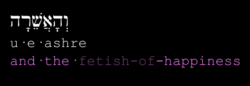
The name Asherah appears in various forms across different languages and eras. In Biblical Hebrew, the term ʾAšēroṯ (the plural form) appears in books such as Judges and 2 Chronicles. Linguistically, archaic suffixes like -atu or -a evolved into the Northwest Semitic -aṯ or -ā. Depending on the transcription and context, she is referred to as Asherat or Asherah.
Beyond the Hebrew texts, she is known as Athirat in Ugaritic sources. Some scholars have drawn connections between her and other great goddesses of the region, suggesting that Athirat is the same entity as the Babylonian Ašratu and the Ašerat found at Ras Shamra.
![Earlier scholars were less reluctant to draw connections among the numerous similarly-named great goddesses.[44] Langdon says ʔ-th-r-t is "surely the same" as Babylonian Ašratu, West Semitic Aširtu, and Ašerat in Ras Shamra.[45]](/images/3c/5e/3c5eb279475773f5c672d37a2c52d1f20063b080ca493980bf6c194e42696bdc.png)
Iconography and Symbols
Asherah's identity is inextricably linked to the natural world, specifically the tree. In ancient iconography, the tree served as a representation of the goddess herself. This is evidenced by the Lachish ewer, where the word Elat (an epithet for Asherah) is positioned directly over a tree motif.
!["The dedicatory inscription on the Lachish ewer [shows] the word Elat positioned immediately over the tree, indicating the... tree as a representation of the goddess Elat."[18]](/images/36/46/3646010f58aa4b9dabe3e510ab18a0aaf0124459a6bd56d1bb29bddbdfd197f3.jpg)
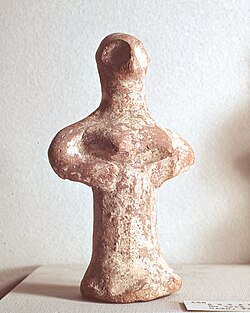
Other symbols include the suckling bovine, representing nourishment and motherhood, and the hand, which some interpret as a symbol of protection. In the archaeological record, "pillar figures"—small statues often depicting women with protruding breasts—are associated with her cult in Judah.
![Khirbet el-Qom's hand is a symbol of Asherah as a protector,[74][page needed] but there is no scholarly hypothesis on why it appears upside-down.](/images/8f/0d/8f0d7f8737a392fa48cc2def551fff6884dc02fcc7bdace06110abb087bed23d.jpg)
![Kuntillet Ajrud's jar has this common motif in illustration. Another alluring symbol of the Goddess, the suckling bovine.[75][76]](/images/3a/01/3a0171376bd244a884edcc37c2f44fb17b6d422508bfb9bdd8229975ca353d71.jpg)
Asherah in the Hebrew Bible
The relationship between Asherah and the biblical narrative is complex. The noun ʾăšērâ appears forty times, but it frequently refers to a cultic object—a physical representation of the goddess—rather than the deity herself. In the Septuagint (the Greek translation of the Old Testament), the term is almost always translated as alsos (grove), while the Latin Vulgate used lucus or nemus (wood/grove).
This strong association with nature meant that Asherah was often "found" under trees or crafted from wood. Over time, as monotheistic reforms took hold—most notably during the reign of King Josiah—these sacred trees and poles were suppressed to eliminate the worship of the goddess.
![1900, grove at brook Kidron, Jerusalem, Gertrude Bell[93]](/images/44/6c/446cdb4d8fd988af5364fc7643465b4499e053580420d26f4ac4a88f89e26cfa.png)
Regional Variations and Divine Consorts
Asherah's role varied by culture, but she almost always occupied a position of high status as a consort to the chief deity:
- Ugarit: She was the consort of El and the mother of numerous deities.
- Hittite Religion: She was linked to Elkunirsa.
- Ancient Israel: Archaeological finds at Kuntillet Ajrud suggest a popular belief in "Yahweh and his Asherah," implying that some Israelites viewed her as the consort of Yahweh.
Summary of Asherah's Attributes
| Attribute | Details |
|---|---|
| Alternative Names | Athirat, Ašratum, Elat |
| Primary Symbols | Trees, Groves, Suckling Bovines |
| Regional Influence | Sumer, Akkad, Ugarit, Israel, Judah, Arabia |
| Biblical Translation | Often translated as "grove" or "pole" |
| Family | Consort of El/Yahweh; Mother of 70-88 sons |
Frequently Asked Questions
Was Asherah a real goddess in ancient Israel?
Yes. While the official biblical narrative promotes monotheism, archaeological evidence from sites like Kuntillet Ajrud and the presence of pillar figurines suggest that Asherah was widely worshipped by the general population in Israel and Judah.
Why is she often associated with trees?
In the ancient Levant, trees and groves were seen as manifestations of divine fertility. The "Asherah pole" or sacred grove served as a physical point of contact between the worshippers and the goddess.
Who was Asherah's husband?
Depending on the culture, her consort was the chief god of that pantheon. In Ugaritic religion, it was El. In some ancient Israelite folk traditions, she was viewed as the consort of Yahweh.
What is the difference between Asherah and Astarte?
While both are prominent West Semitic goddesses, they represent different aspects of divinity. Asherah is primarily a mother goddess and consort, whereas Astarte is more frequently associated with war, sexuality, and the planet Venus.
What happened to the worship of Asherah?
Her worship was systematically suppressed by monotheistic leaders in Israel and Judah, particularly during the reforms of King Josiah, who ordered the destruction of the Asherah poles and groves to centralize worship around a single god.