Arnold Strode-Jackson: Olympic Champion and Decorated War Hero
Arnold Nugent Strode-Jackson was a man of extraordinary versatility, excelling as a world-class athlete, a highly decorated military leader, and a legal professional. Best known for his historic victory at the 1912 Summer Olympics, he transitioned from the sporting arena to the battlefields of the First World War, where he rose to the rank of Brigadier-General. His life was marked by a relentless drive for excellence, whether on the track or in the heat of combat.
Key Facts
- Olympic Gold: Won the 1500m at the 1912 Stockholm Games in an Olympic record time of 3:56.8.
- Military Rank: Attained the rank of Brigadier-General in the British Army.
- High Honors: Awarded the Distinguished Service Order (DSO) with three Bars and the CBE.
- Academic Background: Studied law at Brasenose College, Oxford.
- Global Life: Lived and worked in both the United Kingdom and the United States.
Early Life and Education
Born on April 5, 1891, in Addlestone, Surrey, Arnold Nugent Strode Jackson came from a family with strong academic and military ties. He was the grandson of Lieutenant General George Jackson and the nephew of Clement Jackson, a prominent athlete and co-founder of the Amateur Athletic Association. He later changed his surname to Strode-Jackson in March 1919.
During his time at Malvern College, he earned the nickname "Jackers" while serving as the head of his house and the athletics team. He continued his education at Brasenose College, Oxford, entering in 1910 to pursue a degree in law. At Oxford, he was a multi-sport talent, playing football and rowing, and captaining the hockey team. He also dominated the track, winning the mile race against Cambridge three times and serving as President of the Oxford University Athletic Club.
The "Greatest Race Ever Run"
In 1912, while still an undergraduate, Jackson entered the Stockholm Olympic Games. In a move that would be impossible today, he competed as a private entry after not being selected for the official Great Britain team. His preparation was famously relaxed, consisting primarily of walking, golf, and massage.
The 1500m final became a legendary clash, dominated largely by American runners. As the race reached its climax, the world record holders Abel Kiviat and John Paul Jones led the pack. Forced to run wide to avoid the American trio, Jackson unleashed a powerful final burst in the last 50 yards. He crossed the finish line in 3:56.8, securing the gold medal and setting a new Olympic record. The race was hailed at the time as "the greatest race ever run," and Jackson remained the youngest Olympic 1500m gold medalist until 2008.
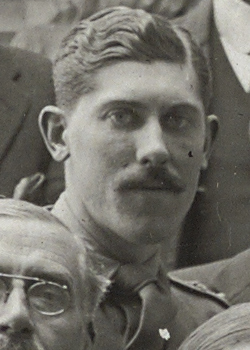
Military Service in the First World War
The outbreak of war in 1914 ended Jackson's athletic career. He was commissioned into the Loyal Regiment (North Lancashire) and attached to the 13th (Service) Battalion, Rifle Brigade. His ascent through the ranks was rapid, driven by bravery and leadership under fire. By June 1917, he was an acting Major and a Companion of the Distinguished Service Order (DSO).
In August 1917, he took command of the 13th (Service) Battalion, King's Royal Rifle Corps, leading them through the grueling Battle of Passchendaele and the German spring offensive. Despite being wounded three times—which left him permanently lame—he continued to lead with distinction, eventually reaching the rank of acting Brigadier-General by October 1918.
Military Honors and Citations
Jackson's bravery was recognized through the DSO and three subsequent Bars. His citations highlight his "conspicuous gallantry," including his ability to maintain command during intense bombardments and his leadership in breaking enemy lines of resistance during assaults.
| Category | Details |
|---|---|
| Olympic Achievement | Gold Medal, 1500m (1912 Stockholm) |
| Highest Military Rank | Brigadier-General |
| Major Awards | CBE, DSO & Three Bars, 6 Mentions in Despatches |
| Education | Malvern College; Brasenose College, Oxford (Law) |
| Notable Roles | Barrister, Justice of the Peace (Connecticut), Author |
Later Life and Legacy
Following the war, Jackson served as part of the British delegation at the 1919 Paris Peace Conference, for which he was appointed a Commander of the Order of the British Empire (CBE). He was called to the Bar at Middle Temple and helped found the Achilles Club, a prestigious athletic organization.
In 1921, he emigrated to the United States. He lived a diverse life in America, working in industry, serving as a Justice of the Peace in Connecticut, and directing the first Kentucky Derby Festival in 1935. During World War II, he served as a colonel on the staff of the Governor of Kentucky and managed anti-sabotage precautions for the Inspection Board of U.K. and Canada.
A man of letters as well as action, he authored Kentucky Heyday: 1787–1827, a biography of portrait painter Matthew Jouett. After the death of his wife, Dora, in 1963, he returned to his roots in Oxford, where he lived until his death on November 13, 1972.
Frequently Asked Questions
How did Arnold Jackson enter the 1912 Olympics?
He entered as a private entry, meaning he was not officially selected by the Great Britain team. This was the last Olympic Games to allow such private entries.
What was the significance of his 1500m victory?
He won the gold medal in an Olympic record time of 3:56.8 in a race widely considered one of the greatest in history. He held the record for the youngest gold medalist in the event for nearly a century.
What military honors did he receive?
He was awarded the Distinguished Service Order (DSO) and three Bars for conspicuous gallantry, was Mentioned in Despatches six times, and was appointed a Commander of the Order of the British Empire (CBE).
Did the First World War affect his athletic ability?
Yes. Jackson was wounded three times during the war, which left him permanently lame and effectively ended his competitive sporting career.
What did he do after moving to the United States?
He worked in industry, served as a Justice of the Peace in Connecticut, directed the first Kentucky Derby Festival, and served as a colonel on the staff of the Governor of Kentucky during WWII.