Argentine Constitution of 1819: The Failed Blueprint for a New Nation
Following the Argentine War of Independence, the nascent state sought to establish a formal legal framework to govern its territories. This effort culminated in the Argentine Constitution of 1819, a document drafted by the Congress of Tucumán. While it aimed to provide stability and structure, the document became a flashpoint for conflict between the centralist ambitions of Buenos Aires and the autonomy of the outlying provinces.
Despite its detailed design, the constitution never truly came into force, serving instead as a catalyst for civil strife that would reshape the political landscape of the United Provinces of the Río de la Plata.
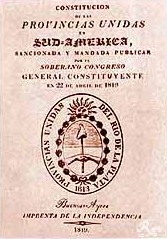
Key Facts
- Drafted by: The Congress of Tucumán in Buenos Aires.
- Promulgation Date: May 25, 1819.
- Primary Influence: Based on laws of the United Provinces and the constitutions of the US, France, and Spain.
- Executive Head: A Supreme Director with a 5-year term.
- Outcome: Rejected by the provinces and repealed following the Battle of Cepeda in 1820.
The Drafting and Sanction of the Constitution
The Congress of Tucumán, which had previously issued the Argentine Declaration of Independence in San Miguel de Tucumán, relocated to Buenos Aires to finalize the nation's governing document. The drafting committee consisted of José Mariano Serrano, Diego Estanislao Zavaleta, Teodoro Sánchez de Bustamante, Juan José Paso, and Antonio Sáenz.
The authors drew inspiration from a blend of domestic and international sources. They utilized the existing laws of the United Provinces of the Río de la Plata (the precursor state to modern Argentina) and integrated principles from the constitutions of the United States, France, and Spain.
Government Structure and Power Distribution
The 1819 Constitution proposed a strict separation of powers divided into three distinct branches. This structure was designed to centralize authority while maintaining a veneer of representative governance.
The Executive Branch
Executive power was vested in a Supreme Director, who was to be elected by a majority of a Joint Session of Congress for a five-year term. This role was a continuation of the government form established in 1814, though the document was written during a period where some had attempted to install a Bourbon king as the monarch of the United Provinces. Notably, the Supreme Director held the significant power to appoint the governors of the provinces.
The Legislative Branch
The legislative power was split between two chambers: a Senate and a Chamber of Deputies. The composition of these bodies was highly restrictive:
- The Senate: Included a fixed number of senators per province, three military officers (colonel rank or higher), one bishop, three clergymen, a representative from each university, and the former Supreme Director.
- The Chamber of Deputies: Held the primary initiative regarding tax-related issues.
Financial barriers to entry were steep; candidates for the Senate were required to prove an estate of $8,000, while deputies needed to prove an estate of $4,000.
Rights and Liberties
The document included a "declaration of rights," which was divided into two categories: the general "rights of the nation" and a specific, enumerated list of "particular rights" granted to individual citizens.
Provincial Rejection and Collapse
Promulgated on May 25, 1819, the constitution was immediately viewed as a tool for Buenos Aires to dominate the other provinces. This perceived centralism led to an immediate rejection by the provincial governments, who subsequently waged war against the Supreme Directorship.
The conflict reached a breaking point when the national armies, preoccupied with the War of Independence, refused to engage in a civil war. This left the forces of Supreme Director José Rondeau severely diminished. On February 1, 1820, Rondeau's troops were defeated at the Battle of Cepeda, leading to the formal repeal of the 1819 Constitution.
| Feature | Details |
|---|---|
| Executive Leader | Supreme Director (5-year term) |
| Legislative Body | Bicameral (Senators and Deputies) |
| Wealth Requirements | $8,000 for Senators / $4,000 for Deputies |
| Key Influence | US, French, and Spanish Constitutions |
| Final Fate | Repealed after the Battle of Cepeda (1820) |
Frequently Asked Questions
Why was the 1819 Constitution rejected?
The constitution was promoted by Buenos Aires and seen as too centralist, granting the Supreme Director the power to appoint provincial governors, which the other provinces found unacceptable.
Who was the Supreme Director during the constitution's collapse?
José Rondeau was the Supreme Director whose forces were defeated at the Battle of Cepeda, leading to the document's repeal.
What were the financial requirements to serve in the legislature?
To be eligible, Senators had to prove an estate of $8,000, and members of the Chamber of Deputies had to prove an estate of $4,000.
Which foreign documents influenced the 1819 draft?
The drafters based the text on the constitutions of the United States, France, and Spain, as well as the existing laws of the United Provinces of the Río de la Plata.
What happened at the Battle of Cepeda?
Occurring on February 1, 1820, this battle resulted in the defeat of the Supreme Director's diminished troops, effectively ending the validity of the 1819 Constitution.