Argentina's National Reorganization Process: The Era of the Last Military Junta
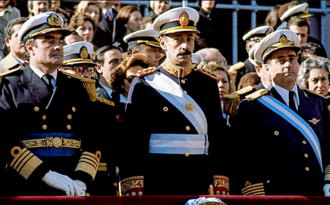
From 1976 to 1983, the Argentine Republic was governed by a military dictatorship officially known as the National Reorganization Process (Proceso de Reorganización Nacional). This period, often referred to as the "last military junta," was characterized by a transition from a federal presidential republic to a regime of state terrorism and authoritarian control.
The regime emerged following a coup d'état on March 24, 1976, overthrowing the government of Isabel Perón. While academic descriptions of the era vary—ranging from "bureaucratic-authoritarian" to "neo-fascist"—the period is most infamously remembered for the Dirty War, a campaign of state-sponsored violence where as many as 30,000 citizens were killed or "disappeared."
Key Facts
- Duration: March 24, 1976, to December 10, 1983.
- Official Name: National Reorganization Process (PRN).
- Human Cost: An estimated 30,000 people were killed or disappeared during the Dirty War.
- Governance: Ruled by a series of military juntas led by figures such as Jorge Rafael Videla and Leopoldo Galtieri.
- End of Regime: Triggered by the defeat in the Falklands War and subsequent general elections in 1983.
The Rise of the Junta
The path to the 1976 coup was paved by years of political instability. Following a period of weak governance and a seven-year military rule, Juan Perón returned from exile in Spain in 1973. However, his return was marred by the Ezeiza massacre on June 20, 1973, which signaled a shift toward the dominance of the right-wing faction of the Peronist movement.
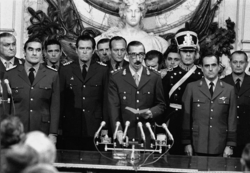
On March 24, 1976, the military seized power, establishing a junta composed of the commanders-in-chief of the Army, Navy, and Air Force. This new government replaced constitutional judges with appointees who swore allegiance to the Charter of the National Reorganization Process rather than the national constitution.
International Relations and Foreign Policy
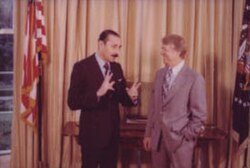
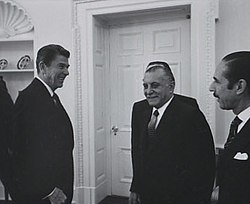
The junta's foreign policy was heavily influenced by the Cold War context. The United States provided significant support during the early years of the regime. The Ford Administration approved $50 million in security assistance, and between 1977 and 1978, the U.S. sold over $120 million in military spare parts to Argentina. Additionally, the U.S. Department of Defense funded the training of 217 Argentine military officers.
Military Intervention in Central America
Argentina extended its military influence beyond its borders through Operation Condor, a campaign of political repression and intelligence sharing among South American dictatorships. Argentine agents from the SIDE and Batallón de Inteligencia 601 operated in Nicaragua to eliminate guerrillas fighting with the Sandinistas.
In Honduras, the junta established Battalion 316, which implemented the "Argentine Method"—a system of torture and political assassination. During the 1980s, at least 184 individuals, including union leaders and politicians, were assassinated by this unit.
The Fall of the Regime
The decline of the military government was accelerated by the Falklands War (April 2 to June 14, 1982), a conflict that severely damaged the junta's prestige and internal stability. This failure paved the way for the general elections on October 30, 1983, leading to the formal disestablishment of the junta on December 10, 1983.
Following the restoration of democracy, President Raúl Alfonsín mandated the prosecution of the junta's leaders. This led to the 1985 Juicio a las Juntas (Trial of the Juntas), where several leaders were convicted of crimes against humanity. Although President Carlos Menem issued controversial pardons in 1989, the Argentine Supreme Court declared amnesty laws unconstitutional in 2005, allowing trials to resume.
Summary of Governance (1976–1983)
| Leader | Term | Status |
|---|---|---|
| Military Junta (Videla, Massera, Agosti) | 1976 | Collective Leadership |
| Jorge Rafael Videla | 1976–1981 | President |
| Roberto Eduardo Viola | 1981 | President |
| Leopoldo Galtieri | 1981–1982 | President |
| Reynaldo Bignone | 1982–1983 | President |
Frequently Asked Questions
What was the "Dirty War"?
The Dirty War was a period of state terrorism conducted by the military junta from 1976 to 1983, involving the systematic kidnapping, torture, and killing of suspected political opponents, resulting in up to 30,000 disappearances.
How did the United States support the junta?
The U.S. provided $50 million in security assistance via the Ford Administration, sold over $120 million in military spare parts, and funded the training of Argentine military officers.
What was the "Argentine Method"?
The "Argentine Method" referred to the systematic use of torture and political assassination to eliminate government opponents, a practice exported to other countries, such as Honduras via Battalion 316.
How did the regime eventually end?
The regime collapsed following the military defeat in the Falklands War in 1982, which led to the 1983 general elections and the return to democratic rule on December 10, 1983.
Were the leaders of the junta ever punished?
Yes, many were tried and convicted in 1985. While some were pardoned in 1989, the 2005 Supreme Court ruling against amnesty laws allowed for the resumption of trials for crimes against humanity.