Argentina 1951 General Election: A Landmark Victory for Juan Perón
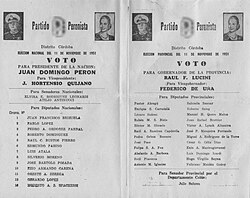
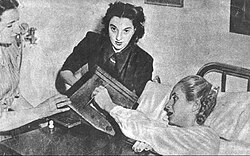
On 11 November 1951, Argentina held general elections to determine the nation's presidency and legislative composition. This electoral cycle marked a historic milestone in Argentine democracy as it was the first national election in which women were enfranchised, granting them the right to vote at the national level.
The election took place against a backdrop of intense social transformation and political polarization. President Juan Perón, seeking a second term, leaned on a legacy of vigorous public works and social reforms. However, his administration faced mounting challenges, including record-high inflation of 50% and increasing strike activity.
Political tensions were further exacerbated by the government's expropriation of La Prensa, the country's second-most circulated daily newspaper. While this move was supported by the CGT (General Confederation of Labour), it damaged Perón's international reputation and alienated domestic critics. The opposition was similarly strained; Ricardo Balbín, the nominee for the Radical Civic Union (UCR), had spent a significant portion of the preceding year as a political prisoner.
Key Facts
- Date: 11 November 1951.
- Historic First: First national election with women's suffrage.
- Presidential Winner: Juan Perón (Peronist Party) with 63.51% of the vote.
- Voter Turnout: Approximately 88.16% for the presidency.
- Legislative Sweep: The Peronist Party won all 30 Senate seats and 146 of 160 Chamber of Deputies seats.
- Economic Context: Record inflation of 50% and the launch of Channel 13, Latin America's first regular broadcast station.
The Campaign and Political Climate
The campaign was marked by instability and high drama. Vice President Hortensio Quijano suffered from failing health, leading to a public movement organized by the CGT to install the influential First Lady, Eva Perón, as the running mate. Despite the massive public acclamation on Buenos Aires' Ninth of July Avenue, "Evita" refused the nomination due to her own terminal illness.
The opposition faced significant hurdles, including limited media access and government harassment. These pressures led the UCR and other parties to boycott all Senate races and several Congressional contests. Even a September 28 coup attempt by ultraconservative elements within the Army failed to derail Perón's momentum.
Election Results
Presidential Outcome
Juan Perón secured a landslide victory, defeating Ricardo Balbín of the Radical Civic Union. While several smaller parties participated, the contest was primarily a battle between the Peronists and the UCR.
| Candidate | Party | Votes | Percentage |
|---|---|---|---|
| Juan Perón | Peronist Party | 4,745,168 | 63.51% |
| Ricardo Balbín | Radical Civic Union | 2,415,750 | 32.33% |
| Reynaldo Pastor | National Democratic Party | 174,399 | 2.33% |
| Rodolfo Ghioldi | Communist Party | 71,318 | 0.95% |
| Alfredo Palacios | Socialist Party | 54,920 | 0.74% |
Legislative and Provincial Results
The Peronist Party achieved near-total dominance in the legislature. In the Chamber of Deputies, they captured 146 out of 160 seats, while the Radical Civic Union took the remaining 14. The Senate was a complete sweep, with the Peronist Party winning all 30 seats.
This dominance extended to the provinces, where the Peronist Party won the governorships of 14 provinces, including Buenos Aires, Córdoba, and Santa Fe. In several provinces, such as Jujuy and San Juan, the Peronist candidates secured over 78% of the vote.
Frequently Asked Questions
Why was the 1951 election historically significant for women?
It was the first time in Argentine history that women were granted the right to vote in a national election, significantly expanding the electorate.
Who was the main opponent of Juan Perón in 1951?
The main opponent was Congressman Ricardo Balbín of the Radical Civic Union (UCR), who ran with Arturo Frondizi as his running mate.
Why didn't Eva Perón run for Vice President?
Despite strong public demand and a massive rally organized by the CGT, Eva Perón refused the nomination because she was dying of cancer.
What was the economic state of Argentina during the election?
The country was experiencing a recovery from a 1949–50 recession and seeing the completion of major public works, but it was also battling record inflation of 50%.
How did the Peronist Party perform in the Senate?
The Peronist Party won a total sweep of the Senate, taking all 30 available seats.