Peronism: The Ideology and Legacy of Justicialism in Argentina
Peronism, also known as justicialism, is a powerful political movement and ideology that has shaped the landscape of Argentine politics throughout the 20th and 21st centuries. Founded on the doctrines and legacy of Juan Perón (1895–1974), the movement has maintained a dominant presence in the nation's governance. Since 1946, Peronist candidates have won 10 out of the 14 presidential elections in which they were permitted to compete.
At its core, Peronism is defined by three fundamental pillars, often referred to as its "three flags": social justice (the struggle against economic and social inequality), economic independence (the development of national industry to reduce reliance on foreign nations), and political sovereignty (the principle that foreign powers should not interfere in domestic affairs).
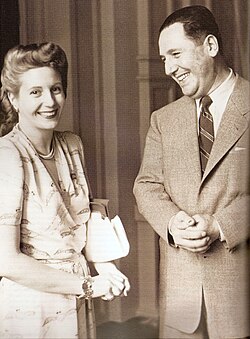
Key Facts
- Founder: Juan Perón, with Eva Perón as a central figure.
- Core Pillars: Social justice, economic independence, and political sovereignty.
- Political Nature: Described as a social form of inclusive nationalism and populism.
- Cold War Stance: Adopted a "third position," famously stating, "we are neither Yankees nor Marxists."
- Key Achievements: Expansion of workers' rights, women's suffrage, and free public university tuition.
The Ideological Framework of Justicialism
Peronism is characterized as a social form of nationalism. Unlike ethno-nationalism, which prioritizes a single ethnic group, Peronism promotes an inclusive nationalism that embraces all races and ethnicities. This inclusivity reflects Argentina's heterogeneous background, resulting from the blending of indigenous peoples, Criollos, and various immigrant groups.
The movement is also widely regarded as populist, as it centers on the leadership of a charismatic figure—originally Juan Perón—to mobilize and lead the masses. This leadership style allowed the movement to navigate the tensions of the Cold War by rejecting both US-led capitalism and Soviet-led Marxism.
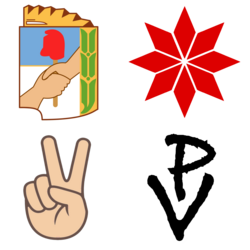
The Twenty Peronist Tenets
The philosophy of Justicialism emphasizes the common people over political elites. Key tenets from Perón's "Peronist Philosophy" include:
- The belief that there is only one class of person: those who work.
- The goal of national unity rather than struggle, seeking heroes instead of martyrs.
- The assertion that children should be the only privileged class.
- The balance between the rights of the individual and the needs of society.
- The vision of an Argentina that is socially fair, economically free, and politically sovereign.
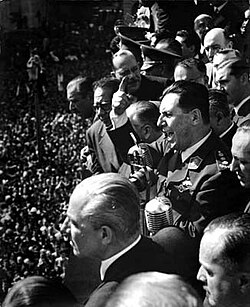
Political Evolution and Social Reforms
Peronism has historically blended progressive social measures with paternalistic conservative elements. While the movement initially embraced anti-communist sentiments, militarism, and Catholic teaching in public schools, it simultaneously enacted transformative progressive reforms.
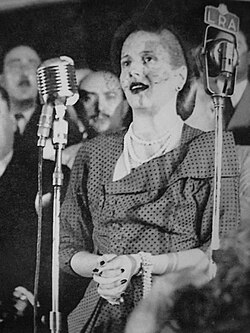
One of the most significant milestones was the adoption of women's suffrage, championed by Eva Perón, which granted women the right to vote in 1947.
Other major reforms included:
- The expansion of workers' rights and the creation of a genuine role for the working class in government.
- The establishment of a constitutional right to housing.
- The end of oppression against indigenous peoples.
- The freezing of retail prices and the subsidization of food for workers.
- The introduction of mandatory trade union representation in regional legislatures.
Internal Currents and Modern Peronism
Over time, Peronism has fragmented into various internal currents, reflecting the diverse political directions the movement has taken. These include Orthodox Peronism, Revolutionary Peronism, and Renovation Peronism. Later iterations include Menemism and Kirchnerism, the latter of which continues to influence contemporary Argentine politics.
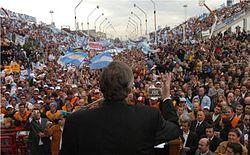
Despite these internal divisions, the movement's influence persists through its ability to adapt to different economic and social eras while maintaining its core identity as a movement of the people.
| Category | Details |
|---|---|
| Primary Goals | Social Justice, Economic Independence, Political Sovereignty |
| Social Impact | Women's suffrage, workers' rights, free university tuition |
| Political Style | Populist, Inclusive Nationalism, Third Position (Cold War) |
| Key Figures | Juan Perón, Eva Perón, Néstor Kirchner |
| Core Philosophy | Prioritizing the working class and national unity over elites |
Frequently Asked Questions
What is the difference between Peronism and Justicialism?
Peronism is the general term for the political movement based on Juan Perón's legacy, while Justicialism is the formal name for the ideology and doctrine that underpins the movement.
What are the "three flags" of Peronism?
The three flags are social justice (fighting inequality), economic independence (developing national industry), and political sovereignty (preventing foreign interference in domestic affairs).
How did Peronism view the Cold War?
Peronism adopted a "third position," meaning it refused to align with either the United States (Yankees) or the Soviet Union (Marxists), seeking a path independent of both superpowers.
What role did Eva Perón play in the movement?
Eva Perón was a central figure who championed the rights of the poor and was instrumental in securing women's suffrage in Argentina in 1947.
Is Peronism considered a left-wing or right-wing movement?
Peronism is complex and has contained both progressive (left-wing) measures, such as workers' rights and social welfare, and conservative (right-wing) elements, such as anti-communism and militarism.