Archibald Cox and the Watergate Special Prosecutor Crisis
The Watergate scandal remains one of the most significant constitutional crises in United States history. At the center of this turmoil was Archibald Cox, the special prosecutor tasked with uncovering the truth behind the June 17, 1972, break-in at the Democratic National Committee's offices at the Watergate Hotel in Washington, D.C.
In May 1973, U.S. Attorney General Elliot Richardson appointed Cox to lead the investigation. To ensure independence, the role was established as a career reserved position within the Justice Department. This meant Cox could only be removed "for cause"—specifically for reasons such as malfeasance in office or gross improprieties. Richardson had previously pledged to the U.S. Senate during his confirmation hearings that he would adhere to this standard.
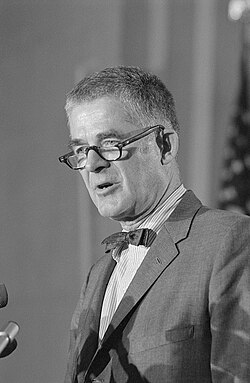
The Battle Over the Oval Office Tapes
As the investigation deepened, Cox issued a subpoena to President Richard Nixon, demanding copies of recorded conversations from the Oval Office. President Nixon refused to comply, citing executive privilege, a legal doctrine that allows the president to withhold certain communications to protect the confidentiality of the executive branch.
The legal battle reached the United States Court of Appeals for the District of Columbia Circuit, which upheld the subpoena on October 12, 1973, rejecting Nixon's claims of privilege. In an attempt to resolve the deadlock, Nixon proposed the Stennis Compromise on October 19. This plan suggested that Senator John C. Stennis of Mississippi, who was hard-of-hearing, would review the tapes and provide summaries to the special prosecutor's office. Cox refused this compromise that same evening.
The Saturday Night Massacre
While many expected a lull in legal activity over the weekend, President Nixon took drastic action on Saturday, October 20, 1973. He ordered Attorney General Elliot Richardson to fire Archibald Cox. Richardson, upholding his promise to Congress, refused the order and resigned in protest.
Nixon then turned to Deputy Attorney General William Ruckelshaus, who also refused to fire Cox and subsequently resigned. This sequence of events left the Justice Department in a state of upheaval.
Finally, Nixon ordered Solicitor General Robert Bork, acting as the head of the Justice Department, to dismiss Cox. Unlike Richardson and Ruckelshaus, Bork had not given personal assurances to congressional oversight committees regarding the prosecutor's tenure. Despite considering resignation to avoid the appearance of simply doing the president's bidding, Bork was sworn in as acting attorney general and wrote the letter dismissing Cox.
Key Facts
- Appointment: Archibald Cox was appointed in May 1973 by Elliot Richardson.
- Removal Clause: Cox could only be fired "for cause," such as gross improprieties.
- Legal Conflict: The D.C. Circuit Court rejected Nixon's claim of executive privilege regarding the Oval Office tapes.
- The Stennis Compromise: A rejected proposal for Senator John C. Stennis to summarize the tapes.
- Resignations: Both Elliot Richardson and William Ruckelshaus resigned rather than fire Cox.
- Final Action: Robert Bork eventually executed the dismissal of Cox.
| Date | Event | Outcome |
|---|---|---|
| October 12 | Court of Appeals Ruling | Subpoena for tapes upheld; executive privilege rejected. |
| October 19 | Stennis Compromise | Cox refuses the proposal to have tapes summarized. |
| October 20 | Nixon's Orders | Richardson and Ruckelshaus resign; Bork fires Cox. |
Frequently Asked Questions
Why was Archibald Cox appointed as a special prosecutor?
He was appointed to investigate the events surrounding the June 17, 1972, break-in at the Democratic National Committee's offices at the Watergate Hotel.
What does "for cause" mean in the context of Cox's employment?
It meant that the attorney general could only remove the special prosecutor for specific reasons of misconduct, such as malfeasance in office or gross improprieties, rather than for political reasons.
What was the Stennis Compromise?
It was a proposal by President Nixon for Senator John C. Stennis to review the Oval Office tapes and provide summaries to the prosecutor's office instead of releasing the tapes themselves.
Who eventually fired Archibald Cox?
Robert Bork, serving as the acting attorney general, wrote the letter dismissing Cox after Elliot Richardson and William Ruckelshaus resigned in protest.
What is executive privilege?
Executive privilege is the claim that the president can withhold certain information or communications from the legislative and judicial branches to protect the functioning of the executive office.