Araceae: A Deep Dive into the Diverse World of Aroids
The Araceae, commonly known as the arum family or aroids, represent one of the most fascinating and diverse groups of flowering plants on Earth. Comprising approximately 114 genera and roughly 3,750 known species, these monocotyledonous plants thrive in environments ranging from the tropical New World to northern temperate regions and the Old World tropics. From tiny aquatic duckweeds to the massive, towering titan arum, the family showcases an incredible breadth of biological adaptation.

Key Facts
- Diversity: Approximately 3,750 species across 114 genera.
- Distinctive Anatomy: Flowers are held on a spadix (a spike-like structure) often surrounded by a spathe (a leaf-like bract).
- Thermogenesis: Some species can generate heat up to 45 °C to attract pollinators.
- Toxicity: Most species contain irritating calcium oxalate crystals (raphides).
- Evolutionary History: One of the oldest angiosperm families, with fossils dating back to the Early Cretaceous.
Botanical Characteristics and Anatomy
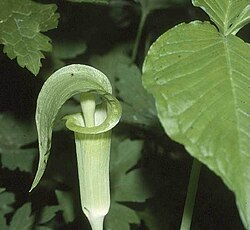
A defining feature of the Araceae is their unique inflorescence. Unlike many flowers, aroids bear their flowers on a spadix, a fleshy spike that can resemble a corn cob. This structure is frequently accompanied or partially enclosed by a spathe, which is a modified, leaf-like bract.
The reproductive strategies within the family are varied. In monoecious species—those possessing both male and female flowers on a single plant—the spadix is typically organized with female flowers at the base and male flowers at the top. To prevent self-fertilization, some species possess perfect flowers where the stigma becomes unreceptive by the time pollen is released. Other species are dioecious, meaning male and female flowers are located on separate plants.
Growth Habits and Morphology
Aroids exhibit a wide array of growth forms. Many species are rhizomatous (having underground stems) or tuberous. Others have adapted to life as epiphytes (growing on other plants), creeping lianas, or vining plants. While foliage varies significantly between genera, the presence of irritating tissues is a common thread throughout the family.
Thermogenesis and Pollination Strategies
One of the most remarkable traits found in several aroid species is thermogenesis, the ability to produce heat. Certain plants, such as the eastern skunk-cabbage (*Symplocarpus foetidus*) and the titan arum (*Amorphophallus titanum*), can raise their floral temperature to 45 °C, even when the surrounding air is much colder.
This heat production serves two primary purposes: it helps protect plant tissues in cold climates and assists in the dispersal of scents to attract pollinators. For instance, species like the dead-horse arum lily (*Helicodiceros muscivorus*) and the voodoo lily (*Sauromatum venosum*) emit pungent odors resembling rotten meat to lure flies. The heat generated by the plant helps carry these scents further into the environment, ensuring successful pollination.
Toxicity and Safety Precautions
While many aroids are aesthetically pleasing or even edible when prepared correctly, they carry a significant chemical defense: calcium oxalate crystals, specifically in the form of needle-like raphides.
Ingesting raw aroid vegetation can lead to serious health issues, including:
- Edema (swelling) and vesicle formation.
- Dysphagia (difficulty swallowing).
- Intense stinging or burning sensations in the mouth and throat.
- In severe cases, anaphylactic shock, which can cause throat swelling and restrict breathing.
The genus Dieffenbachia is famously nicknamed "dumb-cane" due to these effects. However, because these irritating compounds are widespread across the family, this caution applies to many genera. It is important to note that certain genera, such as Alocasia, Colocasia, and Xanthosoma, can have their foliage consumed if cooked, and the fruit of Monstera deliciosa is edible when ripe.
Classification and Taxonomy
The history of Araceae classification has evolved significantly. While early observations were recorded by Theophrastus, the family was not recognized as a distinct group until the 16th century. In the 18th century, Antoine Laurent de Jussieu categorized them based on whether they were climbing or terrestrial.
The 19th century saw competing classification systems: Heinrich Wilhelm Schott focused on floral characteristics, while Adolf Engler emphasized vegetative anatomy. Modern taxonomy, driven by molecular phylogenetics and gene sequencing, now recognizes the Araceae as a monophyletic group (descended from a common ancestor). This modern understanding also includes the duckweeds (formerly the family Lemnaceae) as part of the Araceae.
Economic and Culinary Importance
Aroids play a significant role in both global horticulture and local subsistence agriculture. Many genera are highly valued as ornamental plants, including Anthurium, Monstera, Philodendron, and Spathiphyllum. In the aquarium trade, aquatic genera like Anubias and Cryptocoryne are highly prized.
In terms of food, several species are cultivated for their starch-rich corms. Notable examples include:
- Colocasia esculenta (Taro/Dasheen)
- Xanthosoma (Cocoyam/Tannia)
- Amorphophallus paeoniifolius (Elephant-foot yam)
- Monstera deliciosa (Mexican breadfruit)
Despite their importance, many of these are considered "orphan crops" by organizations like the Crop Trust, as they receive less attention from international plant breeders compared to major staples.
Summary of Araceae Characteristics
| Feature | Description |
|---|---|
| Inflorescence Type | Spadix surrounded by a spathe |
| Key Defense | Calcium oxalate crystals (raphides) |
| Notable Traits | Thermogenesis and pungent scents |
| Common Uses | Ornamental foliage and starch-rich corms |
| Extreme Examples | Titan Arum (largest inflorescence); Wolffia (smallest flower/fruit) |
Frequently Asked Questions
What is the difference between a spadix and a spathe?
The spadix is the fleshy, spike-like structure that holds the actual flowers, while the spathe is the modified, leaf-like bract that typically surrounds or partially encloses the spadix.
Why do some aroids smell like rotten meat?
Certain species, such as the titan arum, produce a pungent odor similar to decaying flesh to attract flies and beetles for pollination. The heat produced by the plant (thermogenesis) helps to broadcast this scent over longer distances.
Are all aroids poisonous?
Most species in the Araceae family contain irritating calcium oxalate crystals. While some species can be eaten safely if properly cooked (like taro), many others can cause painful swelling, burning, or even anaphylactic shock if ingested raw.
What is the largest flower in the Araceae family?
The titan arum (*Amorphophallus titanum*) produces the largest unbranched inflorescence in the world. While often called the "largest flower," it is technically a collection of many small flowers on a spadix.
Is duckweed part of the Araceae family?
Yes. Modern molecular studies and the APG III system recognize duckweeds (formerly classified in the family Lemnaceae) as being part of the Araceae family.