App Store Evolution: From 500 Apps to a Global Digital Powerhouse
Since its debut, the App Store has fundamentally transformed how we interact with technology. Developed by Apple, this digital distribution platform has grown from a niche software repository into a massive ecosystem that powers mobile and desktop computing across multiple operating systems.
Originally launched on July 10, 2008, the App Store serves as the primary gateway for software on iOS, iPadOS, macOS, watchOS, tvOS, and visionOS. While it began as a way to expand the capabilities of the iPhone, it has since expanded into a multi-platform powerhouse, including the dedicated Mac App Store launched in January 2011.

Key Facts
- Initial Launch: July 10, 2008, with only 500 available apps.
- Supported OS: iOS, macOS, iPadOS, watchOS, tvOS, and visionOS.
- Massive Scale: Cumulative downloads have surpassed hundreds of billions over the years.
- Platform Reach: Includes a dedicated version for macOS users.
- Content Diversity: Hosts everything from productivity tools to high-end mobile games.
The Rapid Growth of App Downloads
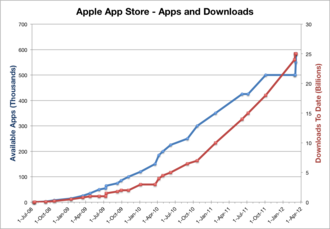
The trajectory of the App Store is marked by explosive growth. In its first few days, the platform saw a rapid climb from 500 apps to 800 apps, with downloads quickly reaching the 10 million mark. By 2013, the ecosystem had surpassed 1 million available apps and 60 billion cumulative downloads.
The scale of adoption is best understood through the milestones of app availability and total downloads. As the number of developers increased, so did the variety of software available to users.
| Date | Available Apps | Downloads to Date |
|---|---|---|
| July 11, 2008 | 500 | 0 |
| September 9, 2008 | 3,000 | 100,000,000 |
| January 5, 2010 | 140,000+ | 3,000,000,000+ |
| January 22, 2011 | 350,000+ | 10,000,000,000+ |
| October 22, 2013 | 1,000,000+ | 60,000,000,000+ |
| June 8, 2015 | 1,500,000+ | 100,000,000,000+ |
| June 13, 2016 | 2,000,000+ | 130,000,000,000+ |
Popularity Trends: Apps and Games
The "killer apps" of the App Store change with the eras. In the mid-2010s, games like Trivia Crack and Crossy Road dominated the charts. By 2024, the landscape shifted toward social media giants and utility tools like TikTok, Threads, and ChatGPT.
Top Performing Apps (All-Time)
- General Apps: WhatsApp, Facebook, Instagram, Messenger, and TikTok.
- Games: Candy Crush Saga, Subway Surfers, Fruit Ninja, and Clash of Clans.
iPad-Specific Software
The iPad has also seen a significant surge in native application development. From just 3,000 apps in April 2010, the number of native iPad applications grew to over 1 million by March 2016.
App Ratings and Safety
To ensure user safety, Apple utilizes a standardized age rating system. This helps parents and users understand the nature of the content before downloading. The current rating categories include:
- 4+: Contains no objectionable material.
- 9+
- 13+
- 16+
- 18+
Note that older rating systems previously used 12+ and 17+ designations.
Frequently Asked Questions
Which operating systems use the App Store?
The App Store is available across Apple's entire ecosystem, including iOS, iPadOS, macOS, watchOS, tvOS, and visionOS.
When was the Mac App Store released?
The Mac App Store was released on January 6, 2011.
How many apps were available at launch?
When the App Store first launched on July 10, 2008, there were 500 available apps.
What are the current age rating categories?
The current ratings are 4+, 9+, 13+, 16+, and 18+.
Has the number of apps on the store changed over time?
Yes, the number of apps has fluctuated significantly, growing from 500 in 2008 to over 2 million in 2016, before seeing different trends in subsequent years.