Anyang: Exploring the Ancient Cradle of Chinese Civilization
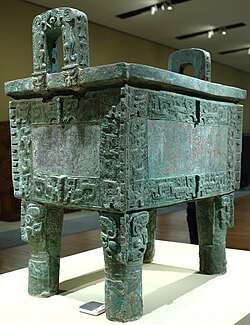
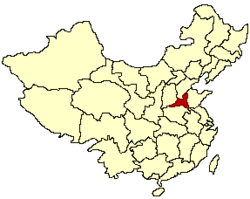
Located in the northern reaches of Henan Province, Anyang is far more than just a modern industrial hub; it is a gateway to China's deepest past. As one of the eight ancient capitals of China, Anyang serves as a living museum, housing the remains of the Shang dynasty and acting as a primary birthplace of Chinese culture. From the legendary sage-kings of antiquity to the sophisticated bronze artistry of the Yin era, Anyang offers an unparalleled journey through thousands of years of human history.
Key Facts
- Historical Significance: Home to the ancient capital of Yin, the first stable capital of China.
- UNESCO Heritage: The Yinxu ruins are designated as a UNESCO World Heritage Site.
- Population: Approximately 5.48 million people (as of the 2020 census).
- Major Industries: Metal production (iron and steel), coal coking, and clothing manufacturing.
- Climate: A monsoon-influenced humid continental/semi-arid climate with hot summers and cold, dry winters.
A Journey Through Time: History and Heritage
Prehistoric and Early Dynastic Roots
The history of Anyang stretches back to the Stone Age. At Xiaonanhai, located on the western edge of the city, archaeologists have unearthed over 7,000 artifacts, including stone tools and animal bone fossils, defining the Xiaonanhai culture. Around 2000 BC, the area is said to have been the seat of power for the legendary sage-kings Zhuanxu and Emperor Ku.
The Glory of the Shang Dynasty
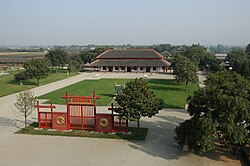
The most defining era for Anyang began in the 14th century BC when King Pangeng of the Shang dynasty established his capital, Yin, on the banks of the Huan River. This city served as the capital for 12 kings across eight generations. Under the rule of Wu Ding, the dynasty reached its peak of power before being superseded by the Zhou dynasty in 1046 BC.
The Modern Era
For much of its recent history, the town was known as Zhangde. Following the establishment of the Republic of China in 1912, it was renamed Anyang. While it briefly belonged to the experimental Pingyuan Province between 1949 and 1953, it was ultimately returned to Henan Province, where it remains a vital prefecture-level city today.
Geography and Climate
Anyang spans 7,355 square kilometers, characterized by diverse terrain. The western region features the foothills of the Taihang Mountains, while the eastern portion transitions into the fertile North China Plain. This geographical variety influences the city's climate, which experiences four distinct seasons.
The climate is monsoon-influenced, meaning much of the annual precipitation (averaging 552 mm) occurs during the hot, humid months of July and August. Winters are notably cold and dry, while summers can be intense, with temperatures occasionally reaching as high as 43.2 °C (110 °F).
Culture, Tourism, and Landmarks
Anyang is a treasure trove for historians and travelers alike. The city is home to several world-class sites, including the National Museum of Chinese Writing and the Yinxu Museum, which sits atop the royal tombs of the Shang dynasty.
Architectural Wonders
- Wenfeng Pagoda: A unique five-story dark red brick octagonal tower. It is famous for its unusual design, being larger at the top than at the bottom, and is topped with a Lamaist stupa-style steeple.
- Tianning Temple: A historic site dating back to the Tang dynasty, featuring the Hall of the Heavenly King and the Precious Hall of the Great Hero.
- Changchun Temple: A Taoist shrine built on a mountainside during the Tang dynasty.
Economic Profile and Infrastructure
Anyang maintains a robust economy driven by its industrial sector. The city is a significant player in metal production, particularly iron and steel, with major operations such as the Shagang Group. The secondary sector (industry) and tertiary sector (services) are the primary drivers of the local GDP.
To support its growing economic needs, the Anyang Hongqiqu Airport opened on November 29, 2023. This domestic civil regional airport is designed to serve millions of people across northern Henan and surrounding regions in Shanxi, Hebei, and Shandong.
City Statistics Summary
| Category | Details |
|---|---|
| Total Area | 7,355 km² |
| Population (2020) | 5,477,614 |
| GDP (2021) | CN¥ 243.55 billion |
| Administrative Divisions | 9 county-level divisions |
| Primary Sector GDP | 9.7% |
| Secondary Sector GDP | 43.7% |
| Tertiary Sector GDP | 46.6% |
Frequently Asked Questions
What is the significance of the Yinxu ruins?
The Yinxu ruins are the site of the ancient Shang dynasty capital, Yin. They are a UNESCO World Heritage Site and provide critical archaeological evidence of early Chinese civilization, including oracle bone inscriptions and royal tombs.
What makes the Wenfeng Pagoda unique?
The Wenfeng Pagoda is an architectural anomaly because it is larger at the top than at the bottom. It is a five-story octagonal brick tower that serves as a symbol of the city.
What are the main industries in Anyang?
Anyang is a major industrial center focusing on the production of metals (iron and steel), coal coking, and clothing manufacturing.
How is the climate in Anyang?
Anyang has a four-season climate. Summers are hot and humid with heavy rainfall in July and August, while winters are cold and dry.
Which famous historical figure is associated with Tangyin County?
Tangyin County was the birthplace of the famous Song dynasty general, Yue Fei.