Antártida Argentina Railway Station
Located at the intersection of Morrison Avenue and Wilde Street in the Fisherton neighborhood of Rosario, Santa Fe, the Antártida Argentina railway station stands as a testament to the evolution of Argentine transport. From its origins as a British-built hub to its modern role in regional connectivity, the station has mirrored the socio-economic shifts of the region.
Key Facts
- Location: Fisherton, Rosario, Argentina.
- Opened: 1890.
- Line: Mitre.
- Current Operators: Trenes Argentinos (passengers) and Nuevo Central Argentino (freight).
- Peak Usage: Approximately 100,000 passengers annually between 1935 and 1940.
- Recent Milestone: Reopened for passenger services in July 2022.
Historical Evolution
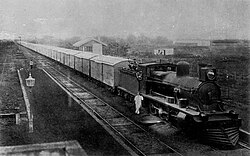
The station was established in the early 1890s by the British-owned Central Argentine Railway. Originally known as Fisherton Station, it served as the catalyst for the growth of the surrounding neighborhood, which was initially developed to house the railway company's employees.
During its early years, the station functioned as an intermediate stop on the line originating from Rosario Central Station. The journey from the terminus to Fisherton was remarkably efficient, taking no more than 15 minutes—a stark contrast to modern bus commutes which can take up to 45 minutes. Beyond Fisherton, the line extended westward, serving various towns before reaching the city of Córdoba.
Nationalization and Renaming
In 1948, under the government of Juan Perón, the Argentine railway network underwent nationalization. Several companies were merged, and the Central Córdoba Railway became part of the Ferrocarril Mitre network. Following this transition, the station was renamed "Antártida Argentina" (Argentine Antarctica) and placed under the management of the state-owned Ferrocarriles Argentinos.
Closure and Cultural Transition
The "golden age" of Argentine rail eventually faced a decline. In 1977, the government eliminated most passenger train services across the country, leading to the closure of the Antártida Argentina station. For decades, the building remained largely abandoned.
During the 1990s, the station underwent restoration. However, these efforts were met with criticism, specifically regarding the removal of a protective brick layer, which experts suggested could compromise the building's long-term durability. While the facilities were managed by the private freight company Nuevo Central Argentino (NCA), the building was lent to the Municipality of Rosario to serve as a community cultural center.
Modern Revival
The station's status changed again in July 2022. Following an extension of services from Rosario Norte to the Cañada de Gómez station by Trenes Argentinos, Antártida Argentina officially reopened for passenger traffic, restoring its original purpose as a vital transit link for the people of Rosario.
| Operator | Period | Service Type |
|---|---|---|
| Central Argentine | 1890–1948 | Passenger & Freight |
| Ferrocarriles Argentinos | 1948–1977 | Passenger & Freight |
| Nuevo Central Argentino (NCA) | 1993–Present | Freight Only |
| Trenes Argentinos | 2022–Present | Passenger |
Frequently Asked Questions
Where is the Antártida Argentina station located?
The station is located in the western neighborhood of Fisherton in Rosario, Santa Fe, Argentina, specifically at the intersection of Av. Morrison and Wilde St.
Why was the station renamed?
The station was originally called Fisherton Station. It was renamed Antártida Argentina after the nationalization of the railways in 1948 and its integration into the Ferrocarril Mitre network.
What happened to the station between 1977 and 2022?
After passenger services were cancelled in 1977, the building was largely abandoned before being restored in the 1990s. It subsequently served as a cultural center for the Municipality of Rosario while freight services continued via NCA.
Who currently operates the station?
The station is currently operated by two entities: the state-owned Trenes Argentinos for passenger services and the private company Nuevo Central Argentino (NCA) for freight transport.
Which passenger line does the station currently serve?
The station is part of the service extending from Rosario Norte to the Cañada de Gómez station.