Anglo-Irish Treaty of 1921: The Path to the Irish Free State
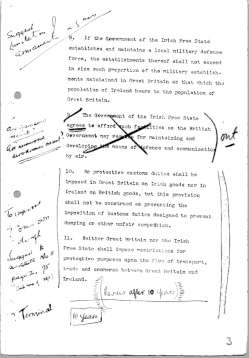
The Anglo-Irish Treaty, officially known as the Articles of Agreement for a Treaty Between Great Britain and Ireland, stands as one of the most pivotal documents in modern history. Signed on December 6, 1921, at 10 Downing Street in London, this agreement brought a formal end to the Irish War of Independence and fundamentally reshaped the political landscape of the British Isles.
The treaty established the Irish Free State as a self-governing dominion. This meant that while Ireland gained significant autonomy, it remained part of the "community of nations known as the British Empire," holding a status equivalent to that of the Dominion of Canada.
Key Facts
- Signed: December 6, 1921, at 10 Downing Street, London.
- Effective Date: March 31, 1922 (fully implemented by December 6, 1922).
- Primary Outcome: Creation of the Irish Free State.
- Northern Ireland: Granted the option to opt out of the Free State, which it subsequently did.
- Key Irish Signatories: Arthur Griffith and Michael Collins.
- Consequence: The split over the treaty's terms led directly to the Irish Civil War (1922–23).
The Negotiation Process
The treaty was the result of intense negotiations between the government of the United Kingdom and the government of the Irish Republic. The British delegation was led by Prime Minister David Lloyd George, supported by high-ranking officials including Winston Churchill (Secretary of State for the Colonies) and Lord Birkenhead.
The Irish delegation was chaired by Arthur Griffith, with Michael Collins serving as a key negotiator. Other members included Robert Barton, Eamonn Duggan, and George Gavan Duffy. The process was fraught with tension; Gavan Duffy later described the immense pressure placed on the Irish delegates to sign the agreement.
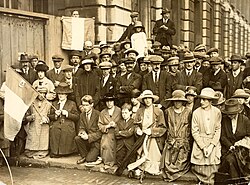
In the final stages, Collins and Griffith secured concessions regarding trade, defense, and the wording of the oath. They also included a clause upholding Irish unity and the creation of a boundary commission. The final decision to sign was reached during private discussions on December 5, 1921, before the formal signing in the early hours of December 6.
Ratification and Political Division
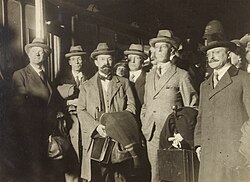
The treaty required approval from both the UK Parliament and a specific meeting of members elected to the House of Commons of Southern Ireland. While the British House of Commons and House of Lords approved the treaty on December 16, 1921, the Irish response was deeply divided.
The Second Dáil (the alternative parliamentary assembly of the Irish Republic) debated the treaty for nine days. On January 7, 1922, it was narrowly approved by a vote of 64 to 57. However, because the Dáil was not the specific body mentioned in the treaty's legal text, a separate "meeting" was convened on January 14, 1922, to formally satisfy the British legal requirements.
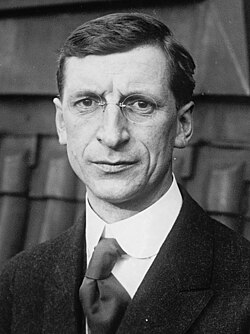
Éamon de Valera, President of the Irish Republic, strongly opposed the Treaty. He resigned from the presidency on January 9, 1922, and proposed an alternative known as Document No. 2. This division between pro-treaty and anti-treaty factions created a volatile political atmosphere.
The Aftermath and Legacy
The narrow victory for the treaty led to a catastrophic split in the Irish leadership, triggering the Irish Civil War on June 28, 1922. The conflict claimed the lives of several key figures. Arthur Griffith died of heart failure in August 1922, and Michael Collins was killed in an ambush at Béal na Bláth shortly thereafter.
Despite the violence, Michael Collins had famously argued that the treaty provided "the freedom to achieve freedom." This perspective was later echoed by de Valera himself, who acknowledged the magnificence of those who secured independence during the 1920s.
Summary of Treaty Details
| Feature | Details |
|---|---|
| Official Name | Articles of Agreement for a Treaty Between Great Britain and Ireland |
| Status Granted | Self-governing Dominion (similar to Canada) |
| Territorial Change | Establishment of Irish Free State; Northern Ireland opted out |
| UK Ratification | Irish Free State (Agreement) Act 1922 |
| Irish Ratification | Approved by Dáil (Jan 7) and "Meeting" (Jan 14) |
Frequently Asked Questions
What was the primary purpose of the Anglo-Irish Treaty?
The treaty was designed to conclude the Irish War of Independence by establishing the Irish Free State as a self-governing dominion within the British Empire.
Why did Northern Ireland remain separate from the Irish Free State?
Under Article 12 of the treaty, Northern Ireland was given the option to opt out of the Free State, a right that was exercised by the Parliament of Northern Ireland to avoid being governed by a nationalist-led state.
Who were the main opponents of the treaty in Ireland?
The treaty was opposed by anti-treaty republicans, most notably led by Éamon de Valera, who believed the agreement fell short of establishing a fully independent republic.
What happened to Michael Collins and Arthur Griffith after the treaty?
Both men died in 1922. Arthur Griffith died of heart failure due to exhaustion, and Michael Collins was killed in an ambush during the Irish Civil War.
How did the treaty lead to the Irish Civil War?
The treaty created a deep ideological divide between those who accepted the dominion status as a stepping stone to full independence and those who viewed it as a betrayal of the Irish Republic, leading to armed conflict between the two factions.