Andrea Cesalpino: The Father of Modern Botanical Classification
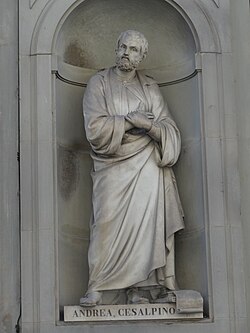
Andrea Cesalpino (1524–1603), also known by his Latinized name Andreas Cæsalpinus, was a towering figure of the Renaissance. A Florentine physician, philosopher, and botanist, Cesalpino bridged the gap between ancient Aristotelian thought and the empirical scientific methods that would define the modern era. His work laid the groundwork for how we categorize the natural world, moving science away from simple lists and toward a systematic understanding of biological structures.
Throughout his career, Cesalpino held prestigious positions at the University of Pisa and the University of Rome, eventually serving as the physician to Pope Clement VIII. His intellectual curiosity spanned multiple disciplines, from the microscopic details of seeds to the complex movement of blood within the human body.
Key Facts
- Botanical Pioneer: Created the first scientific classification of flowering plants based on fruits and seeds.
- Medical Forerunner: Proposed a "chemical circulation" of blood, predating William Harvey's physical circulation theory.
- Academic Legacy: Directed the botanical garden in Pisa from 1554 to 1558.
- Herbarium Innovator: One of the first botanists to create a formal herbarium (preserved plant collection).
- Interdisciplinary Reach: Contributed significant early insights into mineralogy, geology, and the nature of fossils.
Botanical Innovations and the Birth of Morphology
Before Cesalpino, plants were typically categorized alphabetically or by their medicinal uses. In his seminal 1583 work, De plantis libri XVI, Cesalpino revolutionized the field by introducing a system based on morphology (the study of the form and structure of organisms) and physiology.
He argued that plants should be classified according to their organs of fructification—specifically their fruits and seeds. This shift was monumental; it moved botany from a tool for pharmacists to a rigorous science. His acute observations of flowers and seeds, conducted before the invention of the microscope, heavily influenced later naturalists such as John Ray.
Cesalpino's legacy is also preserved in the physical record. In 1563, he arranged an herbarium for Bishop Alfonso Tornabuoni, which remains one of the oldest in existence. Now housed in the Museo di Storia Naturale di Firenze, this collection contains 768 species across 260 folio pages.
Contributions to Medicine and Physiology
In the realm of medicine, Cesalpino is remembered for his early theories on the circulatory system. He envisioned a "chemical circulation" where blood underwent repeated cycles of evaporation and condensation. While not entirely accurate by modern standards, this theory represented a significant leap forward and positioned him as a forerunner to William Harvey, who later theorized the "physical circulation" of blood in 1628.
Philosophy, Geology, and Mineralogy
Cesalpino was a profound thinker and an Averroistic Aristotelian, meaning he integrated the works of Aristotle with the interpretations of the Islamic philosopher Averroes. His philosophical depth is most evident in Quaestionum peripateticarum libri V (1571), though his views occasionally drew criticism from contemporaries and later scholars who debated his leanings toward pantheism.
Beyond biology, Cesalpino ventured into the earth sciences. In De metallicis libri tres (1596), he displayed a sophisticated understanding of fossils. He correctly hypothesized that fossil shells found on land had been deposited there by the sea and subsequently turned to stone as the soil consolidated—a view later cited by the influential geologist Charles Lyell.
| Work Title | Year | Primary Field | Key Contribution |
|---|---|---|---|
| Quaestionum peripateticarum libri V | 1571 | Philosophy | Original Aristotelian study |
| De plantis libri XVI | 1583 | Botany | First scientific plant classification |
| De metallicis libri tres | 1596 | Geology/Mineralogy | Correct understanding of fossils |
| Quaestionum medicarum libri duo | 1593 | Medicine | Investigations into blood circulation |
Frequently Asked Questions
How did Cesalpino change the way plants are classified?
Cesalpino moved away from alphabetical or medicinal classification, instead grouping plants based on their fruits and seeds, which established the foundation for modern plant morphology.
What was Cesalpino's theory on blood circulation?
He proposed a "chemical circulation" involving the evaporation and condensation of blood, serving as a conceptual precursor to William Harvey's discovery of physical circulation.
What is the significance of the genus Cæsalpinia?
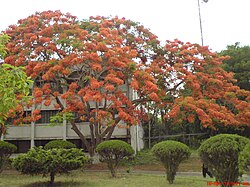
The genus Cæsalpinia (part of the Fabaceae family) was named by Charles Plumier and retained by Linnaeus to honor Cesalpino's contributions to botany.
Did Cesalpino contribute to the study of geology?
Yes, in his work De metallicis libri tres, he correctly identified that fossil shells were left on land by ancient seas and became stone through soil consolidation.
Where can Cesalpino's early botanical collections be found today?
One of his oldest herbaria, created in 1563 for Bishop Alfonso Tornabuoni, is preserved at the Museo di Storia Naturale di Firenze in Florence.