Amphibians: Biology, Evolution, and Diversity of the World's Most Adaptable Vertebrates
Amphibians are a unique class of vertebrates that bridge the gap between aquatic and terrestrial life. From the tiny frogs of New Guinea to the massive prehistoric predators of the Paleozoic era, these creatures have occupied a vital niche in Earth's ecosystems for millions of years. The scientific study of amphibians is known as batrachology, while the broader study of both reptiles and amphibians is termed herpetology.
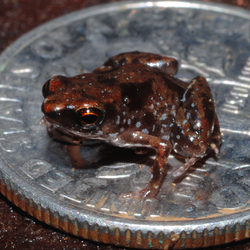
With approximately 8,000 known species, the diversity of amphibians is staggering. Nearly 90% of these species are frogs, though the class also includes salamanders and the limbless caecilians. Their physical range is equally extreme: the smallest vertebrate in the world, Paedophryne amauensis, measures just 7.7 mm, while the South China giant salamander can reach 1.8 meters in length.
Key Facts
- Species Count: Approximately 8,000 species, with frogs making up nearly 90%.
- Size Extremes: Ranges from 7.7 mm (Paedophryne amauensis) to 1.8 m (South China giant salamander).
- Temporal Range: Present from the Early Carboniferous (330 Ma) to the present day.
- Genome Diversity: Known for exceptionally large genomes, particularly in salamanders.
- Unique Traits: Many species exhibit biofluorescence—the ability to absorb light and re-emit it at a different color.
Classification and Evolutionary History
Amphibians are classified within the clade Batrachomorpha. Their evolutionary journey began roughly 330 million years ago, evolving from tetrapodomorph fish. Historically, they are divided into several key groups:
Extinct Lineages
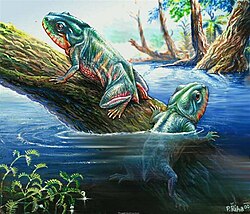
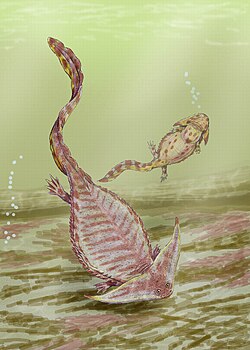
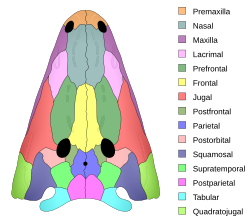
The Temnospondyli were a diverse group of Late Paleozoic and early Mesozoic amphibians, some of which were massive apex predators. Another group, the Lepospondyli, included largely aquatic species like Diplocaulus. Modern amphibians, known as Lissamphibia, are believed by many scientists to have descended from within the Temnospondyli.
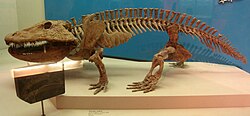
Modern Amphibians (Lissamphibia)
Modern amphibians are categorized into three distinct orders:
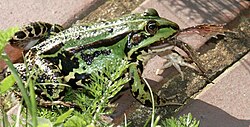
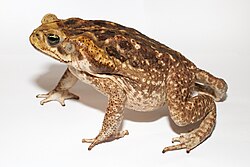
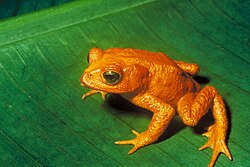
- Anura: Frogs and toads, characterized by the absence of a tail in adults and specialized limbs for jumping.
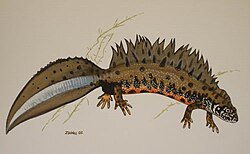
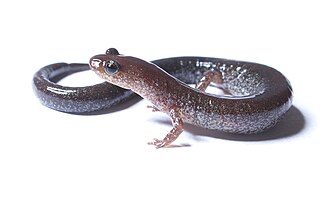
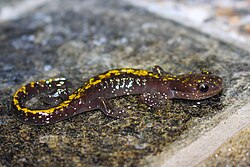
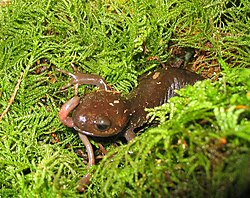
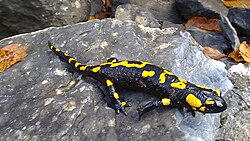
- Caudata: Salamanders and newts, which typically retain their tails throughout their lives.
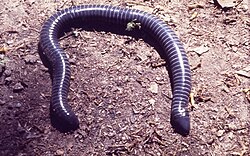
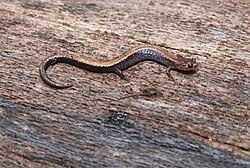
- Gymnophiona: Caecilians, limbless, serpentine amphibians that often live underground.
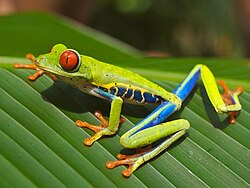
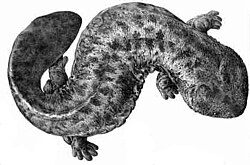
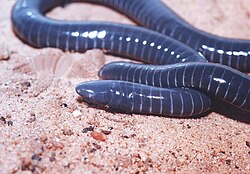
Anatomy and Physiology
Skin and Sensory Systems
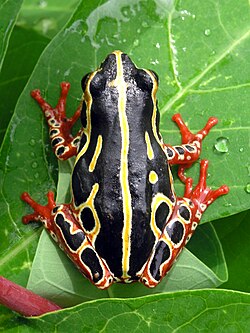
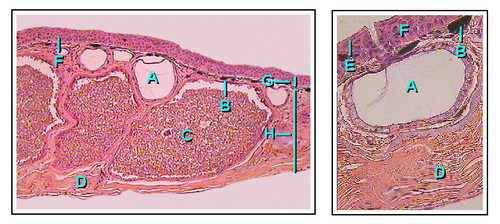
Amphibian skin is a multifunctional organ. It is often permeable, allowing for cutaneous respiration (breathing through the skin). Many species possess granular poison glands for defense and chromatophores for coloration. Some species even exhibit biofluorescence, a trait seen in various amphibians including Ceratophrys cranwelli.
![Many amphibians—like this Ceratophrys cranwelli—exhibit biofluorescence.[4]](/images/56/84/5684422ae29e8b0e76885956b02014e68f888f810f4d743f59faacddcc61abc2.png)
Circulatory and Respiratory Systems
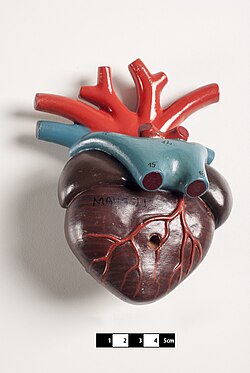
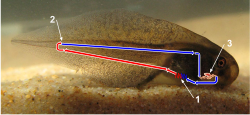
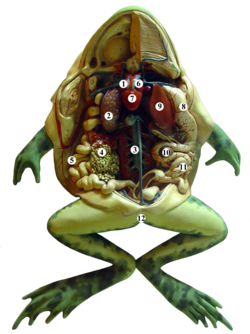
The circulatory system of amphibians evolves as they grow. Juvenile amphibians typically have a single-loop system similar to fish, utilizing internal gills. As adults, they develop a more complex system with a heart that typically consists of three chambers (two atria and one ventricle).
Genetics and Genomics
Amphibians are notable for their genomic diversity. They possess some of the largest genomes of any vertebrate. For example, genome sizes in salamanders can range from 13.89 to 120.56 pg of DNA in haploid nuclei, significantly larger than those found in frogs or caecilians.
Reproduction and Life Cycle
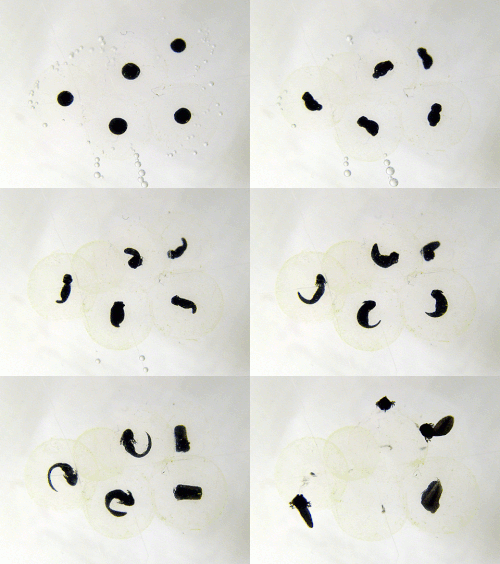
Most amphibians undergo a complex life cycle involving metamorphosis—the biological process of transforming from a larval stage to an adult stage.
Eggs and Larvae
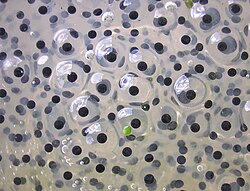
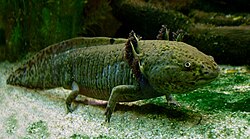
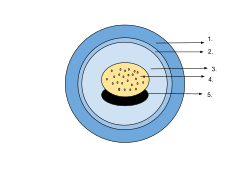
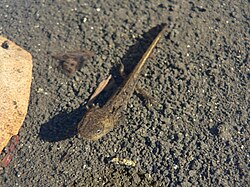
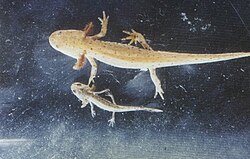
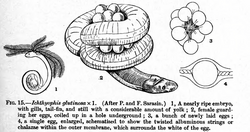
Amphibian eggs are typically laid in water and surrounded by a protective jelly capsule. The larvae, such as tadpoles in frogs, are usually aquatic and breathe through gills. Some species, like the axolotl, exhibit neoteny, meaning they retain their larval gills and aquatic form into adulthood.
Parental Care
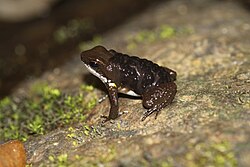
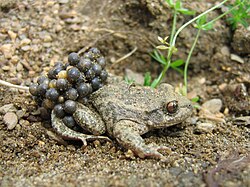
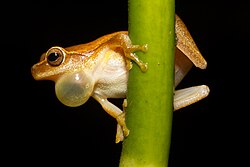
Parental investment varies wildly across species. Some frogs and toads exhibit remarkable care; for instance, the male common midwife toad carries eggs on his body, while the male common rocket frog carries tadpoles on his back.
Behavior and Defense Mechanisms
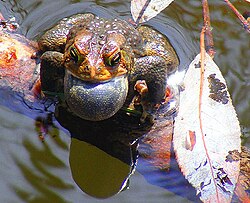
Amphibians employ a variety of strategies to survive and communicate. Many anurans use vocal sacs to inflate and produce calls for mating or territorial defense. To protect themselves from predators, some species use aposematism—bright warning colors that signal toxicity. The golden poison frog (Phyllobates terribilis) is one of the most poisonous animals on Earth.
![Perhaps the most poisonous animal in the world, the golden poison frog (Phyllobates terribilis) is endemic to Colombia.[165]](/images/b1/12/b1124aedc2e64a4d75cecaea61913da33e7eab57be33d7dee3e4ed8c57c97e3d.jpg)
| Feature | Anura (Frogs/Toads) | Caudata (Salamanders/Newts) | Gymnophiona (Caecilians) |
|---|---|---|---|
| Tail (Adult) | Absent | Present | Absent |
| Limbs | Present (Specialized) | Present | Absent |
| Primary Habitat | Semi-aquatic/Terrestrial | Semi-aquatic/Terrestrial | Fossorial (Underground) |
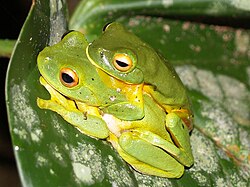
| Example Species | Red-eyed tree frog | Japanese giant salamander | Mexican burrowing caecilian |
Frequently Asked Questions
What is the difference between batrachology and herpetology?
Batrachology is the specific study of amphibians, whereas herpetology is the broader scientific study of both amphibians and reptiles.
Why are some amphibians brightly colored?
Bright colors often serve as a warning to predators that the animal is toxic or poisonous, a defense mechanism known as aposematism.
Can amphibians breathe through their skin?
Yes, many amphibians utilize cutaneous respiration, which allows them to absorb oxygen directly through their permeable skin, supplementing their lung or gill function.
What is neoteny in amphibians?
Neoteny is a condition where an animal retains its larval traits, such as external gills, throughout its entire adult life, as seen in the axolotl.
Which is the smallest vertebrate in the world?
The smallest known vertebrate is the frog Paedophryne amauensis from New Guinea, which measures only 7.7 mm in length.