American University of Beirut: A Legacy of Academic Excellence in the Middle East
The American University of Beirut (AUB) stands as a premier private institution of higher learning, blending a rich historical legacy with a forward-looking approach to global education. Founded in 1866, the university has evolved from its origins as the Syrian Protestant College into a world-renowned center for research and teaching, dedicated to the motto Ut vitam abundantius habeant ("That they may have life and have it more abundantly").
With a diverse student body and a commitment to rigorous academic standards, AUB serves as a bridge between Eastern and Western intellectual traditions. Its degrees are officially registered with the New York Board of Regents, ensuring international recognition and prestige for its graduates.
Key Facts
- Established: 1866 (formerly Syrian Protestant College until 1920).
- Endowment: $891.75 million (as of 2025).
- Campus Size: 61-acre urban campus in Beirut and a 247-acre research farm in Beqaa Valley.
- Global Reach: Graduates reside in more than 120 countries.
- Instruction Language: English.
- International Expansion: Opened its first overseas campus, AUB Mediterraneo, in Paphos, Cyprus, in 2024.
Institutional History and Leadership
AUB began its journey 160 years ago, initially operating as the Syrian Protestant College. Since its inception, the university has been led by a series of distinguished presidents who have steered the institution through periods of growth and regional challenge. The first president, Daniel L. Bliss, helped found the college and served until 1902.
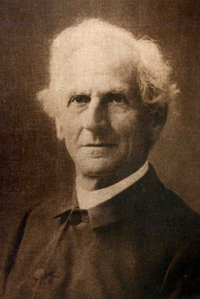
Over the decades, leadership transitioned through figures such as Bayard Dodge, Constantin Zureiq, and Malcolm H. Kerr, leading up to the current presidency of Fadlo R. Khuri, who assumed office in September 2015. This leadership has overseen the university's expansion into a modern powerhouse of education and healthcare.
Campus and Facilities
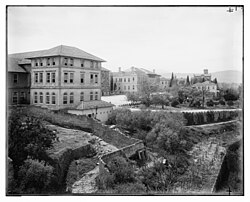
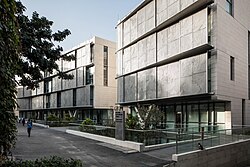
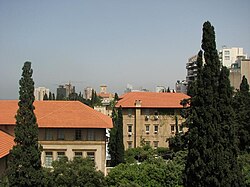
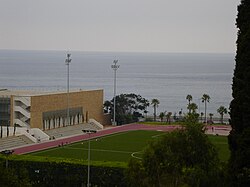
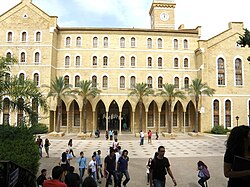
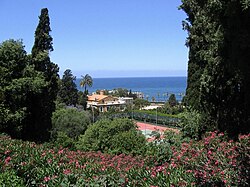
The main campus in Ras Beirut is a 61-acre urban oasis situated on a hill overlooking the Mediterranean Sea. The campus comprises 64 buildings, including seven dormitories and four libraries. Beyond the academic halls, the university hosts the Charles W. Hostler Student Center, an Archaeological Museum, and a Natural History Museum.
For specialized research, AUB maintains a 247-acre research farm and educational complex in the Beqaa Valley, managed by the Faculty of Agricultural and Food Sciences' Advancing Research Enabling Communities (AREC) center. In a significant move toward internationalization, AUB inaugurated AUB Mediterraneo in Paphos, Cyprus, on September 4, 2024, after evaluating 15 other potential countries.
Academic Structure and Accreditation
AUB is organized into several specialized faculties that provide a comprehensive range of undergraduate and postgraduate programs. The university's commitment to quality is reflected in its institutional accreditation by the Commission on Higher Education of the Middle States Association of Colleges and Schools, reaffirmed as recently as 2019.
Faculties of Study
- Faculty of Arts and Sciences (FAS)
- Faculty of Medicine (FM)
- Faculty of Health Sciences (FHS)
- Maroun Semaan Faculty of Engineering and Architecture (MSFEA)
- Suliman S. Olayan School of Business (OSB)
- Faculty of Agricultural and Food Sciences (FAFS)
- Rafic Hariri School of Nursing (HSON)
Specific program accreditations include the Rafic Hariri School of Nursing's BSN and MSN programs (CCNE) and various engineering degrees—including Civil, Computer and Communications, Electrical and Computer, and Mechanical Engineering—accredited by the Accreditation Board for Engineering and Technology (ABET).
Medical Center and Library Resources
The American University of Beirut Medical Center (AUBMC), formerly known as the American University Hospital, is a cornerstone of the institution, providing 420 beds and leading healthcare services in the region.
Supporting its academic mission is a vast library system, including the Nami Jafet Memorial Library, the Engineering and Architecture Library, and the Science and Agriculture Library. These facilities house an immense collection of print and electronic resources.
| Resource Type | Print Titles/Volumes | Electronic Titles |
|---|---|---|
| Books | 412,775 titles / 505,548 volumes | 1,098,491 |
| Periodicals | 5,776 titles / 162,727 volumes | 138,430 |
| Manuscripts | 1,373 titles / 1,408 volumes | N/A |
| Maps | 1,684 titles / 2,027 volumes | N/A |
Notable Alumni and Impact
AUB has a storied history of producing influential leaders and intellectuals. The university has celebrated the works of over 60 world-renowned authors among its alumni, with a total of approximately 250 authors having graduated from the institution.
One of the most distinguished alumnae is Angela Jurdak Khoury, who in 1938 became the first woman to earn a master's degree from AUB. She later became Lebanon's first woman diplomat and received the National Order of the Cedar in 1959.
Frequently Asked Questions
What was the original name of the American University of Beirut?
The university was established in 1866 as the Syrian Protestant College and operated under that name until 1920.
Where is AUB's first overseas campus located?
AUB's first overseas campus, AUB Mediterraneo, is located in Paphos, Cyprus, and was officially inaugurated on September 4, 2024.
Is AUB accredited internationally?
Yes, AUB holds institutional accreditation from the Middle States Association of Colleges and Schools. Additionally, its engineering programs are ABET accredited, and its nursing programs are CCNE accredited.
What is the language of instruction at AUB?
The primary language of instruction for all academic programs at the American University of Beirut is English.
How many students are enrolled at AUB?
As of 2019, the university had 9,408 students, consisting of 7,782 undergraduates and 1,626 postgraduates.