American Rock Music: A Comprehensive History of Genres and Evolution
American rock is a vast musical tapestry woven from the sounds of the 1940s and 1950s. Its foundations lie in rock and roll, rhythm and blues, and country music, while drawing additional inspiration from folk, jazz, blues, and classical traditions. Over the decades, this sonic evolution was further accelerated by the British Invasion of 1964, which catalyzed the birth of psychedelic rock and set the stage for a proliferation of diverse subgenres.
Key Facts
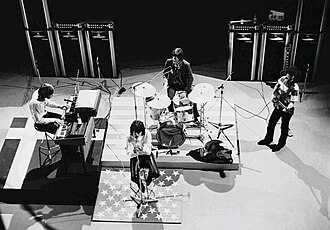
- Origins: Rooted in 1940s-50s rock and roll, R&B, and country music.
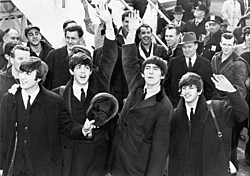
- The British Invasion: A pivotal 1964 event that reshaped American pop charts and influenced psychedelic rock.
- Fusion Era: The late 60s and early 70s saw the rise of folk rock, blues rock, country rock, and jazz rock.
- Diversification: The 1970s introduced hard rock, heavy metal, glam rock, and punk.
- Modern Era: The 1990s brought grunge and indie rock to the mainstream, followed by emo and metalcore in the 2000s.
The Foundations: Rock and Roll and the British Invasion
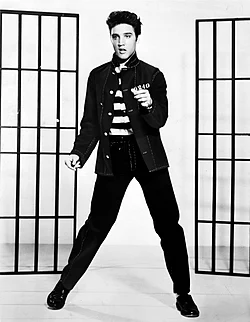
The early era of American rock was defined by the high energy of rock and roll. However, the landscape shifted dramatically in 1964 with the arrival of British bands. This period, known as the British Invasion, not only dominated the charts but also pushed American musicians toward experimentation.
This cross-pollination led to the development of psychedelic rock, a genre characterized by an LSD-inspired vibe. While the New York-based Holy Modal Rounders used the term in 1964, the 13th Floor Elevators from Texas were the first to explicitly advertise themselves as a psychedelic rock group in late 1965.
The Era of Fusion and Diversification (1960s–1970s)

By the late 1960s, rock began blending with other established styles to create fusion genres. This experimentation resulted in folk rock, country rock, roots rock, and jazz rock. One of the most enduring results was blues rock.
Early blues rock bands often mirrored jazz through long, complex improvisations. By 1967, groups like Cream began transitioning toward psychedelia. By the 1970s, the genre became heavier and more riff-based, with the lines between blues rock and hard rock becoming nearly invisible.
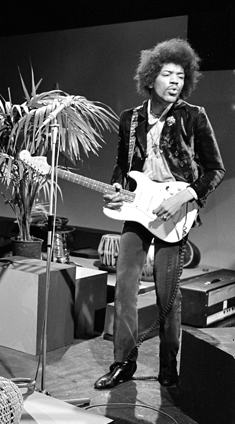
The 1970s saw an explosion of distinct subgenres. Progressive rock focused on technical complexity, while glam rock emphasized theatricality. Simultaneously, the era birthed soft rock, hard rock, and the early iterations of heavy metal.

Punk, Alternative, and the Mainstream Shift (1980s–1990s)
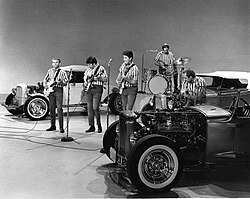
The mid-1970s brought a raw, aggressive reaction to the complexity of progressive rock: punk rock. This movement spawned several influential 1980s derivatives, including new wave, post-punk, hardcore punk, and thrash metal.

During this time, alternative rock began to emerge from the underground. By the 1990s, this movement broke into the mainstream via grunge, a gritty sound that popularized the genre worldwide. Other significant developments in this decade included indie rock and nu metal, which blended rock with rap and industrial elements.

The New Millennium and Digital Evolution (2000s–Present)
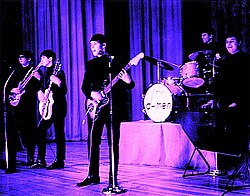
Entering the 2000s, the rock landscape continued to fragment and evolve. Emo and metalcore entered the mainstream, and there was a notable revival of garage rock and post-punk. The integration of digital technology eventually led to the rise of digital electronic rock, merging traditional instrumentation with software-driven sounds.

Below is a summary of the evolution of American rock genres across the decades.
| Era | Primary Influences/Events | Key Subgenres |
|---|---|---|
| 1950s - Early 60s | R&B, Country, Rock and Roll | Rock and Roll, Surf Music |
| Mid-to-Late 60s | British Invasion, LSD Culture | Psychedelic Rock, Folk Rock, Blues Rock |
| 1970s | Jazz, Classical, Theatricality | Hard Rock, Heavy Metal, Progressive, Punk |
| 1980s | Punk Reaction, Underground Scenes | New Wave, Post-Punk, Thrash, Alternative |
| 1990s | Underground Alternative | Grunge, Indie Rock, Nu Metal |
| 2000s+ | Digital Tech, Post-Punk Revival | Emo, Metalcore, Digital Electronic Rock |
Frequently Asked Questions





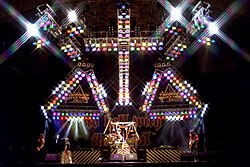


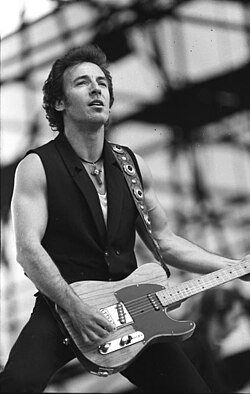






What was the impact of the British Invasion on American rock?
The British Invasion, starting in 1964, significantly influenced American pop charts and played a crucial role in the development of psychedelic rock by introducing new styles and perspectives to the US music scene.
How did blues rock evolve into hard rock?
Blues rock began with jazz-like improvisations but shifted toward a heavier, riff-based sound by the 1970s. Eventually, the distinction between blues rock and hard rock became barely visible as bands focused on heavier recording styles.
What is the difference between grunge and alternative rock?
Alternative rock is a broad category that emerged from underground scenes in the 1980s. Grunge is a specific subgenre of alternative rock that broke into the mainstream in the 1990s, characterized by its gritty sound.
Which bands were pioneers of psychedelic rock?
The Holy Modal Rounders used the term in 1964, but the 13th Floor Elevators from Texas were the first group to officially advertise themselves as a psychedelic rock band in late 1965.
How has technology affected rock music in the 21st century?
The development of digital technology has led to the creation of digital electronic rock, integrating electronic production and software into the traditional rock framework.