American March Music: History, Form, and the Legacy of the March King
American march music is a vibrant genre of music written and performed in the United States, characterized by its rhythmic precision and patriotic spirit. While deeply associated with American identity, its roots are global, stemming from European composers who borrowed elements from the military music of the Ottoman Empire starting in the 16th century. This influence traveled through the British model during the colonial and Revolutionary periods, eventually evolving into a distinct American style used for both military ceremonials and civilian entertainment.
Key Facts
- The March King: John Philip Sousa revolutionized and standardized the American march during the 19th and early 20th centuries.
- Ottoman Origins: The genre's roots lie in Ottoman military music, which used percussion to signal orders and intimidate opponents.
- Golden Era: The peak of the march music era in the U.S. spanned from the 1850s to the 1920s.
- National Symbol: "The Stars and Stripes Forever" was adopted as the national march of the United States in 1987.
- The Sousaphone: A specialized brass instrument designed by Sousa for ease of carry and forward-projecting sound in marching bands.
The Evolution of the American March
The development of the American march was a transition from functional military utility to public art. Originally, military music served to regulate army movements and signal orders in the field. The heavy use of cymbals and percussion was not only for timing but for psychological effect, as these sounds were initially unknown in Western Europe and could frighten enemies.
By the 18th and 19th centuries, a vogue for Turkish marching bands swept through Europe, influencing classical composers like Mozart, Haydn, and Beethoven. In the United States, this evolved into a widespread cultural phenomenon. Between the 1850s and 1940s, march music dominated the public sphere before gradually being overshadowed by the rise of jazz.
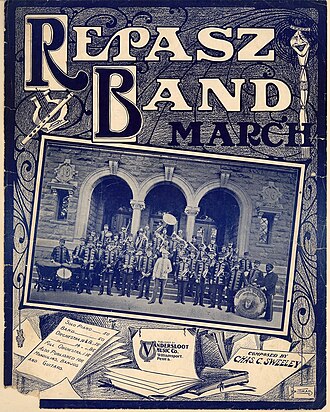
Beyond the military, the genre flourished through community and concert bands. In the late 19th century, many U.S. towns and companies formed their own bands to perform at parades and gazebo concerts. Prolific composers such as Karl L. King and Henry Fillmore provided a steady stream of published music, helping the genre spread rapidly across the country.

John Philip Sousa and the Standardization of the Genre
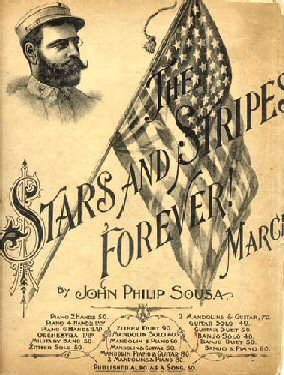
No figure is more central to the American march than John Philip Sousa. Known as "The March King," Sousa standardized the military march form and expanded the capabilities of the concert band. He composed 137 marches and over 80 other significant works, including operettas and suites.
Sousa's compositions are celebrated for their rousing themes and technical brilliance. His magnum opus, "The Stars and Stripes Forever," is world-renowned for its piccolo obligato—a prominent, decorative melodic line played by the piccolo that floats above the rest of the band.
The Sousaphone
To improve the practicality of marching, Sousa directed the design of the sousaphone. This instrument was specifically adapted for marching bands, offering a more comfortable carry and a sound that projects forward toward the audience, unlike the traditional tuba.
Musical Structure and Form
Most American marches follow a strict structure derived from the sonata form, utilizing contrasting sections to maintain interest.
Meter and Tempo
Marches typically use two primary meters:
- Cut Time (2/2): The most common march feel.
- 6/8 Time: Played "in two," this creates a triplet, dance-like swing beat (e.g., "The Washington Post").
The Military March Form
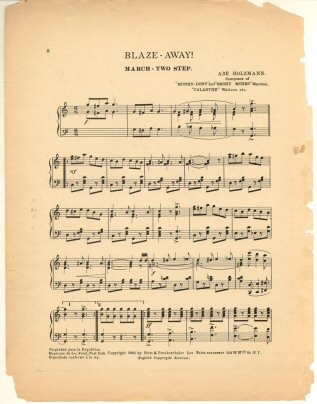
A standard military march is generally organized into the following sections:
- Introduction (Fanfare): A short, loud section (4 to 16 bars) designed to capture attention.
- First Strain: The primary melody, usually 8 or 16 bars long, often rhythmically straightforward.
- Second Strain: A second primary melody that often introduces more complex dynamics or modulations.
- Breakstrain: A transitional section that builds tension before the final resolution.
- Trio: A contrasting, often more lyrical section. In Sousa's work, this is frequently "subdued" to highlight a solo instrument.
Instrumentation of the Modern March Band
While early bands varied based on the composer's personal ensemble, modern arrangements typically follow a standardized scoring to ensure a full, balanced sound.
| Section | Typical Instruments |
|---|---|
| Woodwinds | Piccolo, Flutes, Oboes, Bassoons, Clarinets (Eb, Bb, Bass), Saxophones (Alto, Tenor, Baritone) |
| Brass | Trumpets, Cornets, French Horns, Trombones, Euphonium, Tuba, Sousaphone |
| Percussion | Timpani, Bass Drum, Cymbals, Snare Drum, Triangle, Glockenspiel |
| Strings/Other | String Bass, Harp (occasional) |
Within the ensemble, specific roles are assigned for stylistic effect. For instance, French horns typically provide the rhythmic backup, playing the upbeats to create the classic "oom-pah" sound in cut-time marches.
Notable Composers and Works
While Sousa is the most famous, several other composers contributed significantly to the repertoire. Karl L. King was known as the "Circus Music King," and Henry Fillmore was dubbed the "Trombone King." Even modern composers like John Williams continue the tradition with cinematic marches such as "The Imperial March."
Frequently Asked Questions
What is a piccolo obligato?
A piccolo obligato is a secondary, prominent melodic line played by the piccolo that runs alongside the main melody, most famously heard in Sousa's "The Stars and Stripes Forever."
How does a 6/8 march differ from a standard march?
A 6/8 march has a more dance-like, swinging feel compared to the straightforward drive of a cut-time march, often characterized by a "da-bah-da-bah" rhythmic pattern.
What is the purpose of the breakstrain?
The breakstrain serves as a bridge between the primary strains and the trio, typically building musical tension that resolves when the final section begins.
Why was the sousaphone invented?
The sousaphone was designed by John Philip Sousa to be easier for musicians to carry while marching and to project sound forward toward the audience rather than upward or backward.
Where did American march music originate?
It originated from European military music, which had been heavily influenced by the military bands of the Ottoman Empire since the 16th century.