American Film Institute: Preserving Cinema Heritage and Educating Future Filmmakers
The American Film Institute (AFI) is a premier nonprofit organization dedicated to the art of motion pictures in the United States. By balancing the preservation of cinematic history with the education of emerging talent, AFI serves as a vital bridge between the golden age of Hollywood and the future of digital storytelling. Supported by private funding and public membership fees, the institute operates as a hub for filmmakers, historians, and cinephiles alike.
Key Facts
- Founded: June 5, 1967, following a presidential mandate by Lyndon B. Johnson.
- Mission: To educate filmmakers and honor the heritage of American cinema.
- Headquarters: An eight-acre campus in Los Angeles, California.
- Key Leadership: Led by President and CEO Bob Gazzale, with Kathleen Kennedy (Board of Trustees Chair) and Robert A. Daly (Board of Directors Chair).
- Global Standing: Operates the world's largest nonprofit film exhibition program.
The History and Evolution of AFI
The origins of the American Film Institute date back to 1965, when President Lyndon B. Johnson announced a mandate in the White House Rose Garden to create a national arts organization. The goal was threefold: preserve the legacy of American film, educate new filmmakers, and honor the artists who shaped the medium. Officially established in 1967, the institute received early support from the Ford Foundation, the Motion Picture Association of America, and the National Endowment for the Arts.
The founding Board of Trustees featured legendary figures such as actor Gregory Peck as chairman and Sidney Poitier as vice-chairman, alongside director Francis Ford Coppola. Over the decades, AFI expanded its reach, moving to its current Hollywood campus in 1981 and evolving its training programs into a world-class accredited graduate school.
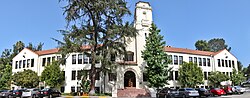
The AFI Conservatory: Training the Next Generation
Established in 1969, the AFI Conservatory began at the Doheny Mansion in Beverly Hills before growing into a highly selective accredited graduate school. The program is designed to mirror a professional production environment, allowing Fellows to collaborate on more films than almost any other graduate-level program. Admission is strictly limited to a maximum of 140 graduates per year.
The Conservatory provides specialized training in six core filmmaking disciplines:
- Cinematography
- Directing
- Editing
- Producing
- Production Design
- Screenwriting
Under the artistic leadership of figures like James L. Brooks, the Conservatory has produced alumni who have earned Academy Awards, Emmys, Tonys, and various guild awards.
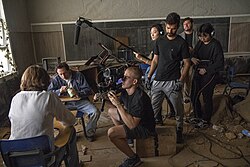
Cultural Programs and Global Influence
Beyond education, AFI maintains a vast array of programs that celebrate artistic excellence and provide scholarly resources for the industry.
Film Festivals and Exhibition
AFI operates two major festivals: AFI Fest in Los Angeles and AFI Docs in Washington, D.C. and Silver Spring, Maryland. AFI Fest is unique for being a high-stature festival that remains free to the public. Its "Red Carpet Premieres" section often showcases films that later receive Academy Award Best Picture nominations, such as La La Land, The Father, and Maestro.
Preservation and Research
The AFI Catalog of Feature Films, launched in 1968, is a comprehensive web-based database. It serves as a scholarly tool for historians, containing entries for over 60,000 feature films and 17,000 short films produced between 1893 and 2011.
Awards and Recognition
AFI is well-known for its non-competitive awards, including the AFI Life Achievement Award (established in 1973) and the annual AFI Awards, which recognize the ten most outstanding movies and television programs of the year.
Empowering Women in Cinema
The AFI Directing Workshop for Women is a tuition-free, year-long production program. It is specifically designed to increase the number of professional women screen directors through mentoring and hands-on training. Notable alumnae include Maya Angelou, Anne Bancroft, and Lily Tomlin.
AFI Program Summary
| Program | Primary Focus | Key Feature |
|---|---|---|
| AFI Conservatory | Graduate Education | 6 filmmaking disciplines; highly selective |
| AFI Fest | Film Festival | Free to the public; Oscar-qualifying shorts |
| AFI Docs | Documentary Festival | Attracts over 27,000 enthusiasts annually |
| AFI Catalog | Filmography Database | Records of 60,000+ feature films |
| Directing Workshop for Women | Professional Mentorship | Tuition-free training for women directors |
| AFI Silver Theatre | Exhibition Center | Historic 1938 venue in Maryland |
Frequently Asked Questions
What is the purpose of the American Film Institute?
AFI is a nonprofit organization dedicated to educating the next generation of filmmakers and preserving the history and heritage of the motion picture arts in the United States.
How selective is the AFI Conservatory?
The AFI Conservatory is highly selective, limiting its annual graduating class to a maximum of 140 students across six filmmaking disciplines.
Is AFI Fest free to attend?
Yes, AFI Fest is the only festival of its stature that is free to the public, showcasing a mix of independent American and foreign films.
What is the AFI Catalog of Feature Films?
It is a scholarly, web-based filmographic database that documents over 60,000 feature films and 17,000 short films produced from 1893 to 2011.
Who can participate in the Directing Workshop for Women?
The program is designed for women seeking to increase their professional presence in screen directing; it is a tuition-free, year-long program requiring the completion of a short film.