American Bison: A Legacy of Resilience and Recovery
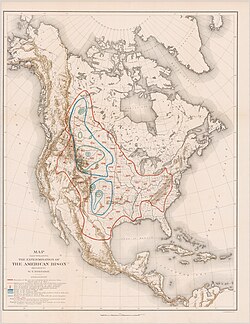
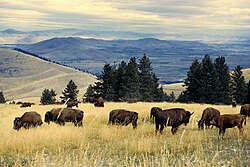
The American bison (*Bison bison*) stands as one of the most iconic symbols of the North American wilderness. From the vast grasslands of the Great Plains to the rugged landscapes of the north, these massive mammals have shaped ecosystems and cultures for millennia. Once numbering in the tens of millions, the bison faced a catastrophic decline that brought the species to the brink of extinction, only to undergo one of the most significant conservation recoveries in natural history.
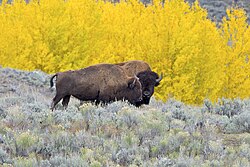
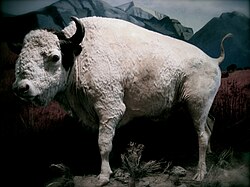
Belonging to the family Bovidae, the American bison is a heavy-bodied ruminant characterized by its massive shoulder hump and distinctive horns. Today, the species is categorized as Near Threatened by the IUCN, reflecting a population that has rebounded significantly but still requires careful management to ensure long-term genetic health and habitat stability.
Key Facts
- Scientific Name: Bison bison
- Subspecies: Plains bison (*B. b. bison*) and Wood bison (*B. b. athabascae*)
- Conservation Status: Near Threatened (IUCN 3.1)
- Estimated Population (2010): 400,000 to 500,000
- Wild Population: Approximately 15,000 are considered wild and free-range.
Subspecies and Classification
The American bison is divided into two primary subspecies, each adapted to different environments:
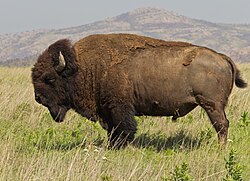
Plains Bison (*Bison bison bison*)
The plains bison is the most widely recognized subspecies, historically inhabiting the vast grasslands of central North America. They are well-adapted to open prairies and shortgrass ecosystems.
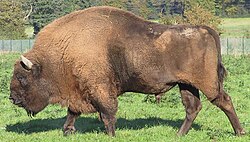
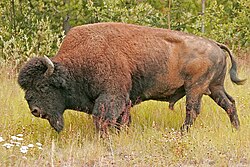
Wood Bison (*Bison bison athabascae*)
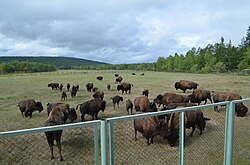
The wood bison is typically found in more heavily forested or northern regions. While some scientific discussions debate whether the wood bison is a distinct species or an ecotype, it remains a vital component of northern biodiversity.
A History of Near Extinction
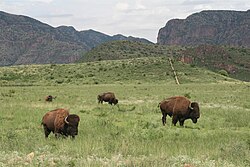
The history of the American bison is marked by a dramatic population bottleneck. In the pre-1800 era, estimates suggest there were as many as 60,000,000 bison roaming the continent. However, rapid changes in the 19th century led to a devastating collapse.
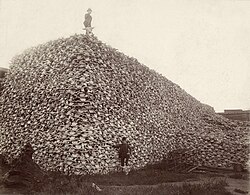
By 1889, the number of bison in the United States had plummeted to just 541 individuals. By 1900, that number dropped to approximately 300. This extreme reduction was driven by intensive hunting and habitat loss, leaving the species with a dangerously narrow genetic base.
The Impact of Population Bottlenecks
Extreme population bottlenecks can have lasting biological consequences. For example, the Texas State Bison Herd serves as a cautionary tale; due to its limited genetic diversity, it experienced an average natality (birth) rate of only 0.376 offspring per female and a high first-year mortality rate of 52.6% between 1997 and 2002. In contrast, other healthy herds maintained a natality rate of 0.560 and a much lower mortality rate of 4.2%.
Population Recovery and Modern Status
Through dedicated conservation efforts and the introduction of new individuals into isolated groups, bison populations have seen a remarkable resurgence. The Yellowstone National Park herd is a prime example of this success; after receiving new individuals in 1902 to bolster its numbers, the herd grew to approximately 5,900 individuals by mid-2022.
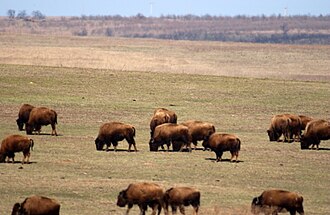
As of 2010, the total population was estimated between 400,000 and 500,000. This includes approximately 20,500 animals held in 62 conservation herds and roughly 6,400 commercial herds. While the numbers are much higher than the lows of the 1800s, the distinction between wild, free-range bison and those in managed or commercial settings remains important for conservationists.
| Year | Estimated Population |
|---|---|
| Pre-1800 | 60,000,000 |
| 1830 | 40,000,000 |
| 1870 | 5,500,000 |
| 1880 | 395,000 |
| 1889 | 541 (U.S.) |
| 1900 | 300 (U.S.) |
| 1951 | 23,340 |
| 2017 | 500,000 |
Ecology and Behavior
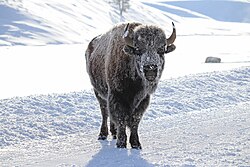
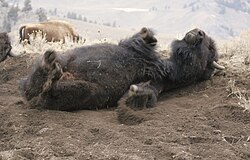
Bison are highly social animals that exhibit complex behaviors. They often live in herds, which provide protection and social structure. Their ecology is deeply intertwined with the landscapes they inhabit, from grazing on prairies to wallowing in the dirt to manage parasites and coat health.
Social Dynamics and Reproduction
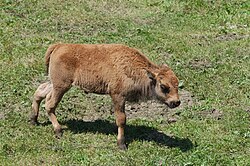
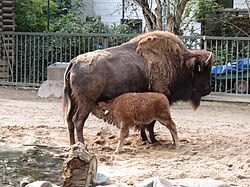
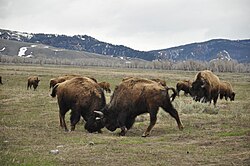
Reproduction and social hierarchy are central to bison life. Dominance is often established through physical interactions, and birth synchrony can play a role in survival strategies against predators. The life cycle begins with the calf, which requires significant care from the herd.
Predation and Survival
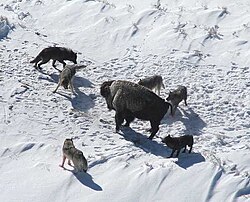
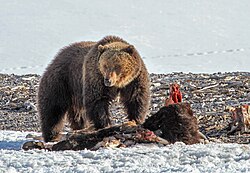
In the wild, bison are part of a complex food web. They face predation from animals such as wolves and grizzly bears. While adult bison are formidable and can defend themselves, calves and weakened individuals are more vulnerable to these predators.
Frequently Asked Questions
What is the difference between a bison and a buffalo?
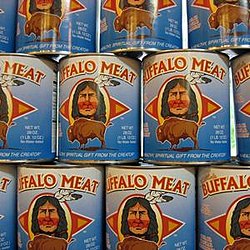
While the terms are often used interchangeably in common English, "buffalo" typically refers to species in the genus Bubalus (such as the African water buffalo), whereas the animals native to North America are scientifically classified as bison.
Are bison dangerous to humans?
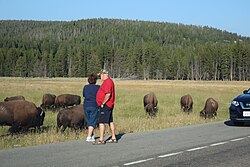
Yes, bison are wild animals and can be unpredictable and aggressive. It is important to maintain a safe distance, especially when they are near herds or in close proximity to tourists.
What are the two subspecies of American bison?
The two recognized subspecies are the plains bison (*Bison bison bison*) and the wood bison (*Bison bison athabascae*).
How did the bison population decrease so rapidly?
The population collapse in the 19th century was primarily due to intensive hunting and the loss of their natural habitats.
What is a "wallow" in bison behavior?
Wallowing is a behavior where bison roll in dirt or dust. This helps them manage parasites, shed hair, and create depressions in the ground that can influence local ecology.
Can bison be domesticated?
While there are commercial herds and some crossbreeding with domestic cattle (often resulting in hybrids), the American bison is primarily managed as a wild or semi-wild species for conservation and ecological purposes.