Alpine Gardens: Cultivating High-Altitude Flora in Your Own Backyard
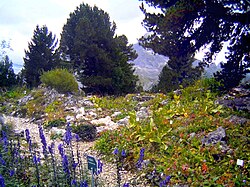
An alpine garden—also known as an alpinum or alpinarium—is a specialized horticultural space dedicated to the collection and cultivation of plants that naturally thrive at high altitudes. While often integrated into larger landscapes, these gardens focus specifically on species from the world's most rugged mountain ranges, including the Alps, Himalayas, Andes, Rockies, Pyrenees, and the Caucasus.
Though frequently categorized as a type of rock garden, the primary focus of an alpine garden is the plants themselves rather than the stones. Scientifically, alpine plants are defined by their ability to grow above the tree line in mountainous regions, where environmental conditions often prevent the development of woody tissues. In a horticultural context, any hardy, small-stature plant capable of surviving in troughs, raised beds, or rock gardens is considered an alpine species.
Key Facts
- Primary Focus: The cultivation of high-altitude plants rather than just rock arrangements.
- Growth Habit: Plants are typically small in stature and exceptionally hardy.
- Soil Requirements: They require poor, sandy, and extremely well-drained soil.
- Historical Milestone: The first true alpine garden was created by Anton Kerner von Marilaun in 1875 on Blaser Mountain, Austria.
- Climate Challenges: Excessive moisture and standing water during winter can be detrimental to alpine species.
Designing the Ideal Alpine Environment
To succeed, an alpine garden must attempt to imitate the natural conditions of the plants' place of origin. This often involves using gravel beds and large stones instead of standard garden soil. Because alpine plants are adapted to harsh, well-drained environments, they are highly susceptible to rot if they sit in damp soil during the winter months.
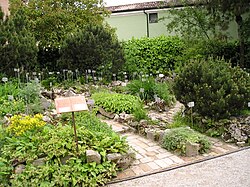
Creating these conditions can be challenging in regions with heavy rainfall or mild, wet winters, such as the United Kingdom or Ireland. To mitigate these risks, gardeners may use an alpine house—an unheated greenhouse designed to replicate ideal mountain conditions—or protect plants with a raised sheet of glass during the winter season.
Common Alpine Vegetation
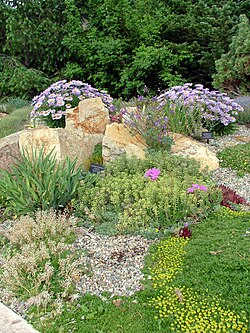
A diverse alpine garden features a variety of resilient species. Common plants include:
- Androsace and Saxifraga species
- Arabis alpina (rock cress)
- Campanula and Primula species
- Dianthus and Phlox subulata
- Gentiana and Leontopodium
- Sedum spathulifolium (stonecrop)
- Thymus (thyme) and Ranunculus (buttercup)
- Pulsatilla vulgaris (pasque flower)
Global Alpine Gardens and Botanical Collections
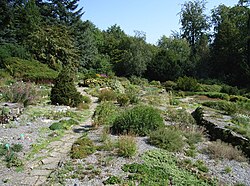
Many botanical gardens around the world maintain specialized alpine sections or alpine houses to preserve these unique species. Below is a summary of notable locations:
| Country | Notable Garden/Institution |
|---|---|
| Austria | Botanical Garden of the University of Innsbruck |
| Canada | Jardin botanique de Montréal; University of Alberta Botanic Garden |
| Germany | Botanischer Garten Berlin; Botanischer Garten München-Nymphenburg |
| Italy | Orto botanico di Padova |
| United Kingdom | Royal Botanic Gardens, Kew; RHS Wisley |
| United States | Betty Ford Alpine Gardens; Denver Botanic Gardens |
Frequently Asked Questions
What is the difference between an alpine garden and a rock garden?
While they are closely related, a rock garden focuses on the arrangement of stones, whereas an alpine garden focuses specifically on the cultivation of plants that grow above the tree line in mountainous regions.
Do alpine plants need rocks to grow?
No. While rocks are often used to help with drainage and mimic natural habitats, the focus of the garden is the alpine plants, which can also be grown in troughs or raised beds.
Why is drainage so important for alpine plants?
Alpine plants are adapted to environments where water drains away quickly. They are particularly vulnerable to damage if they sit in damp or waterlogged soil, especially during the winter months.
What is an alpine house?
An alpine house is an unheated greenhouse used to reproduce the specific environmental conditions required by alpine plants, helping to protect them from unsuitable local climates.
Where was the first true alpine garden established?
The first true alpine garden was established in 1875 by Anton Kerner von Marilaun on Blaser Mountain in Tyrol, Austria, at an altitude of 2,190 meters.