Alien Status in International and Domestic Law
In legal terms, an alien is a foreign-born resident who has not undergone naturalization—the legal process of acquiring citizenship in a host country—and remains a citizen or subject of another nation. While the core concept remains consistent, the specific definitions and terminology used to describe non-citizens vary significantly across different global legal systems.
Lexicology and Origins
The term "alien" originates from the Latin word alienus, which historically referred to a stranger, a foreigner, or someone not related by blood. In modern legal and social contexts, similar terms include "foreigner" or "lander." Over time, the usage of these terms has evolved, reflecting changing political climates and social sensitivities regarding national identity and belonging.
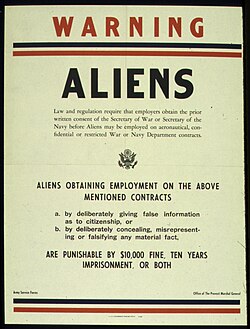
General Categories of Non-Citizens
Countries employ various classifications to determine the rights and restrictions of foreign nationals. These categories typically depend on the individual's legal authorization to remain in the country.
- Permanent Resident: An immigrant lawfully admitted to a nation with the legal right to remain indefinitely, including registered refugees.
- Temporary Resident: A foreign national granted permission to reside, work, study, or travel for a specific duration, after which they must apply for an extension or depart.
- Nonresident Alien: A person lawfully present in a nation (such as a tourist or visa holder) whose legal domicile—their permanent legal home—remains in another country.
- Alien Enemy: A foreign national who hails from a country currently at war with the host nation.
- Undocumented Alien: Also referred to as a removable alien, this is a person found "subject to removal" by an Immigration Judge, often due to visa violations, specific criminal convictions, or entering the territory without authorization.
Legal Perspectives Across Jurisdictions
Common Law Foundations
In early English law, an alien was anyone born outside the monarch's dominions who did not owe allegiance to the crown. These individuals faced specific restrictions, such as being barred from owning land and being subject to different tax rates than subjects. This framework influenced many Commonwealth jurisdictions.
Australia
Australia classifies non-citizens as permanent residents, temporary residents, or "unlawful non-citizens." While most travelers require a visa, holders of New Zealand passports may apply on arrival under the Trans-Tasman Travel Arrangement. Notably, in the 2020 case Love v Commonwealth, the High Court of Australia ruled that Aboriginal Australians cannot be considered aliens under the Constitution, regardless of their citizenship status or birthplace.
Canada
Canada avoids the term "alien" in its federal statutes. Instead, the Immigration and Refugee Protection Act uses the term foreign national, defined as any person who is not a Canadian citizen or permanent resident, including stateless persons.
United Kingdom
Under the British Nationality Act 1981, an alien is defined as someone who is not a British citizen, a citizen of Ireland, a Commonwealth citizen, or a British protected person. The UK's legal approach to aliens was heavily shaped by early 20th-century legislation, including the Aliens Act 1905 and the Aliens Restriction (Amendment) Act 1919.
United States
In the U.S., "alien" is synonymous with foreign national. The Immigration and Nationality Act (INA) defines an alien as any person who is not a citizen or national of the United States. This includes specific distinctions, such as "non-citizen nationals" (people born in American Samoa or Swains Island).
The terminology in the U.S. is often a point of contention. While "alien" is a technical term of art in the INA, terms like "illegal alien" are often viewed as pejorative in contemporary usage. Consequently, the US Library of Congress replaced the term in 2021 with "noncitizens" and "illegal immigration." Additionally, New York City has prohibited the use of "alienage" (citizenship status) as a basis for employment discrimination since 1989.
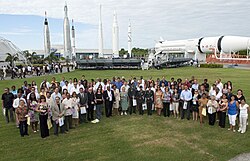
Other Global Regions
- Arab States: In Gulf Cooperation Council (GCC) countries, such as Saudi Arabia and the UAE, many non-natives reside from birth but face significant hurdles in obtaining citizenship. In Kuwait, many stateless individuals, known as Bedoon, belong to indigenous northern tribes.
- Europe: The European Parliament has moved away from the term "alien" in documents regarding Eurodac (the EU biometric database), opting instead for "third-country national or a stateless person."
Summary of Legal Classifications
| Category | Legal Status | Primary Characteristic |
|---|---|---|
| Permanent Resident | Lawful | Right to remain indefinitely |
| Temporary Resident | Lawful | Time-limited permission to stay |
| Nonresident Alien | Lawful | Domicile is in another nation |
| Undocumented Alien | Unlawful | Subject to removal/deportation |
| Alien Enemy | Hostile | Citizen of a nation at war with host |
Key Facts
- The term "alien" is derived from the Latin alienus, meaning stranger or foreigner.
- In the U.S., the term is legally defined by the Immigration and Nationality Act (INA).
- Canada and the European Parliament have largely replaced "alien" with "foreign national" or "third-country national."
- The High Court of Australia ruled that Aboriginal Australians cannot be classified as aliens.
- Permanent residency often includes registered refugees who have been lawfully admitted.
Frequently Asked Questions
What is the difference between a nonresident alien and a temporary resident?
A nonresident alien is a foreign national whose legal domicile is in another country, such as a tourist. A temporary resident is specifically granted permission by a government to reside, work, or study for a set number of years.
How does the U.S. define a "non-citizen national"?
Under U.S. law, people born in American Samoa or on Swains Island are considered non-citizen nationals, distinguishing them from both citizens and aliens.
Why is the term "alien" being replaced in some jurisdictions?
Many institutions, such as the US Library of Congress and the European Parliament, have adopted terms like "noncitizen" or "third-country national" because "alien" can be perceived as dehumanizing or pejorative in contemporary social contexts.
Can an Aboriginal Australian be deported as an alien?
No. According to the 2020 ruling in Love v Commonwealth, the High Court of Australia determined that Aboriginal Australians cannot be considered aliens under the Constitution, regardless of their citizenship status.
What constitutes an "undocumented alien"?
An undocumented or removable alien is someone an Immigration Judge finds subject to removal, typically due to entering without authorization, violating visa terms, or being convicted of specific crimes.