Alboran Sea Ecology and Biodiversity
The Alboran Sea serves as a critical ecological bridge, acting as a transition zone where the waters of the Atlantic Ocean meet the Mediterranean Sea. This unique positioning creates a diverse marine environment that supports a rich blend of species from both oceanic regions, making it one of the most biologically significant areas in the western Mediterranean.
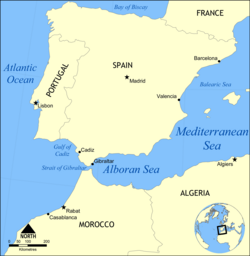
Key Facts
- Transition Zone: A biological crossroads between Atlantic and Mediterranean species.
- Marine Mammals: Home to the largest population of bottlenose dolphins and the last remaining harbour porpoises in the western Mediterranean.
- Turtle Habitat: The most vital feeding grounds for loggerhead sea turtles in Europe.
- Coral Protection: Site of the only known cold-water coral reef in the Mediterranean at Cabliers Bank.
- Terrestrial Biodiversity: Surrounded by the Baetic-Rifan complex, a recognized biodiversity hotspot.
Marine Life and Conservation
The Alboran Sea is a sanctuary for several high-profile marine species. Beyond its role as a feeding hub for loggerhead sea turtles, it supports significant populations of cetaceans. However, this biodiversity has faced threats from industrial fishing practices. In 2003, the World Wildlife Fund (WWF) highlighted the dangers of widespread drift net fishing, which endangered dolphins, turtles, and various other marine animals.
Recent international cooperation has led to stronger protections for the seabed. In 2023, the European Union, Morocco, and Algeria reached an agreement to ban bottom fishing around Cabliers Bank. This measure is specifically designed to protect the Mediterranean's only known cold-water coral reef, ensuring the survival of this rare deep-sea ecosystem.
Commercial Fisheries
The sea remains economically vital due to its commercial fisheries. The region is particularly known for the harvesting of sardines and swordfish, balancing economic utility with the need for ecological preservation.
The Gibraltar Arc and Terrestrial Ecology
The ecology of the region extends beyond the coastline to the Gibraltar Arc, a mountain chain that wraps around the northern, western, and southern borders of the Alboran Sea. This arc consists of the Baetic Cordillera in Southern Spain and the Rif Mountains in Morocco.
Ecologists refer to these combined ranges as the Baetic-Rifan complex. Much like the sea itself, this complex is a transition zone between Mediterranean and Atlantic (Macaronesian) ecological zones. Because the Atlantic Ocean exerts a moderating influence on the climate, many relict species—species that have survived from an earlier period—have persisted here despite climatic fluctuations over the last few million years that caused their extinction in other parts of the Mediterranean basin.
| Feature | Details | Significance |
|---|---|---|
| Marine Species | Bottlenose dolphins, harbour porpoises, loggerhead turtles | Critical habitat and feeding grounds |
| Protected Site | Cabliers Bank | Only Mediterranean cold-water coral reef |
| Terrestrial Zone | Baetic-Rifan complex | Biodiversity hotspot for relict species |
| Commercial Fish | Sardines and swordfish | Key regional economic resources |
Frequently Asked Questions
Why is the Alboran Sea considered a transition zone?
It is located where the Atlantic Ocean enters the Mediterranean Sea, resulting in a mix of species and ecological characteristics from both bodies of water.
Which marine mammals are most notable in this region?
The Alboran Sea hosts the largest population of bottlenose dolphins and the final remaining population of harbour porpoises in the western Mediterranean.
What is the significance of Cabliers Bank?
Cabliers Bank is home to the only cold-water coral reef known to exist in the Mediterranean, leading to a 2023 ban on bottom fishing in the area by the EU, Morocco, and Algeria.
What is the Baetic-Rifan complex?
It is the ecological term for the mountains of the Gibraltar Arc, comprising the Baetic Cordillera of Spain and the Rif Mountains of Morocco, serving as a biodiversity hotspot.
How did the Atlantic Ocean help relict species survive?
The Atlantic provided a moderating climatic influence that protected species in the Baetic and Rif mountains from the extreme climatic fluctuations that led to extinctions elsewhere in the Mediterranean basin.