Albion Football Club: The Legacy of Uruguay's Football Pioneer
In the heart of Montevideo, Albion Football Club stands as a living monument to the origins of South American sport. Founded in 1891, it holds the prestigious title of the oldest football club in Uruguay. While other institutions existed prior to its inception, Albion was the first specifically dedicated to the beautiful game, cementing its place as the Decano Leones Pionero (Dean Pioneer Lions).
From its humble beginnings as a student-led association to its modern-day battles in the Liga AUF Uruguaya, Albion's journey reflects the evolution of football in the region. In July 2018, the club's historical significance was recognized globally when it became a member of the Club of Pioneers, an association of the world's oldest active football clubs.
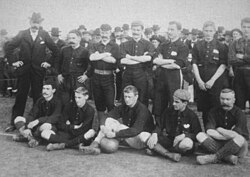
Key Facts
- Founded: June 1, 1891
- Status: Oldest active football club in Uruguay
- Home Ground: Parque Enrique Falco, Montevideo
- Capacity: 2,000 spectators
- Major Achievement: First Uruguayan club to win matches abroad (Argentina, 1896)
- Recent Success: Promoted to the top flight in 2021 after a 113-year absence
The Foundation and Early Years
Albion was established on June 1, 1891, originally under the name "Football Association." The club was founded by students from the English High School, driven largely by 18-year-old Henry Lichtenberger. Lichtenberger was a disciple of William Leslie Poole, who is widely regarded as the "father" of Uruguayan football.
In its earliest days, the club maintained a strict policy of only accepting native players, though many were of British descent. The original kit featured a white jersey adorned with a red star on the chest. The club's first official match took place on August 2, 1891, against the Montevideo Cricket Club, resulting in a 3–1 defeat.
By September 21, 1891, the organization renamed itself Albion Football Club. The name "Albion" was chosen as a tribute to Great Britain, as it was the term used by Ancient Greeks to refer to the British Isles. Along with the name change, the club adopted a blue jersey with a white collar, later evolving into blue shirts with white collars and sleeves, white shorts, and black socks.
The Golden Age (1895–1900)
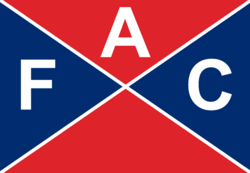
The mid-to-late 1890s marked a period of unprecedented dominance for Albion. In 1895, the club modernized its rules to allow foreign players and updated its colors to red and blue as a tribute to the British flag.
International Breakthroughs
Albion became the first Uruguayan team to achieve success on foreign soil. In 1896, the club traveled to Buenos Aires, Argentina, where they defeated Retiro Athletic Club (4–1) and Belgrano AC (5–3). These matches represented the first international victories for any Uruguayan club.
The First Uruguayan Derby
The rivalry between Albion and Peñarol established the first great derby in Uruguayan football. Their first encounter occurred on July 18, 1892, with Albion winning 3–2. Between 1895 and 1897, Albion dominated this rivalry, achieving an extraordinary streak of 14 consecutive wins over Peñarol, with only one draw in between.
Founding the National League
In February 1900, Henry Lichtenberger invited Peñarol, Deutscher, and Uruguay Athletic to form a structured league. This led to the creation of the Uruguay Association Foot-ball League (now the Uruguayan Football Association) on March 30, 1900. Albion finished as runners-up in the inaugural championship and won the Copa de Competencia that same year.
Decline, Refoundation, and Modern Era
The early 20th century saw a gradual decline. After a period of selling off key players, Albion played its final season in the Primera División (top flight) in 1908. The club spent several decades in minor leagues and the Liga Universitaria de Deportes.
A turning point came in June 1953 when the club was refounded. This era saw Albion diversify, becoming a founder of the Uruguayan baseball league and establishing competitive basketball and athletics teams. After a brief, unsuccessful merger with Club Sportivo Miramar in 1976, the club returned to its independent roots.
The Road Back to the Top
The 21st century brought a resurgence. After winning the Segunda División B in 2017, Albion climbed the ranks of the Uruguayan football pyramid. In 2021, the club won the Segunda División championship, securing promotion to the Primera División for the first time in 113 years.
Club Overview
| Category | Details |
|---|---|
| Full Name | Albion Football Club |
| Nicknames | Decano Leones Pionero |
| Founded | June 1, 1891 |
| Current League | Liga AUF Uruguaya |
| Stadium | Parque Enrique Falco |
| Chairman | Charles Coupland |
| Manager | Federico Nieves |
Frequently Asked Questions
Why is Albion FC considered the oldest club in Uruguay?
While clubs like Montevideo Rowing and Montevideo Cricket were founded earlier, they were multi-sport institutions. Albion is recognized as the oldest because it was the first club specifically dedicated to football.
What is the significance of the name "Albion"?
The name is a tribute to Great Britain, the birthplace of football. "Albion" was the name used by the Ancient Greeks to refer to the island of Great Britain.
When did Albion return to the top division?
Albion returned to the Primera División in 2021 after winning the Segunda División championship, ending a 113-year absence from the top flight.
What was Albion's first international achievement?
In 1896, Albion became the first Uruguayan club to win matches abroad, defeating Argentine teams Retiro Athletic Club and Belgrano AC in Buenos Aires.
Who was the key figure in the club's foundation?
Henry Lichtenberger, an 18-year-old student and disciple of William Leslie Poole, was the primary driver behind the establishment of the club in 1891.