Albert Londres Prize: France's Most Prestigious Journalism Award
The Albert Londres Prize stands as the highest honor in French journalism. Often described as the French equivalent of the Pulitzer Prize, it recognizes exceptional courage, rigor, and storytelling in the field of reporting. Established to honor the legacy of the legendary journalist Albert Londres, the award celebrates those who venture into the heart of global events to bring truth to the public.
Key Facts
- Founded: 1932 (first awarded in 1933).
- Purpose: To honor the memory of journalist Albert Londres.
- Categories: Written press, audiovisual reporting, and reporting books.
- Eligibility: Originally restricted to journalists under the age of forty.
- Administration: Managed by the Association of Albert Londres Prize and the Civil Society of Multimedia Authors (SCAM).
History and Evolution
Following the death of Albert Londres on May 16, 1932, his daughter, Florise Martinet-Londres, sought to create a lasting tribute to her father's professional excellence. This led to the creation of the prize, which has been awarded annually on May 16 since 1933.
Over the decades, the prize has evolved to reflect the changing landscape of media. While it began as a reward for written reporting, the influence of director Henri de Turenne led to the introduction of an audiovisual documentary category in 1985. More recently, in 2017, a third category was added for the "best reporting book," ensuring that long-form investigative literature is also recognized.
The administration of the prize is handled by the Association of Albert Londres Prize, a body composed of previous winners. For 21 years, Henri Amouroux served as chair, followed by Josette Alia, who took the role in May 2006. The selection process is governed by a jury consisting of 19 journalists and laureates from the preceding year. Since the expansion into audiovisual works, the association has been administered by the Civil Society of Multimedia Authors (SCAM), a professional grouping for documentary authors.
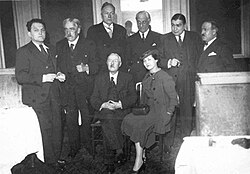
Award Categories and Laureates
Each year, three laureates are selected across three distinct categories, highlighting the diversity of modern reporting.
Written Press
The written press category is the oldest, dating back to 1933. Early winners included Émile Condroyer and Stéphane Faugier. Over the years, the prize has been awarded to journalists from major publications such as Le Monde, Le Figaro, Libération, and the AFP (Agence France-Presse). Notable recipients include Bernard Guetta (1981) and the entire AFP Moscow bureau in 1995.
Audiovisual Reporting
Introduced in 1985, this category recognizes excellence in television and film documentaries. It has highlighted critical global issues, from the "War of Nerves" (1987) to recent investigations into the Wagner Group (2022) and the "Havana Syndrome" (2025).
Reporting Books
The newest category, established in 2017, honors journalists who produce high-impact non-fiction books. Recent winners include Victor Castanet for his revelations on the maltreatment of the elderly in Les Fossoyeurs (2022) and Éléna Volochine for her work on Vladimir Putin's propaganda (2025).
| Category | Established | Focus | Example Recent Winner |
|---|---|---|---|
| Written Press | 1933 | Newspapers and News Agencies | Julie Brafman (2025) |
| Audiovisual | 1985 | Documentaries and TV Reports | Jules Giraudat & Arthur Bouvart (2025) |
| Reporting Book | 2017 | Investigative Non-fiction Books | Éléna Volochine (2025) |
Frequently Asked Questions
Who was Albert Londres?
Albert Londres was a renowned French journalist whose work inspired the creation of the prize. The award was established by his daughter, Florise Martinet-Londres, to honor his legacy after his death in 1932.
How many people win the Albert Londres Prize each year?
Three laureates are awarded each year, one for each of the three categories: written press, audiovisual reporting, and reporting books.
Who decides who wins the award?
The winners are selected by a jury composed of 19 members, including professional journalists and winners from the previous year.
What is SCAM's role in the prize?
The Civil Society of Multimedia Authors (SCAM), a grouping of documentary authors, has administered the association since the audiovisual prize was created in 1985.
Is there an age limit for the prize?
Historically, from 1933 onwards, the prize was specifically awarded to young journalists under the age of forty.