Albanians in South America: History, Migration, and Heritage
The Albanian diaspora in South America represents a unique intersection of European migration and cultural adaptation. Comprising an estimated 80,000 to 100,000 people, this community is primarily established in Argentina, Brazil, Uruguay, and Chile. Many of these individuals trace their roots back to the Arbëresh—ethnic Albanians who had previously settled in southern Italy—leading to a strong historical and cultural link with the broader Italian diaspora in the region.
Key Facts
- Estimated Population: 80,000 to 100,000 people.
- Primary Locations: Argentina, Brazil, Uruguay, and Chile.
- Ancestry: Largely derived from the Arbëresh (Albanian-Italians) and early 20th-century exiles.
- Languages: Spanish, Portuguese, Albanian, and Italian.
- Religion: Predominantly Christian, with Muslim and irreligious minorities.
Migration Patterns and Cultural Identity
The presence of Albanians in South America is deeply intertwined with the great waves of European immigration during the 19th and early 20th centuries. Because many migrants arrived via Italy, a significant portion of the community identifies with the larger Italian-South American population. This dual heritage has influenced the languages spoken within the community, which include Spanish and Portuguese as primary tongues, alongside Italian and Albanian.
Religious diversity is also a hallmark of the community. While the majority are Christians, there are significant minorities who practice Islam or identify as irreligious.
Regional Distributions
Argentina
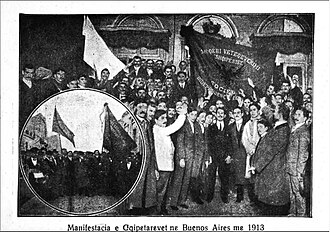
Argentina hosts a substantial Albanian population. The initial migration consisted largely of Arbëresh people from southern Italy during the 19th century. This was followed in the early 20th century by the arrival of approximately 20,000 to 30,000 Albanian exiles. Over time, many of these immigrants integrated with local populations and Italians, resulting in a loss of the Albanian language for some families.
Today, the community is concentrated heavily in Buenos Aires, with smaller family groups remaining in Córdoba and Rosario. Cultural heritage is preserved through the Albanian Patriotic Society of Skanderbeg (Asociación Patriotica Albanesa Skenderbeu), which celebrates Flag Day every November 28 with traditional foods and music.
Chile
In Chile, the Albanian community is characterized by its cultural activity. Approximately 60,000 Arbëresh emigrated to Chile, driven largely by high unemployment rates in Italy at the time of their departure.
Brazil and Uruguay
Brazil and Uruguay also maintain significant populations of Albanian descent, contributing to the overall demographic spread of the diaspora across the southern continent.
Summary of Albanian Diaspora in South America
| Category | Details |
|---|---|
| Total Estimated Population | 80,000 - 100,000 |
| Major Countries | Argentina, Brazil, Uruguay, Chile |
| Primary Ancestry Groups | Arbëresh (Italian-Albanians), 20th-century exiles |
| Key Languages | Spanish, Portuguese, Albanian, Italian |
| Main Religions | Christianity (Majority), Islam, Irreligious |
Frequently Asked Questions
Who are the Arbëresh?
The Arbëresh are ethnic Albanians who settled in southern Italy centuries ago. Many of the Albanians who migrated to South America, particularly to Argentina and Chile, came from these Italian-Albanian communities.
Where do most Albanians in Argentina live?
The vast majority of Albanians in Argentina reside in Buenos Aires, although some families can still be found in the cities of Rosario and Córdoba.
How is Albanian culture preserved in Argentina?
Culture is maintained through the Albanian Patriotic Society of Skanderbeg, which organizes annual celebrations for Flag Day on November 28, featuring traditional Albanian songs and cuisine.
Why did Albanians migrate to Chile?
Approximately 60,000 Arbëresh migrated to Chile primarily due to high unemployment levels in Italy during the period of their emigration.
What languages are spoken by the Albanian diaspora in South America?
Depending on their country of residence and family history, members of the community speak Spanish, Portuguese, Italian, and Albanian.