AlabamaHeart of DixieMontgomeryHuntsvilleBirmingham

Alabama: The Heart of Dixie's History, Geography, and Economy

Alabama: The Heart of Dixie Known by many names, including the Yellowhammer State, the Heart of Dixie, and the Cotton State, Alabama is a region of profound historical depth and diverse n...

Alabama: The Heart of Dixie

Known by many names, including the Yellowhammer State, the Heart of Dixie, and the Cotton State, Alabama is a region of profound historical depth and diverse natural beauty. From its early roots in Native American civilizations to its pivotal role in the American Civil War and the modern space race, Alabama blends traditional Southern heritage with cutting-edge industrial innovation.

Key Facts
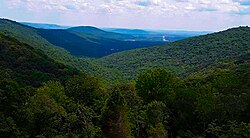
Monte Sano State Park in Huntsville
  • Capital: Montgomery
  • Largest City: Huntsville
  • State Motto: Audemus jura nostra defendere ("We dare defend our rights")
  • Admission to Union: December 14, 1819 (22nd state)
  • Total Area: 52,419 square miles
  • Population: Approximately 5.16 million (2024)
  • Highest Point: Mount Cheaha (2,413 ft)

Historical Evolution
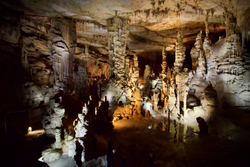
Cathedral Caverns in Marshall County

Pre-European and Early Settlement

Long before European arrival, the region was home to the Mississippian culture, a complex society known for building large earthen mounds. One of the most significant remnants of this era is the Moundville Archaeological Site.
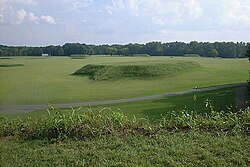
The Moundville Archaeological Site in Hale County. It was occupied by Native Americans of the Mississippian culture from 1000 to 1450 CE.

The 19th Century and the Civil War

The 1800s saw the rise of the plantation economy, particularly in the Black Belt region, where fertile soil supported large-scale agriculture. This era was marked by the growth of estates like Thornhill, but also by the systemic reliance on enslaved labor.
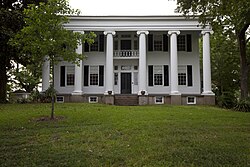
The main house, built in 1833, at Thornhill in Greene County. It is a former Black Belt plantation.

During the American Civil War, Alabama was a central Confederate state. The conflict brought significant upheaval, exemplified by the Union Army's capture and occupation of Huntsville's Courthouse Square in 1864.
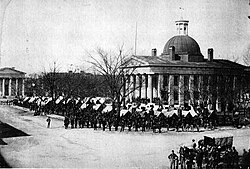
Union Army troops occupying Courthouse Square in Huntsville, following its capture and occupation by federal forces in 1864

The 20th Century to Present

The 1900s witnessed the industrialization of the state, with Birmingham emerging as a major center for iron and steel production. The mid-century was defined by the Civil Rights Movement and a pivot toward aerospace and technology, particularly in Huntsville.
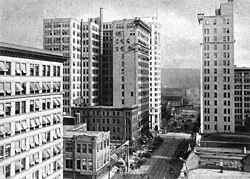
The developing skyline of Birmingham, 1915

Education also evolved, with the construction of Rosenwald Schools—such as the Mount Sinai School—providing critical educational opportunities for African American students in rural areas.
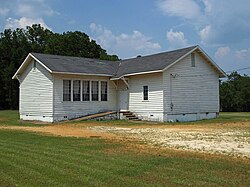
The former Mount Sinai School in rural Autauga County, completed in 1919. It was one of the 387 Rosenwald Schools built in the state.

Geography and Natural Wonders

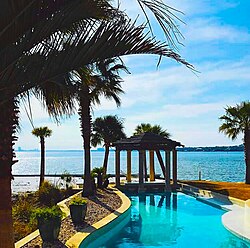
Ono Island in Baldwin County

Alabama's landscape varies from the white sandy beaches of the Gulf of Mexico to the rugged foothills of the Appalachian Mountains. The state's geography is punctuated by unique geological formations and diverse ecosystems.
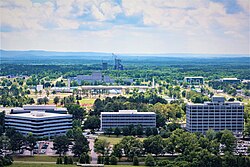
George C. Marshall Space Flight Center, 2017

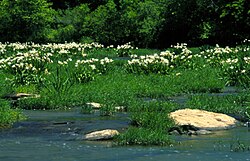
Notable natural landmarks include the Natural Bridge Rock in Winston County, the longest natural bridge east of the Rockies, and the Wetumpka meteorite crater. The state also boasts unique flora, such as the rare Cahaba lilies found in the Cahaba River National Wildlife Refuge.
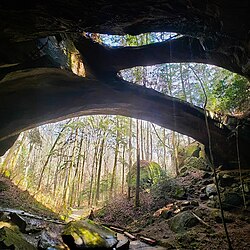
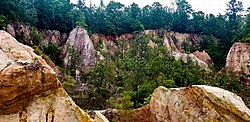
The Natural Bridge Rock in Winston County is the longest natural bridge east of the Rockies.

Cliffs at the rim of the Wetumpka meteorite crater

A stand of Cahaba lilies (Hymenocallis coronaria) in the Cahaba River, within the Cahaba River National Wildlife Refuge

While the state enjoys a generally warm climate, it is susceptible to severe weather. The April 27, 2011 tornado outbreak remains the largest in recorded history, causing significant damage in cities like Cullman.

A large tornado in downtown Cullman during the April 27, 2011 tornado outbreak, the largest in recorded history

Demographics and Culture

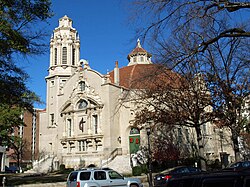
Highlands United Methodist Church in Birmingham, part of the Five Points South Historic District

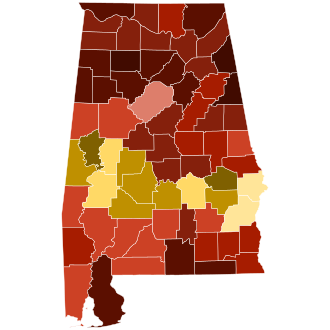
Alabama's population is distributed across diverse urban and rural settings. As of the 2020 census, the state maintains a significant racial plurality, with a strong presence of both Non-Hispanic White and Black or African American populations.
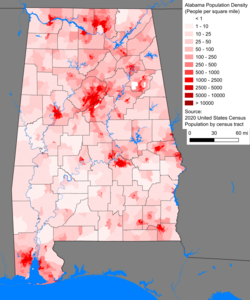
Alabama's population density, 2020

Map of counties in Alabama by racial plurality, per the 2020 census Legend Non-Hispanic White 40–50% 50–60% 60–70% 70–80% 80–90% 90%+ Black or African American 40–50% 50–60% 70–80% 80–90%

Religion and Community

The state's cultural fabric is woven with various religious traditions. This is evident in the presence of historic sites like Temple B'Nai Sholom in Huntsville, the state's oldest synagogue in continuous use, as well as the Islamic Center of Tuscaloosa.
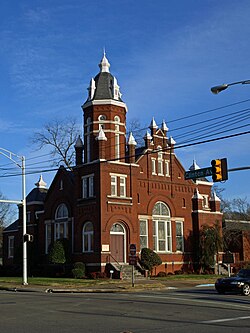
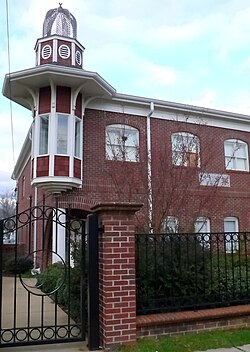
Temple B'Nai Sholom in Huntsville, established in 1876. It is the oldest synagogue building in continuous use in the state.

The Islamic Center of Tuscaloosa

Leisure and Tourism

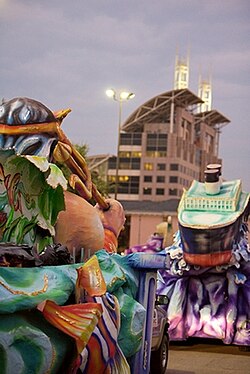
Tourism is a major economic driver, fueled by the state's beaches, the Robert Trent Jones Golf Trail, and the birthplace of U.S. Mardi Gras in Mobile.
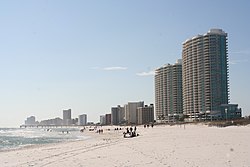
Alabama's beaches are one of the state's major tourist destinations.

Mobile is the birthplace of Mardi Gras in the U.S.

Economy and Infrastructure

The Robert Trent Jones Golf Trail has a large economic impact on the state.

Industrial Powerhouses

Alabama has transitioned into a hub for automotive and aerospace manufacturing. The state hosts major facilities for Mercedes-Benz, Hyundai, and Airbus. In Huntsville, the George C. Marshall Space Flight Center continues the state's legacy of space exploration.
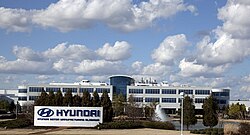
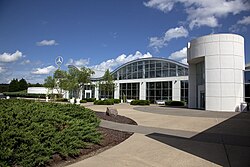
Hyundai Motor Manufacturing Alabama in Montgomery in 2010

Mercedes-Benz U.S. International in Tuscaloosa County was the first automotive facility to locate within the state.

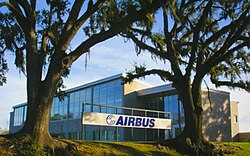
Airbus Mobile Engineering Center at the Brookley Aeroplex in Mobile

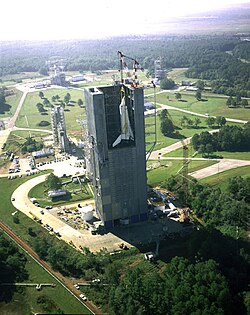
The Space Shuttle Enterprise being tested at Marshall Space Flight Center in 1978

Major Employers and Education

The economy is supported by a mix of government, healthcare, and educational institutions. Redstone Arsenal and the University of Alabama at Birmingham (UAB) are among the state's largest employers.
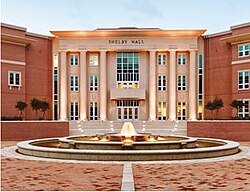
Shelby Hall, School of Computing, at the University of South Alabama in Mobile

Transportation and Trade

The Port of Mobile serves as a critical gateway for international trade via the Gulf of Mexico. Internally, the state is connected by a robust network of interstates and rail lines, including the Crescent service to New York and New Orleans.
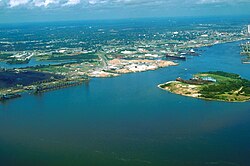
Aerial view of the port of Mobile

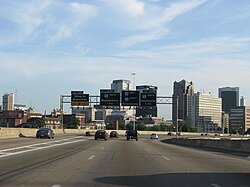
Interstate 59 (co-signed with Interstate 20) approaching Interstate 65 in downtown Birmingham

State Government and Administration

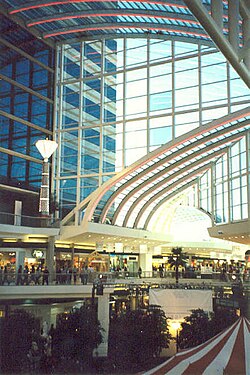
The Riverchase Galleria in Hoover, one of the largest shopping centers in the southeast

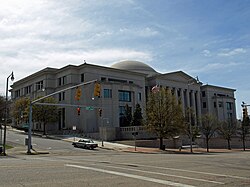
The state government is headquartered in Montgomery, where the State Capitol Building and the Heflin-Torbert Judicial Building house the executive and judicial branches. As of 2025, the state is led by Governor Kay Ivey.
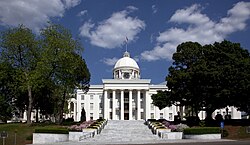
The State Capitol Building in Montgomery, completed in 1851

The Heflin-Torbert Judicial Building in Montgomery. It houses the Supreme Court of Alabama, Alabama Court of Civil Appeals, and Alabama Court of Criminal Appeals.

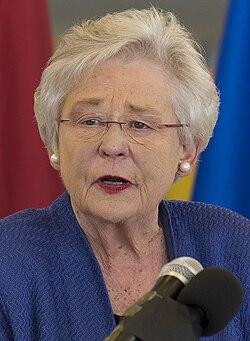
Republican Kay Ivey is the governor of Alabama as of 2025.

Administrative Divisions

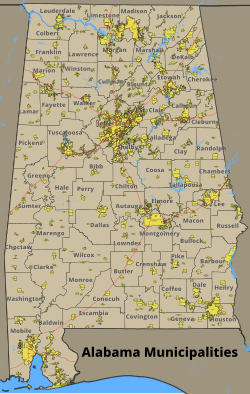
Alabama is divided into numerous counties and municipalities, with Jefferson County being the most populous.
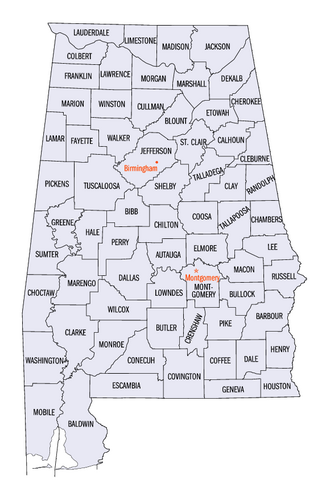
Alabama counties (clickable map)

Alabama municipalities

Category Detail
Total Area 52,419 sq mi
Population (2024) 5,157,699
Median Household Income (2023) $62,200
Official Language English
Highest Elevation 2,413 ft (Mount Cheaha)

Frequently Asked Questions

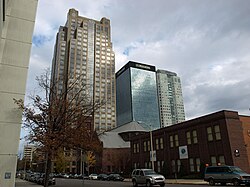
Regions-Harbert Plaza, Regions Center, and Wells Fargo Tower in Birmingham's financial district
Senator Doug Jones won a special election in 2017.
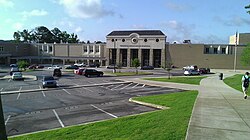
Vestavia Hills High School in the suburbs of Birmingham
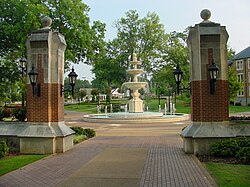
Harrison Plaza at the University of North Alabama in Florence. The school was chartered as LaGrange College by the Alabama Legislature in 1830.
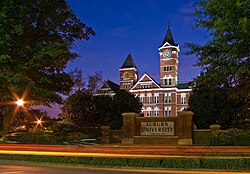
William J. Samford Hall at Auburn University
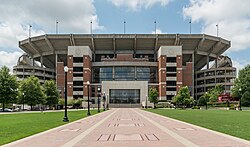
Bryant–Denny Stadium at the University of Alabama in Tuscaloosa
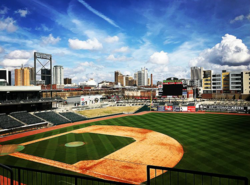
Regions Field in Birmingham
Von Braun Center in Huntsville
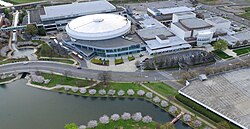
Birmingham–Jefferson Convention Complex in Birmingham
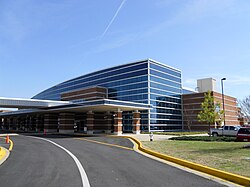
Terminal at the Montgomery Regional Airport in Montgomery

What is the largest city in Alabama?

Huntsville is currently the largest city in the state.

Which city is the capital of Alabama?

Montgomery serves as the state capital.

What are the primary industries in Alabama?

The state's economy is heavily driven by automotive manufacturing (Hyundai, Mercedes-Benz), aerospace (Airbus, NASA's Marshall Space Flight Center), and healthcare.

What is the significance of the Black Belt?

The Black Belt refers to a region of Alabama known for its rich, dark soil, which historically supported a large plantation economy.

What is the highest point in Alabama?

The highest point is Mount Cheaha, reaching an elevation of 2,413 feet.