AI Workplace Hazards: Managing Physical, Psychosocial, and Algorithmic Risks
The integration of Artificial Intelligence (AI) into the professional environment is not inherently risky; rather, the hazards depend entirely on how these systems are implemented. While AI offers significant efficiency gains, it introduces a complex array of risks that span from physical safety to psychological well-being and systemic fairness.
Key Facts
- Sub-symbolic AI (such as machine learning) is more prone to unpredictable behavior than symbolic AI, especially in unstructured environments.
- Psychosocial hazards can lead to both mental health issues (burnout, anxiety) and physical ailments (cardiovascular disease).
- Cobots (collaborative robots) increase collision risks because they operate without the protective barriers used for traditional industrial robots.
- Algorithmic bias can perpetuate historical discrimination in hiring and firing if training data is flawed.
- Augmented intelligence emphasizes the combination of human and AI capacities rather than total replacement.
Technical Hazards of AI Systems
AI systems generally fall into two categories: symbolic and sub-symbolic. Systems using sub-symbolic AI, such as machine learning, are more susceptible to inscrutability—where the decision-making process is not easily understood by humans. This unpredictability is heightened when the AI encounters situations not present in its training dataset or operates in less structured environments.
Undesired behaviors can stem from software bugs, flaws in knowledge representation, or sensor degradation. Furthermore, improper training—such as applying a single algorithm to two problems with different requirements—can lead to system failure. There is also a critical distinction between machine learning applied during the design phase versus that applied at runtime.

Beyond operational unpredictability, AI increases cybersecurity vulnerabilities and raises significant information privacy concerns regarding the data collected from workers.
Psychosocial Risks and Work Practices
Psychosocial hazards are those arising from the design, organization, and management of work. Unlike physical hazards, these are rooted in social and economic contexts. If overlooked by designers, these risks can lead to occupational burnout, depression, and anxiety, as well as physical conditions like musculoskeletal injury or cardiovascular disease.
Research by Einola and Khoreva suggests that successful AI integration requires human ownership and a deep understanding of the specific workplace ecosystem, warning against blind technological optimism.
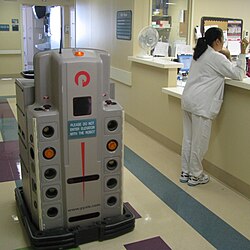
The Shift to Augmented Intelligence
Many experts prefer the term augmented intelligence to describe AI tools that enhance human capabilities. This framework allows organizations to make contextual choices about whether human or AI capacities should take priority. However, over-reliance on these tools can lead to the deskilling of certain professions.
Social and Organizational Impact
- Loss of Mentorship: When AI replaces peer collaboration, opportunities for interpersonal skill development and team learning diminish.
- Surveillance and Stress: The use of activity trackers, wearable sensors, and augmented reality can lead to micromanagement, causing stress and anxiety for both gig workers and assembly line staff.
- Power Dynamics: As noted by Newell & Marabelli, AI alters employee autonomy and shifts power dynamics within the organization.
- Operational Pressure: Workers may be forced to match a robot's pace or monitor systems during nonstandard hours.
The fear of obsolescence is often fueled by reports on AI capabilities. For instance, a 2025 preprint regarding Microsoft Copilot claimed high overlap between AI and forty specific jobs. However, critics and historians, such as Chris Campbell, argue that such reports often misrepresent complex human analytical skills as simple knowledge provision, thereby unfairly inflating AI's applicability score.
Algorithmic Bias and Information Asymmetry
AI can inadvertently codify human prejudice. Algorithms trained on historical data may mimic discriminatory hiring or firing practices. In some cases, discrimination is intentional, achieved by designing metrics that use correlated variables to covertly discriminate.
Furthermore, information asymmetry—where management has access to the algorithms and data while workers do not—can create significant workplace stress. In the event of an accident, some analysis methods may be biased toward protecting the technology and its developers by unfairly assigning blame to the human operator.
Physical Hazards and Robotics
The most direct physical risks involve cobots (collaborative robots), which are designed to work in close proximity to humans. Unlike traditional industrial robots, cobots cannot be isolated by fences or barriers. This proximity means that sensor malfunctions or unexpected environmental changes can lead to human-robot collisions.
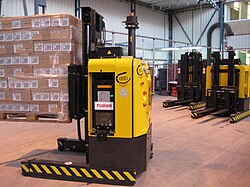
Common examples of cobots include automated guided vehicles (AGVs), such as AI-powered forklifts and pallet jacks used in warehouses. Other risks include the safety of self-driving cars and the ergonomics of human-machine control interfaces.
Summary of AI Hazard Categories
| Hazard Category | Primary Sources | Potential Impacts |
|---|---|---|
| Technical | Sub-symbolic AI, sensor degradation, software bugs | Unpredictable behavior, cybersecurity breaches |
| Psychosocial | Surveillance, deskilling, change in work organization | Burnout, anxiety, cardiovascular disease |
| Algorithmic | Biased training data, information asymmetry | Discriminatory practices, unfair blame assignment |
| Physical | Cobots, AGVs, interface ergonomics | Human-robot collisions, physical injury |
Frequently Asked Questions
What is the difference between symbolic and sub-symbolic AI in terms of risk?
Symbolic AI is generally more predictable. Sub-symbolic AI, such as machine learning, is more prone to inscrutability and unpredictable behavior, particularly when it encounters data not included in its original training set.
How can AI lead to physical health problems if it is not a physical object?
AI creates psychosocial hazards through increased monitoring and changes in work organization. These stressors can manifest physically as cardiovascular disease or musculoskeletal injuries.
What are cobots and why are they riskier than traditional robots?
Cobots are collaborative robots designed to work alongside humans. Because they operate in close proximity, they cannot be separated by safety fences, making sensor failures or unpredictable movements more likely to result in collisions.
How does algorithmic bias occur in the workplace?
Bias occurs when AI is trained on historical data that contains human prejudices (such as discriminatory hiring patterns) or when metrics are intentionally designed to discriminate via correlated variables.
What is augmented intelligence?
Augmented intelligence is a conceptual approach where AI is used as a tool to enhance human intelligence rather than replace it, focusing on the optimal combination of human and machine capacities for specific tasks.