Chatbots: The Evolution from Simple Scripts to Generative AI
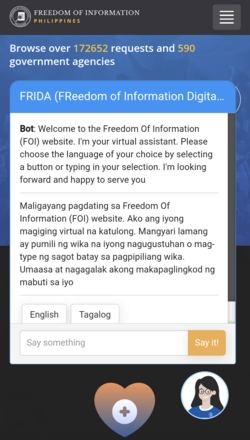
A chatbot (originally known as a chatterbot) is a software application or web interface designed to act as a conversation partner, interacting with users through text or speech. While they may seem like a recent phenomenon, chatbots have existed for decades, evolving from rigid, rule-based systems into the fluid, intelligent entities we interact with today.
The landscape shifted dramatically during the AI boom of the 2020s. The emergence of generative AI—exemplified by platforms like ChatGPT, Gemini, Claude, and Grok—introduced chatbots based on deep learning. These modern systems utilize fine-tuned large language models (LLMs), which are advanced AI systems trained on vast amounts of data to generate human-like text.
Key Facts
- Definition: Software designed to simulate conversation via text or speech.
- Modern Tech: Current high-end chatbots rely on fine-tuned large language models (LLMs).
- Adoption: By September 2017, Facebook Messenger had reached 100,000 developer-created bots.
- Business Trend: A 2016 study indicated that 80% of businesses intended to implement chatbots by 2020.
- Diverse Use: Applications range from customer support and healthcare to politics and toys.
The History and Evolution of Conversational AI
Foundations and Early Experiments
The conceptual roots of chatbots are tied to the Turing test, a benchmark proposed by Alan Turing in 1950 to determine if a machine can exhibit intelligent behavior indistinguishable from that of a human.
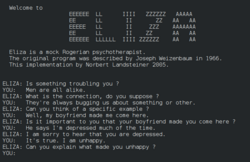
Early iterations were primarily rule-based. One of the most famous early examples was ELIZA, which simulated conversation by following pre-defined scripts.
The Rise of Commercial Integration
Before the current AI boom, companies integrated basic virtual assistants into their websites to streamline operations. For example, Alaska Airlines debuted "Ask Jenn" in 2008, and Expedia launched a virtual customer service agent in 2011. By 2017, more sophisticated tools appeared, such as "Rocky," an IBM Watson-powered bot used by the e-commerce company Rare Carat to assist diamond buyers.
The Messaging App Explosion
The accessibility of chatbots surged when messaging platforms opened their ecosystems. In 2016, Facebook Messenger allowed developers to build bots on its platform; within the first six months, 30,000 bots were created, growing to 100,000 by September 2017.
Modern Applications of Chatbots
Chatbots are no longer limited to simple FAQs. They are now deployed across a wide array of sectors:
- Customer Service: The most common application, providing 24/7 support and automated troubleshooting.
- Healthcare: Used for providing medical information and assisting in public health crises, such as the WhatsApp chatbots used in India to fight COVID-19.
- Politics: Some entities have experimented with "virtual politicians," including a Danish political party led by an AI.
- Toys: Companies have integrated speech technology into toys, such as "Hello Barbie" and others powered by IBM Watson.
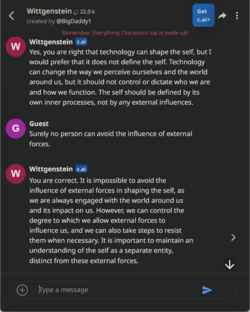
- Personalized Simulation: Modern LLMs allow users to simulate conversations with historical or philosophical figures.
| Era | Primary Technology | Key Examples/Metrics | Primary Use Case |
|---|---|---|---|
| Early Era | Rule-based scripts | ELIZA | Academic research/Simulation |
| Integration Era | Virtual Assistants / Watson | Ask Jenn, Rocky | Corporate Customer Service |
| Platform Era | API-driven bots | Facebook Messenger (100k bots) | Messaging & Business Apps |
| Generative Era | Large Language Models (LLMs) | ChatGPT, Claude, Gemini | General Purpose Content Generation |
Limitations and Ethical Concerns
Despite their utility, chatbots present several significant challenges. Algorithmic bias occurs when the data used to train a model contains prejudices, which the chatbot then replicates. There are also concerns regarding data security and the privacy of user conversations.
The impact on society is a subject of ongoing debate. Economically, there are fears of technological unemployment as bots replace human roles in customer service. Environmentally, the massive computing power required for LLMs is expected to drive a significant increase in data center power demand.
Furthermore, adverse effects have been documented in mental health contexts. For instance, a chatbot used by the National Eating Disorders Association was taken down after providing harmful weight-loss advice to users with eating disorders.
Frequently Asked Questions
What is the difference between a traditional chatbot and a generative AI chatbot?
Traditional chatbots typically follow pre-defined rules or scripts to provide specific answers. Generative AI chatbots use large language models to understand context and generate original, human-like text on the fly.
How are chatbots used in healthcare?
They are used to provide general health information, assist in triage, and manage public health communications, such as the official WhatsApp bots used during the COVID-19 pandemic in India.
Can chatbots be biased?
Yes. Because they are trained on large datasets created by humans, they can inherit and amplify algorithmic biases present in that data.
What is the Turing test?
Proposed by Alan Turing in 1950, it is a test of a machine's ability to exhibit intelligent behavior equivalent to, or indistinguishable from, that of a human.
Do chatbots impact the environment?
Yes, the training and operation of large-scale AI models require immense computational resources, which significantly increases the power demand for data centers.