Ahmet Ertuğ: Capturing the Architectural Heritage of Turkey and Europe
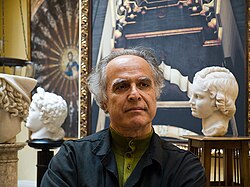
Ahmet Ertuğ is a distinguished fine art photographer and publisher based in Istanbul, Turkey. With a professional background rooted in structural design, Ertuğ blends technical precision with artistic vision to document some of the world's most significant historical structures.
Ertuğ's journey began in London, where he trained as an architect at the Architectural Association School of Architecture, graduating in 1974. This academic foundation allows him to approach photography with a deep understanding of spatial dynamics and structural integrity, specializing in the documentation of architectural and archaeological edifices.
Technical Mastery in Large Format Photography
To achieve the highest level of detail and clarity, Ertuğ utilizes large format photography—a technique involving cameras that use larger film sheets than standard 35mm cameras, resulting in superior resolution and image quality. Specifically, he employs 20 x 25 cm film material and high-resolution digital camera backs when required by the location.
His work focuses heavily on the diverse historical layers of Turkey, capturing the grandeur of the Hellenistic, Roman, Byzantine, and Ottoman periods. By focusing on these eras, his portfolio serves as a visual record of the region's complex cultural evolution.
Publishing and Major Works
Beyond the lens, Ertuğ is an active publisher. Alongside Ahmet Kocabıyık, he founded Ertuğ & Kocabıyık: Publishers of Fine Art Books. This partnership has produced a series of 25 limited edition volumes, all printed and bound manually in Italy and Switzerland. These works are presented in Folio and larger formats to preserve the scale and detail of the original photographs.
European Architectural Projects
In 2009, Ertuğ expanded his scope to Europe, photographing 30 historical libraries. This project culminated in the publication of Temples of Knowledge: Libraries of the Western World. He followed this in 2010 with Palaces of Music: Opera Houses of Europe, a volume featuring text by Michael Forsyth that documents the architecture of grand opera houses.
Archaeological Documentation
In 2012, Ertuğ released Gods of Nemrud: The Royal Sanctuary of Antiochos & the Kingdom of Commagene. This work focuses on the first-century BC archaeological material from Commagene, specifically relating to the local kingdom of Antiochus I, with contributing text by R.R.R. Smith.
Key Facts
- Education: Graduated from the Architectural Association School of Architecture in London (1974).
- Specialization: Large format photography of Hellenistic, Roman, Byzantine, and Ottoman architecture.
- Equipment: Uses 20 x 25 cm film and high-resolution digital backs.
- Publishing: Co-founder of Ertuğ & Kocabıyık; produced 25 limited edition manually bound volumes.
- Key Publications: Temples of Knowledge (2009), Palaces of Music (2010), and Gods of Nemrud (2012).
| Year | Title | Subject Matter | Contributor/Collaborator |
|---|---|---|---|
| 2009 | Temples of Knowledge | 30 European historical libraries | N/A |
| 2010 | Palaces of Music | European opera houses | Michael Forsyth |
| 2012 | Gods of Nemrud | Kingdom of Commagene (1st century BC) | R.R.R. Smith |
Frequently Asked Questions
What is Ahmet Ertuğ's professional background?
Ahmet Ertuğ is a fine art photographer and publisher who originally trained as an architect, graduating from the Architectural Association School of Architecture in London in 1974.
What specific historical periods does his work cover?
His photography focuses on the architectural and archaeological edifices of the Hellenistic, Roman, Byzantine, and Ottoman periods in Turkey.
What technical equipment does he use for his photography?
He specializes in large format photography using 20 x 25 cm film material and high-resolution digital camera backs for specific locations.
How are his fine art books produced?
Published through Ertuğ & Kocabıyık, his limited edition volumes are printed and bound manually in Switzerland and Italy, typically in Folio or larger formats.
Which European structures has he documented?
He has documented 30 historical libraries across Europe and various grand opera houses.