Age of Revolution: The Global Wave of Political and Industrial Change
The Age of Revolution (1765–1849) was a transformative era that reshaped the global political landscape, dismantling ancient feudal systems and giving rise to modern republicanism. Driven by the intellectual currents of the Enlightenment—a philosophical movement emphasizing reason, individualism, and skepticism of traditional authority—this period saw a series of interconnected upheavals across Europe and the Americas.
From the birth of the United States to the sweeping changes of the French Revolution and the industrialization of society, these movements were not isolated events. Instead, they formed a chain reaction where revolutionaries emulated and inspired one another, seeking to replace absolute monarchies with systems based on liberalism and the equality of men.
Key Facts
- Timeline: Spanned from March 22, 1765, to October 4, 1849.
- Core Drivers: Enlightenment ideals, economic grievances, and the rise of the urban middle class.
- Major Outcomes: The end of feudalism, the rise of nationalism, and the establishment of numerous independent republics.
- Human Cost: Massive casualties, including over 150,000 in the French Revolution and between 3.5 to 7 million during the Napoleonic Wars.
- Global Reach: Significant revolutions occurred in the US, France, Haiti, Ireland, Serbia, and across Latin America.
The Atlantic Revolutions
The Atlantic Revolutions comprise a significant portion of this era, characterized by a wave of uprisings in the Atlantic World aimed at ending monarchical rule. These movements often equated personal freedom with the right to own property and the fundamental equality of all citizens.
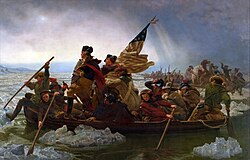
The American Revolution (1765–1783) served as the catalyst, securing independence from Britain with assistance from France, Spain, and the Netherlands. This success inspired subsequent movements, including the French Revolution of 1789 and the Haitian Revolution of 1791.
The French Revolution and Napoleonic Influence
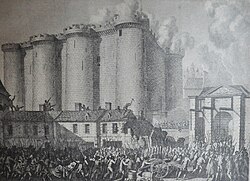
The French Revolution (1789–1799) was a period of radical upheaval triggered by economic crisis and resentment toward the privileges of the clergy (First Estate) and nobility (Second Estate). The vast majority of the population—the commoners or Third Estate—demanded a voice in governance.
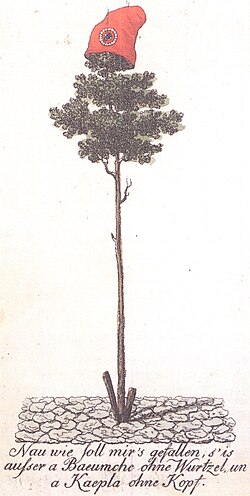
France provided the modern world with the vocabulary of nationalism, the metric system, and civil codes of law. When Napoleon Bonaparte took power in 1799, he spread these concepts across continental Europe through conquest. While he introduced equality before the law, his military occupation sparked national rebellions in Germany and Spain.
The Haitian Revolution
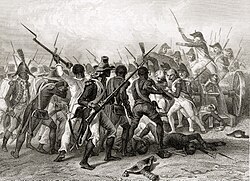
Between 1791 and 1804, Haiti underwent a brutal but successful struggle for independence. Initially brought under French Republican control due to the abolition of slavery, the colony later faced a restoration of slavery under Napoleon. Led by General Toussaint Louverture and later by other rebel forces, the movement culminated in the Battle of Vertières, leading to Haiti's independence on January 1, 1804.
Global Ripples: Independence and National Identity
The weakening of European powers, particularly Spain during the Napoleonic Wars, created a power vacuum in the Americas. Between 1810 and 1820, most Spanish colonies in Latin America proclaimed their independence, including Colombia.
In Europe, the spirit of revolution manifested in various forms:
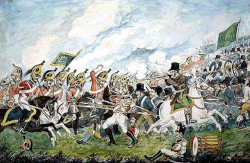
- Ireland: The United Irishmen's Rebellion of 1798 sought to challenge British rule.
- Serbia: The Serbian Revolution (1804–1835) evolved from an Ottoman province into a constitutional monarchy, eventually abolishing serfdom.
- Greece: The Greek War of Independence (1821–1829) saw Russia, Britain, and France assist Greeks in driving Ottoman forces off the Peloponnese Peninsula.
![Bastille Day, 1792, Belfast, Ireland. Volunteer companies parade "The Colours of Five Free Nations, viz.: Flag of Ireland – motto, Unite and be free. Flag of America – motto, The Asylum of Liberty. Flag of France – motto, The Nation, the Law, and the King. Flag of Poland – motto, We will support it. Flag of Great Britain – motto, Wisdom, Spirit, and Liberality."[8]](/images/9d/10/9d101a3ac7197ddb86de82b9987bd5fd59921ccdea830198c9d78111324eda0e.jpg)
The Industrial Revolution
Parallel to political upheaval was the Industrial Revolution (c. 1760–1840), a transition to new manufacturing processes. This shift led to unprecedented population and income growth but also created severe social strains. The rapid expansion of cities gave rise to a powerful urban middle class and new social classes that rejected orthodox politics, feeding into the revolutionary waves of 1848.
The Final Waves: 1820, 1830, and 1848
Following the Congress of Vienna (1814–15), the Holy Alliance attempted to restore monarchies and suppress dissent. However, revolutionary waves continued to strike southern Europe in 1820 (Portugal, Spain, Italy, and Greece) and again in 1830.
The era reached its climax in 1848 with the Spring of Nations. These uprisings merged democratic demands with movements for national unification in Poland, Hungary, Italy, and Germany. The violent repression of these movements eventually marked the end of the Age of Revolution.
| Revolution | Period | Primary Goal | Key Outcome |
|---|---|---|---|
| American Revolution | 1765–1783 | Independence from Britain | Formation of the USA |
| French Revolution | 1789–1799 | End of Absolute Monarchy | Rise of Republicanism & Nationalism |
| Haitian Revolution | 1791–1804 | Abolition of Slavery/Independence | First independent Black republic |
| Latin American Wars | 1808–1833 | Independence from Spain/Portugal | Multiple independent nations |
| Serbian Revolution | 1804–1835 | Independence from Ottoman Empire | Modern Serbian state |
| Spring of Nations | 1848 | Democracy & Unification | Short-term failure; long-term political shift |
Frequently Asked Questions
What was the primary cause of the Age of Revolution?
The era was primarily driven by the ideas of the Enlightenment, which challenged absolute monarchies and promoted liberalism, equality, and the right to self-governance.
How did the Industrial Revolution contribute to political unrest?
Industrialization caused rapid urban growth and social strain, creating a new urban middle class and economic grievances that fueled later uprisings, such as those in 1848.
What role did Napoleon play in spreading revolutionary ideas?
Napoleon conquered much of Europe, imposing modern concepts like the civil code and equality before the law, though his military occupation also triggered nationalistic rebellions.
What was the "Spring of Nations"?
The Spring of Nations refers to the revolutionary wave of 1848, where democratic demands merged with national unification movements in countries like Italy, Germany, and Hungary.
How did the American Revolution influence other nations?
It served as a successful starting point for the Age of Revolution, proving that Enlightenment ideals could be used to establish a new, independent republic, which inspired the French and Haitian revolutions.