African American Newspapers: A History of the Black Press
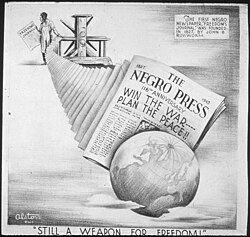
The history of the Black press in the United States is a testament to resilience, advocacy, and the pursuit of truth. From the early days of covert distribution in the North to the digital landscapes of the 21st century, African American newspapers have served as vital tools for social and political mobilization, providing a voice for a community often silenced by the mainstream media.
In their earliest iterations, these publications were more than just news sources; they were instruments of liberation. Early papers often focused on regional and international news while tackling the critical issues of American slavery and the activities of the American Colonization Society, which sought the repatriation of free Black people to Africa.
Key Facts
- Freedom's Journal (1827) was one of the earliest influential publications.
- The Woman's Era (1894) was the first nationally distributed newspaper published by and for African American women.
- The 1940s saw a surge in growth, with the number of Black newspapers increasing from 150 to 250.
- The National Newspaper Publishers Association remains a key trade organization for the industry.
- Modern news delivery has shifted toward digital platforms like The Root and The Grio.
The 19th Century: Foundations of Resistance
The 19th century saw the birth of several landmark publications. Early efforts were concentrated in the North, where papers like Freedom's Journal (1827–1829) and Philip Alexander Bell's Colored American (1837–1841) laid the groundwork. Frederick Douglass also played a pivotal role with The North Star (1847–1860) and Frederick Douglass' Paper (1851–1863).
As the century progressed, the press expanded geographically. In California, the Gold Rush spurred the creation of The Elevator and the Pacific Appeal. In 1879, John J. Neimore founded The California Owl (later The California Eagle), which became one of the oldest Black newspapers in the West.
Pioneering National and Specialized Press
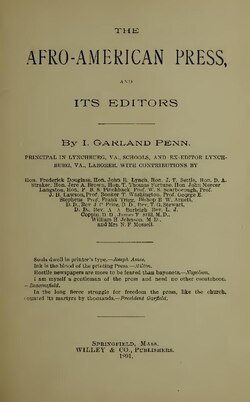
The late 1800s marked a shift toward national reach and specialized audiences. Daniel Rudd's Ohio Tribune (1885) is noted as the first newspaper printed by and for Black Americans, eventually expanding into the American Catholic Tribune, the first Black-owned national newspaper. In 1890, the National Afro-American Press Association was established in Indianapolis to organize the growing industry.
Gender-specific journalism also emerged in 1894 when Josephine St. Pierre Ruffin founded The Woman's Era. This publication served as the official organ of the National Association of Colored Women and created essential career opportunities for Black women journalists in the South.
Challenges of the Era
Despite their impact, many 19th-century papers struggled with sustainability. Low literacy rates and limited income among freed African Americans made subscriptions expensive. Consequently, many readers shared single copies of publications to stay informed.
The 20th Century: Growth and Political Influence
By the 1900s, African American newspapers flourished in major urban centers, with publishers becoming influential figures in business and politics. Daily papers emerged in cities such as Washington, D.C., Baltimore, Chicago, and Norfolk.
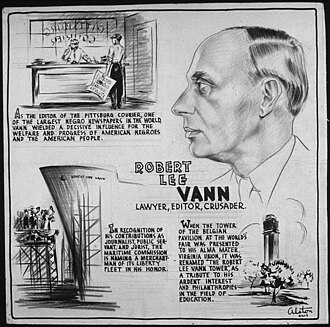
Prominent leaders of this era included Robert Sengstacke Abbott and John H. Sengstacke of the Chicago Defender, Robert Lee Vann of the Pittsburgh Courier, and Anthony Overton of the Chicago Bee.
The Golden Age of Circulation
The 1940s represented a period of significant expansion, with the total number of newspapers growing to 250. By the end of World War II, the Pittsburgh Courier, the Afro-American, the Chicago Defender, and the Norfolk Journal and Guide held the highest circulations in the country.
To support this growth, various trade associations formed. The Associated Negro Press (1919–1964) operated as a subscription news agency with a wide network of correspondents. In 1940, John H. Sengstacke led the formation of the trade association now known as the National Newspaper Publishers Association.
Social Impact and Contradictions
While the press was a powerful tool for progress, it sometimes reflected the biases of the time. During the 1930s and 1940s, the Southern Black press publicized the movement for equal pay for Black teachers. However, the reporting often highlighted male figures, diminishing the visible role of the Black women who had actually spearheaded the fight.
The 21st Century: The Digital Transition
The late 20th century brought economic challenges. Many papers founded between the 1960s and 1980s closed due to a lack of advertising revenue. By 2002, only about 200 Black newspapers remained in print.
The decline of print media coincided with the rise of the internet, leading to the emergence of influential Black news websites. Platforms such as The Root, The Grio, Black Voice News, and Black Voices now continue the legacy of providing targeted news and commentary for the African American community.
| Publication | Key Period/Date | Significance |
|---|---|---|
| Freedom's Journal | 1827–1829 | One of the earliest Black publications in the North. |
| The North Star | 1847–1860 | Founded by Frederick Douglass. |
| The Woman's Era | Founded 1894 | First national paper by and for Black women. |
| Chicago Defender | 20th Century | Major daily paper with high national influence. |
| The Root / The Grio | 21st Century | Leading digital news platforms. |
Frequently Asked Questions
What was the first nationally distributed newspaper for Black women?
The Woman's Era, founded by Josephine St. Pierre Ruffin in 1894, was the first nationally distributed newspaper published by and for African American women.
Which newspapers had the highest circulation after World War II?
The highest circulation rates were held by the Pittsburgh Courier, the Afro-American, the Chicago Defender, and the Norfolk Journal and Guide.
Why did many early African American newspapers struggle financially?
Many struggled due to low literacy rates among the population and the low incomes of freed African Americans, which made paid subscriptions difficult to maintain.
What is the National Newspaper Publishers Association?
It is a trade association for African American newspaper publishers, formed in 1940 under the leadership of John H. Sengstacke.
How has the Black press evolved in the 21st century?
Due to the decline of print media and advertising revenue, many traditional newspapers closed, leading to the rise of digital-first news sites like The Root and The Grio.