Adolf Engler: The Architect of Modern Plant Taxonomy
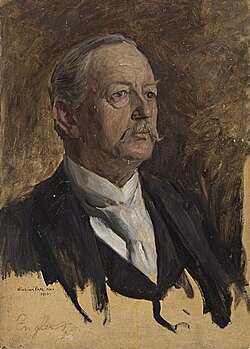
Heinrich Gustav Adolf Engler was a titan of botanical science whose work redefined how we categorize the natural world. A German botanist specializing in plant taxonomy (the science of naming and classifying plants) and phytogeography (the study of the geographic distribution of plant species), Engler created a classification system that remains a cornerstone for herbaria and botanical manuals worldwide.
His legacy is defined by an unparalleled drive for comprehensive documentation, attempting to catalog the entire plant kingdom from simple algae to complex flowering plants.
Key Facts
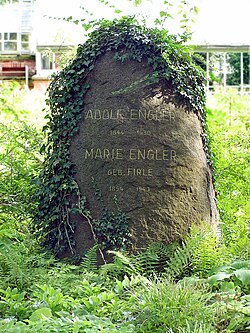
- Full Name: Heinrich Gustav Adolf Engler (1844–1930).
- Major Contribution: Developed the Engler system of plant classification.
- Defining Work: Co-edited Die Natürlichen Pflanzenfamilien (The Natural Plant Families).
- Institutional Impact: Transformed the Berlin-Dahlem Botanical Garden into one of the world's premier botanical institutions.
- Major Award: Recipient of the Linnean Medal in 1913.
Life and Academic Career
Born on March 25, 1844, in Sagan, Prussia (now Żagań, Poland), Engler pursued his higher education at the University of Breslau, where he earned his PhD in 1866. His career was marked by a series of prestigious appointments across Germany's leading botanical institutions.
Engler began his professional journey as the custodian of botanical collections at the Botanical Institute of Munich (1871–1878), followed by a professorship at the University of Kiel. In 1884, he returned to Breslau as the director of the Botanical Garden and professor of botany. His final and most influential tenure began in 1889 at the Friedrich Wilhelm University of Berlin, where he served as a professor and director of the Berlin-Dahlem Botanical Garden until 1921.
Beyond the classroom and laboratory, Engler was an avid explorer. His travels to various global regions significantly expanded scientific knowledge of floristic distribution, with a particular emphasis on the flora of Africa.
Monumental Works in Taxonomy and Geography
Engler's output was prodigious, characterized by a desire to create exhaustive references for the scientific community. He collaborated with other luminaries, such as Alphonse de Candolle and C.F.P. von Martius, to produce definitive monographs on flowering plants and the flora of Brazil.
The Engler System and Major Publications
The Engler system is perhaps his most enduring contribution. It is distinguished as the only system to treat all plants—ranging from algae to flowering plants—with such comprehensive depth. This system was detailed in several massive undertakings:
- Die Natürlichen Pflanzenfamilien (1887–1915): A 23-volume series edited with Karl A. E. von Prantl. This work is one of the few since Linnaeus to attempt a full classification of the plant kingdom.
- Das Pflanzenreich (1900–1968): A monographic series on the plant kingdom that continues to serve as a vital resource.
- Syllabus der Pflanzenfamilien (1892): A summary of the Engler system providing descriptions of higher taxonomic levels.
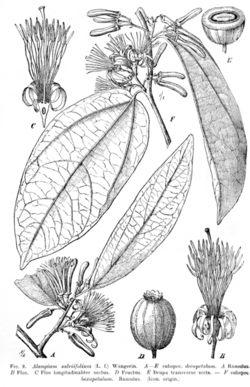
To bring these works to life, Engler collaborated for 40 years with illustrator Joseph Pohl. Pohl's contribution was staggering, producing over 33,000 drawings across 6,000 plates for Die Natürlichen Pflanzenfamilien alone.
Pioneering Phytogeography
Engler was a pioneer in phytogeography, recognizing that geological factors play a critical role in biodiversity. In 1879, he defined specific biogeographical regions, later publishing Vegetation der Erde (1896) and Die Pflanzenwelt Ost-Afrikas und der Nachbargebiete (1895) to document the earth's vegetation patterns.
Recognition and Legacy
The scientific community has honored Engler through numerous awards and namesakes. In addition to the Linnean Medal, the International Association for Plant Taxonomy established the Engler Medal in 1986 to recognize outstanding contributions to plant taxonomy.
His influence is also visible in nomenclature; many plant and fungi genera bear his name, including Engleria, Englerina, and Engleromyces. Furthermore, the journal Englera, published by the Berlin-Dahlem Botanical Garden, continues to carry his name.
| Category | Details |
|---|---|
| Primary Fields | Botany, Plant Taxonomy, Phytogeography |
| Key Institutions | University of Breslau, University of Kiel, Friedrich Wilhelm University of Berlin |
| Major Publications | Die Natürlichen Pflanzenfamilien, Das Pflanzenreich, Syllabus der Pflanzenfamilien |
| Key Collaborator | Joseph Pohl (Illustrator) |
| Honors | Linnean Medal (1913), Engler Medal (est. 1986) |
Frequently Asked Questions
What is the Engler system?
The Engler system is a method of plant classification developed by Adolf Engler. It is widely used by herbaria and in botanical manuals because it provides a comprehensive taxonomic treatment of all plants, from algae to flowering plants.
What was the significance of Die Natürlichen Pflanzenfamilien?
This 23-volume work, co-edited with Karl A. E. von Prantl, is one of the most detailed attempts since the time of Linnaeus to classify the entire plant kingdom, making it an invaluable resource for botanists.
How did Joseph Pohl contribute to Engler's work?
Joseph Pohl was a skilled illustrator who collaborated with Engler for approximately 40 years. He produced more than 33,000 drawings and 6,000 plates, providing the essential visual documentation for Engler's major taxonomic publications.
What is phytogeography, and how did Engler influence it?
Phytogeography is the study of the geographic distribution of plant species. Engler was a pioneer in this field, defining biogeographical regions in 1879 and emphasizing the impact of geology on biodiversity.
Which botanical garden did Engler transform?
Engler served as the director of the Berlin-Dahlem Botanical Garden from 1889 to 1921, transforming it into one of the greatest and most significant botanical gardens in the world.