Admiral Lord Cochrane: The Audacious Sea Wolf of Four Navies
Few figures in maritime history embody the spirit of adventure, brilliance, and controversy as vividly as Admiral Thomas Cochrane, 10th Earl of Dundonald. Known by many names—including le Loup des Mers (the Sea Wolf) and El Diablo (the Devil)—Cochrane was a master tactician whose career spanned the French Revolutionary Wars, the Napoleonic Wars, and the independence struggles of South America and Greece.
From his early days as a midshipman to his eventual reinstatement as a high-ranking officer in the Royal Navy, Cochrane's life was a rollercoaster of spectacular military triumphs and dramatic personal falls from grace. His legacy is not only one of naval victory but also of technological innovation and political defiance.
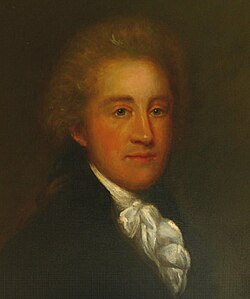
Key Facts
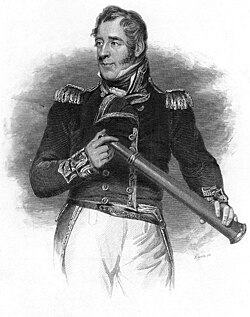
- Full Name: Thomas Cochrane, 10th Earl of Dundonald.
- Naval Service: Served in the navies of Great Britain, Chile, Brazil, and Greece.
- Famous Nicknames: The Sea Wolf, The Devil, and The Metallic Lord.
- Major Achievement: Instrumental in the independence of Chile and Brazil.
- Technological Contribution: Co-patented the tunnelling shield used for the Thames Tunnel.
- Controversy: Dismissed from the Royal Navy in 1814 following a fraud conviction.
Early Life and Rise in the Royal Navy
Born on December 14, 1775, in Lanarkshire, Scotland, Thomas Cochrane was born into a family of Scottish aristocracy and military tradition. Despite his lineage, the family faced financial hardship by 1793, leading to the sale of their estate to cover debts.
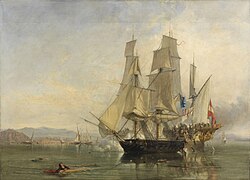
Cochrane entered the navy at age 17 as a midshipman. His early career was marked by rapid progression and daring actions. During the French Revolutionary Wars, he served under his uncle, Captain Alexander Cochrane, and later distinguished himself in the Mediterranean. One of his most notable early successes occurred during a 13-month cruise aboard the Speedy, where he captured, burnt, or drove ashore 53 ships.
The Napoleonic Wars
As the Napoleonic Wars intensified, Cochrane continued to demonstrate tactical genius. However, his career was not without friction. While commanding the HMS Arab, he complained that the vessel handled poorly, famously comparing it to a "haystack." His tenure was also marked by an international incident when he intercepted the American merchant ship Chatham while Britain was not at war with the United States.
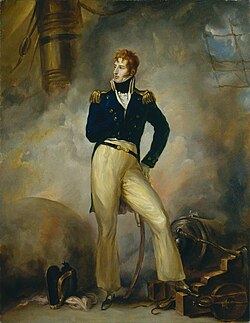
Political Career and the Great Stock Exchange Fraud
Cochrane was not only a man of the sea but also a man of politics. He served as a Member of Parliament (MP) for Honiton and later for Westminster, aligning himself with the Whig Radicals. He used his platform to advocate for parliamentary reform.
His political and naval career suffered a catastrophic blow in 1814. Cochrane was convicted of fraud in the Great Stock Exchange Fraud, leading to his dismissal from the Royal Navy and expulsion from Parliament. Despite this, his constituents in Westminster showed their support by re-electing him shortly after his expulsion.
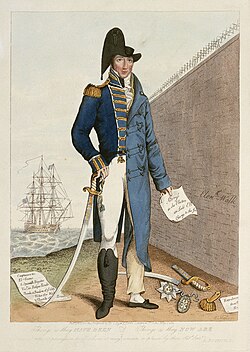
A Mercenary for Independence
Unable to serve his own country, Cochrane offered his services to emerging nations. In 1818, he joined the cause of Hispano-American independence, traveling to Chile.
The Chilean and Peruvian Campaigns
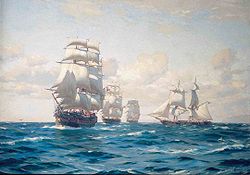
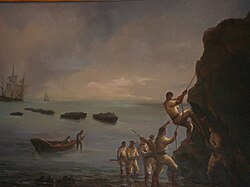
In Chile, Cochrane helped organize the new navy and led critical operations, including the Capture of Valdivia. His efforts extended to Peru, where he participated in the Liberating Expedition of Peru and conducted several blockades of Callao.
The Brazilian Empire
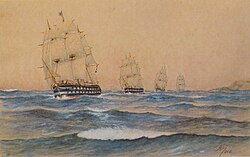
In 1823, Cochrane took command of the Imperial Brazilian Navy. He successfully blockaded the Portuguese in Bahia and used psychological warfare—bluffing the garrison at Maranhão into surrendering by claiming a massive fleet was imminent. For his services, Emperor Pedro I granted him the title of Marquess of Maranhão.
The Greek War of Independence
Cochrane's final foreign venture was with the Greek Revolutionary Navy between 1827 and 1828. While he took an active role, his impact was limited compared to his South American successes. He eventually resigned and returned to Britain.
Restoration and Final Years
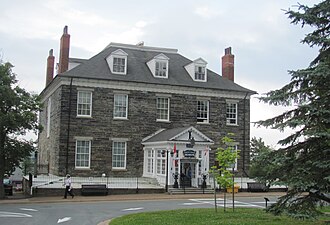
Following the death of his father in 1831, Cochrane became the 10th Earl of Dundonald. In 1832, he was pardoned by the Crown and reinstated in the Royal Navy as a Rear-Admiral of the Blue. Although he was slow to accept commands until his knighthood was restored in 1847, he eventually served as Commander-in-Chief of the North America and West Indies Station from 1848 to 1851.
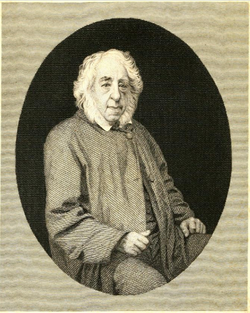
Cochrane died on October 31, 1860, in Kensington, London, at the age of 84, holding the rank of Admiral of the Red.
Technological Innovations
Beyond the quarterdeck, Cochrane was a prolific inventor. In 1818, he co-patented the tunnelling shield with Marc Isambard Brunel, a device that made the construction of the Thames Tunnel possible. He also patented the first airlock in 1830, a design that would later be used for tunneling under the Hudson River in New York.
| Period/Nation | Key Role/Rank | Major Actions/Achievements |
|---|---|---|
| Royal Navy (Early) | Captain | Action of 6 May 1801; Raid on Oropesa |
| Chile | Commander | Capture of Valdivia; Liberating Expedition of Peru |
| Brazil | First Admiral | Siege of Salvador; Capture of Maranhão |
| Greece | Commander | Greek War of Independence (1827–1828) |
| Royal Navy (Late) | Admiral of the Red | C-in-C North America and West Indies Station |
Frequently Asked Questions
Why was Lord Cochrane dismissed from the Royal Navy?
He was dismissed in 1814 following a controversial conviction for fraud related to the Great Stock Exchange Fraud. A later Parliamentary committee concluded that the conviction was unjust, and his grandson received compensation for this in 1876.
What was Cochrane's role in the independence of Brazil?
As the First Admiral of the National and Imperial Navy, he blockaded Portuguese forces in Bahia and used strategic bluffing to force the surrender of garrisons in Maranhão and Belém, effectively securing Brazil's de facto independence.
What is the "tunnelling shield" and why is it important?
The tunnelling shield was a device patented by Cochrane and Marc Isambard Brunel. It allowed workers to excavate tunnels through soft ground safely, which was essential for the construction of the Thames Tunnel between 1825 and 1843.
Which navies did Admiral Cochrane serve in?
Cochrane served in the Royal Navy (Great Britain), the Chilean Navy, the Imperial Brazilian Navy, and the Hellenic Navy (Greece).
What were some of his most famous nicknames?
He was known as le Loup des Mers (the Sea Wolf) by Napoleon, and in South America, he was called El Diablo (the Devil) and El Metálico (the Metallic Lord).