Administrative Centres and the Concept of the Chef-Lieu
An administrative centre serves as the primary seat of local government or regional administration. Depending on the jurisdiction, it may be referred to as a county seat, a town, or the specific location where the central administration of a commune or equivalent subdivision is based. These centres act as the operational hubs for public services and governmental oversight.
In nations where French is an administrative language—including Belgium, Luxembourg, Switzerland, and various African countries—the term chef-lieu (literally meaning "chief place" or "main place") is used to describe a town or city that holds significant administrative importance.
Key Facts
- Chef-lieu is the standard term for administrative centres in many Francophone countries.
- In France, the chef-lieu of a department is specifically called a prefecture.
- Sweden distinguishes between central localities (municipal level) and residence cities (county level).
- Administrative centres often give their names to the larger region or commune they govern.
- The role of these centres can range from high-level political seats to nominal designations with few active services.
Administrative Structures in Francophone Countries
France
France employs a hierarchical system of administrative centres. The chef-lieu of a department is the prefecture, the city where the prefect and their associated services are located. Within each region, one department takes preeminence; the city housing the regional prefect is the chef-lieu of the region.
Below the department level is the arrondissement, whose chef-lieu is known as the sous-préfecture. If an arrondissement contains the departmental prefecture, it typically does not have its own sub-prefect, as duties are handled by the secretary-general of the departmental prefecture. At the lowest level, the chef-lieu of a canton is usually the largest town in that area, though its role is now largely nominal.
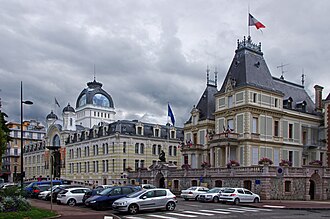
Belgium, Luxembourg, and Switzerland
In Belgium, the chef-lieu is the administrative centre of each of the ten provinces. In some cases, such as Antwerp, Liège, and Namur, the city shares its name with the province. Luxembourg uses the term for its twelve cantons and 100 communes, with the commune usually named after its communal chef-lieu.
Switzerland applies the term chef-lieu to the capital of each of its 26 cantons. Additionally, in 16 of those cantons, the territory is further divided into districts, each with its own chef-lieu and prefect.
Francophone Africa and New Caledonia
Many West African states, including Senegal, Burkina Faso, Benin, Mali, and Niger, inherited the French system of departments and communes. In Mali and Niger, decentralization efforts since the 1990s have shifted the chef-lieu from being the seat of a governor or prefect to the location of regional, department, and communal councils.
In New Caledonia, the chef-lieu denotes the principal city of a province (e.g., Nouméa for the South Province). Interestingly, it can also refer to a principal area within a town; for example, Wé is the chef-lieu of Lifou, despite being part of the town of Lifou.
Administrative Centres in Other Nations
Russia
Russia designates several large cities as official administrative centres for federal districts, including Moscow, St. Petersburg, Novosibirsk, and Yekaterinburg. While regional and municipal centres are often called administrative centres unofficially, the term capital is strictly reserved for the seats of government in republics. Notably, the capital of Russia itself is not referred to as an "administrative centre."
Sweden
Sweden utilizes a two-tier system. The central locality (centralort) is the settlement serving as the municipal administrative centre. While most municipalities are named after their central locality, some share administration between two towns of similar size.
The residence city (residensstad) is the political seat of the county, handling regional tasks like public transport and healthcare. This term originates from the fact that the governor (landshövding) resides there.
Jordan, Tunisia, and the United Kingdom
In Jordan, administrative centres are called nahias, which may oversee a sub-district (qda), district (liwa), or governorate (muhafazah). Tunisia uses chef-lieu for the capital of its 24 governorates and the central cities of its delegations.
In the United Kingdom, an administrative centre is the seat of a local authority. This is distinct from a county town of a historic county. For instance, while Lancaster is the county town of Lancashire, the administrative centre is Preston.
Summary of Administrative Terminology
| Region/Country | Primary Term | Specific Variations |
|---|---|---|
| Francophone Countries | Chef-lieu | Prefecture (France Dept), Sous-préfecture (France Arrondissement) |
| Sweden | Centralort / Residensstad | Central locality (Municipal), Residence city (County) |
| Russia | Administrative Centre | Capital (used specifically for Republics) |
| Jordan | Nahia | Chief towns |
| United Kingdom | Administrative Centre | Distinct from "County Town" |
Frequently Asked Questions
What is the literal meaning of chef-lieu?
The term chef-lieu is French for "chief place" or "main place," referring to a town or city that serves as an administrative hub.
How does a prefecture differ from a sous-préfecture in France?
A prefecture is the chef-lieu of a department and houses the prefect, while a sous-préfecture is the chef-lieu of an arrondissement and houses the sub-prefect.
What is the difference between a central locality and a residence city in Sweden?
A central locality handles local municipal and political tasks, whereas a residence city is the seat of the county governor and manages regional services like healthcare.
Is the administrative centre always the same as the county town in the UK?
No. The administrative centre is where the local authority sits, which can be different from the historic county town. For example, Preston is the administrative centre of Lancashire, but Lancaster is the county town.
How has the role of the chef-lieu changed in West Africa?
Since the 1990s, decentralization in countries like Mali and Niger has transitioned the chef-lieu from the seat of colonial-style governors and prefects to the location of decentralized communal and regional councils.