Seats of Government: Defining Political Centers and Global Capitals
A seat of government is defined as a building, a complex of buildings, or an entire city from which a government exercises its authority. While the seat of government is generally the capital of a state or administrative entity, this is not always the case. Depending on the scale of the territory, different terms are used to describe these centers: administrative centres, county seats (common in the United States), county towns (used in the United Kingdom and Ireland), or barrio-pueblos (used in Puerto Rico).
Physically, these seats can manifest as various types of infrastructure, including official residences, supreme court buildings, city or town halls, legislative buildings, and executive offices.
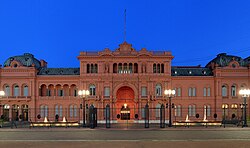
Key Facts
- A seat of government can be a single building, a complex, or a whole city.
- Many nations separate their official (de jure) capital from their actual (de facto) seat of government.
- Some countries, such as Switzerland and Nauru, have no official national capital.
- National seats are often divided into legislative, executive, and judicial branches.
National Seats of Government
In many countries, the seat of government is concentrated in a single city, though it may be spread across multiple specialized sites to separate the branches of power.
Examples of Centralized Seats
- Canada: The city of Ottawa serves as the seat of government.
- United States: The US Constitution mandates a federal district as the seat of government, which led to the establishment of the District of Columbia.
Distributed Seats of Power
Some nations distribute their government functions across specific buildings or sites within a city:
- India (New Delhi): Power is split between Raisina Hill (Parliament House for legislation), the Rashtrapati Bhavan and 7 Race Course Road (executive), and the Supreme Court of India (judicial).
- United Kingdom (London): Authority is divided between the Palace of Westminster (legislative), 10 Downing Street (executive), and Middlesex Guildhall (judicial).
- Philippines (Metro Manila): Functions are spread across the GSIS Building and Batasang Pambansa Complex (legislative), Malacañang Palace (executive), and the Supreme Court of the Philippines (judicial).
When the Capital and Seat of Government Differ
It is common for a country to maintain an official capital for constitutional or traditional reasons while conducting daily operations from a different location.
| Country | Official/Constitutional Capital | Seat of Government (De Facto) |
|---|---|---|
| Benin | Porto-Novo | Cotonou |
| Bolivia | Sucre (Judicial) | La Paz (Executive/Legislative) |
| Ivory Coast | Yamoussoukro | Abidjan |
| Malaysia | Kuala Lumpur | Putrajaya |
| Netherlands | Amsterdam | The Hague |
| Sri Lanka | Sri Jayawardenepura Kotte | Colombo (Economic/Legislative) |
Unique Case Studies
Some separations occur due to political conflict or natural disasters. In Eswatini, Lobamba serves as the legislative and spiritual capital, while Mbabane is the official capital. In Montserrat, the official capital of Plymouth was abandoned in 1997 following eruptions from the Soufrière Hills volcano, leaving Brades as the de facto capital.
The situation in Israel and Palestine is complex; Israel considers Jerusalem its undivided capital, though many embassies remain in Tel Aviv. The State of Palestine also claims Jerusalem but maintains its seat of government in Ramallah.
In Tanzania, the capital began transferring from Dar es Salaam to Dodoma in 1974, a process officially completed in 1996, though central bureaucracy remained focused in Dar es Salaam as of 2018.
Countries Without Official Capitals
Not every sovereign state designates a city as its official capital.
- Switzerland: Since 1848, the seat of government has been in Bern, but the city was never granted official capital status and is informally called the "Federal City."
- Nauru: This republic has no official capital; Yaren District serves as the de facto center.
- Republic of China (Taiwan): Taipei has served as the provisional capital and seat of government since December 7, 1949.
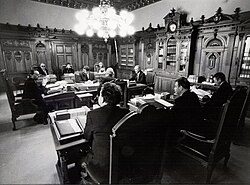
Historical Shifts in Government Seats
The location of power often shifts due to political reunification or royal decree. For example, the Federal Republic of Germany saw Berlin as its capital and Bonn as its seat of government from 1990 to 1999, with some institutions remaining in Bonn indefinitely per the Berlin-Bonn Act.
Historically, the Kingdom of England distinguished between the City of London (traditional capital) and Westminster (seat of government). Similarly, the Kingdom of France moved its seat of government from Paris to the Palace of Versailles during two distinct periods: 1682–1789 and 1871–1879.
Frequently Asked Questions
What is the difference between a capital and a seat of government?
A capital is often the official or constitutional city designated as the head of a state, whereas the seat of government is the actual location where the administrative, legislative, or judicial authority is exercised.
Can a country have more than one seat of government?
Yes. Many countries distribute their government across different sites. For example, India and the Philippines have separate locations for their legislative, executive, and judicial branches.
Why would a government move its seat away from the capital?
Reasons vary by country. Malaysia moved its administrative center to Putrajaya to reduce overcrowding and congestion in Kuala Lumpur, while Montserrat was forced to move due to volcanic activity.
Does every country have an official capital?
No. Some countries, such as Nauru and Switzerland, do not have a city with the official legal status of a national capital, relying instead on de facto administrative centers.