Actaea: A Comprehensive Look at Baneberry, Bugbane, and Cohosh
The genus Actaea, commonly known by the names baneberry, bugbane, and cohosh, represents a fascinating group of flowering plants. Belonging to the Ranunculaceae family, these plants are found across the subtropical, temperate, and subarctic regions of North America, Europe, and Asia. While they are often admired for their unique appearances, they are equally well-known for their complex chemical profiles and toxicity.
Taxonomy and Classification
The scientific classification of Actaea has been a subject of botanical debate. In the 1990s, researchers redefined the genus to include Cimicifuga and Souliea. This broader classification was based on DNA sequence data, morphological similarities, and biochemical constituents, returning the genus to its original Linnean concept. Under this broader definition, the genus contains approximately 25 to 30 species.
However, some botanists prefer a narrower definition. They argue that because only the Actaea group possesses fleshy fruit—while the others have dry fruit—the groups should remain separate. Despite these differing views, many modern botanical resources treat the genus in its broader sense.
Scientific Hierarchy
- Kingdom: Plantae
- Clade: Embryophytes, Tracheophytes, Angiosperms, Eudicots
- Order: Ranunculales
- Family: Ranunculaceae
- Subfamily: Ranunculoideae
- Tribe: Cimicifugeae
- Genus: Actaea L.
Key Facts
- Common Names: Baneberry, bugbane, cohosh, doll's eyes, and herb christopher.
- Toxicity: Contains cardiac toxins and the irritant protoanemonin.
- Primary Seed Dispersers: Birds (which are unharmed by the berries).
- Etymology: Named after the Greek word for elder (Sambucus) due to leaf similarity.
- Traditional Use: Certain species like A. dahurica are used in Chinese medicine (Sheng ma).
Notable Species
The genus includes a diverse array of species, each with distinct characteristics. Some of the most recognizable include:
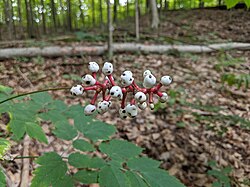
- Actaea pachypoda: Known as white baneberry, white cohosh, or "doll's eyes."
- Actaea rubra: Known as red baneberry.
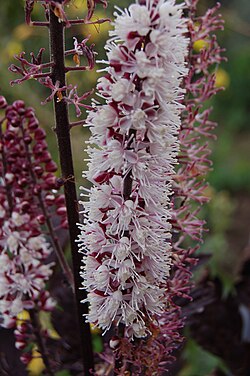
- Actaea racemosa: Known as black cohosh or black bugbane.
- Actaea simplex: The type species for the genus.
- Actaea dahurica: Used in traditional pharmacology as Sheng ma.
Toxicity and Safety Information
The name "baneberry" is a direct reference to the plant's toxicity. While all parts of the plant contain some level of toxicity, the berries are considered the most poisonous. The plants contain ranunculin, a glycoside that converts into protoanemonin when the plant tissue is damaged (such as through chewing).
Protoanemonin is a potent irritant to mucous membranes. Ingestion can lead to:
- Burning sensations in the mouth and throat
- Excessive salivation
- Nausea, vomiting, and abdominal cramps
- Diarrhea
Furthermore, the plants contain cardiotoxins that can interfere with heart function. This may result in dizziness, heart palpitations, and in extreme, severe cases, cardiac arrest. While poisoning in adults is rare due to the berries' extremely bitter taste, children and rabbits are at higher risk. Interestingly, birds are the primary seed dispersers for these plants and are not harmed by the berries.
Summary of Actaea Species and Characteristics
| Scientific Name | Common Name(s) | Key Feature |
|---|---|---|
| Actaea pachypoda | White baneberry, Doll's eyes | Waxy white berries |
| Actaea rubra | Red baneberry | Red berries; contains β-sitosterol glucoside |
| Actaea racemosa | Black cohosh | Black bugbane |
| Actaea dahurica | Sheng ma | Used in Chinese herbal medicine |
| Actaea spicata | Herb christopher | Type species of the genus |
Frequently Asked Questions
Why is the plant called "baneberry"?
The name "baneberry" refers to the plant's poisonous nature, specifically the toxicity of its berries.
Are the berries safe for animals to eat?
It depends on the animal. Birds are harmlessly affected and serve as the plant's primary seed dispersers, but the plant is toxic to rabbits and can be dangerous to humans and livestock.
What is protoanemonin?
Protoanemonin is a potent irritant produced when the plant tissue is damaged or chewed. It can cause burning of the mouth and throat and gastrointestinal distress.
How does the name "Actaea" relate to other plants?
The name is derived from the Greek word for elder (Sambucus) because the leaves of Actaea look similar to those of the elder plant.
Is there any medicinal use for Actaea?
Yes, in traditional pharmacology, certain species like Actaea dahurica and Actaea heracleifolia are used to create the Chinese herbal preparation known as Sheng ma.