Understanding Protoanemonin: The Reactive Toxin of the Buttercup Family
In the natural world, many plants have developed sophisticated chemical defenses to protect themselves from herbivores. One such defense mechanism involves protoanemonin, a highly reactive toxin found in various species of the buttercup family (Ranunculaceae). While it serves as a potent biological deterrent, its unique chemical properties make it a subject of significant interest in both toxicology and organic synthesis.
What is Protoanemonin?
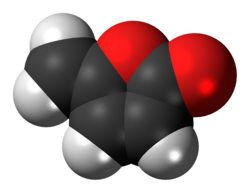
Protoanemonin is a chemical compound characterized by a 5-membered lactone ring—a cyclic ester—containing a highly reactive double bond system. This specific structure is responsible for its ability to inhibit both gram-positive and gram-negative bacteria, making it a potent antimicrobial agent.

Chemically, its preferred IUPAC name is 5-methylidenefuran-2(5H)-one. In its pure state, it appears as a pale yellow oil. Because of its high reactivity, it does not remain in this state indefinitely; at room temperature, it undergoes a process called spontaneous dimerization, where two molecules join together to form a more stable compound known as anemonin.
The Biological Pathway in Plants
Protoanemonin is not typically stored in its active form within the plant. Instead, plants in the Ranunculaceae family store a glycosidic precursor called ranunculin. A glycoside is a molecule in which a sugar is bound to another functional group. This storage method keeps the plant safe from its own toxin.
The transformation occurs through the following biological sequence:
- Plant Injury: When the plant is wounded, crushed (macerated), or chewed, the cellular structure breaks down.
- Enzymatic Breakdown: Enzymes react with the stored ranunculin, breaking it down into glucose and the active toxin, protoanemonin.
- Dimerization: The protoanemonin then spontaneously reacts with itself to form anemonin.
- Hydrolyzation: Anemonin can further undergo hydrolyzation (reaction with water) to become 4,7-dioxo-2-decenedioic acid.
Toxicity and Safety Considerations
Protoanemonin is a vesicant, meaning it has the ability to cause skin irritation, rashes, or blistering upon contact with the skin or mucous membranes. If ingested in large quantities, the toxin can lead to severe health issues, including nausea, vomiting, dizziness, spasms, acute hepatitis, jaundice, or even paralysis in both humans and animals.
Handling Plants and Livestock
Despite these risks, plants containing these precursors can be handled safely under specific conditions. When plants are properly harvested and dried into hay, the protoanemonin undergoes its natural transition into anemonin. Because anemonin is more stable and lacks the highly reactive unsaturated lactone ring, the dried material is considered safe for human handling and for livestock consumption.
Chemical Properties and Synthesis
Due to its instability, scientists have long sought reliable ways to produce protoanemonin in a laboratory setting. Early extraction methods required maintaining a nearly neutral pH and adding radical scavengers to prevent the molecule from turning into anemonin. While some solutions could retain potency for days or months, the process was often complicated and difficult to replicate.
Modern synthetic methods have improved significantly. A notable 2006 synthesis by Kotera and colleagues provides a more efficient route. This method involves a four-step process starting from 2-deoxy-D-ribose, resulting in a stable crystalline solid that can be converted into protoanemonin with an 80% yield when stirred with triethylamine overnight.
Summary of Chemical Profile
| Property | Value/Description |
|---|---|
| Chemical Formula | C5H4O2 |
| Molar Mass | 96.085 g/mol |
| Appearance | Pale yellow oil |
| Boiling Point | 73 °C (163 °F) |
| CAS Number | 108-28-1 |
| LD50 (Mouse) | 190 mg/kg |
Key Facts
- Natural Source: Found in the buttercup family (Ranunculaceae) via the precursor ranunculin.
- Mechanism: Released when plant tissues are wounded or macerated.
- Biological Activity: Acts as an antimicrobial agent against gram-positive and gram-negative bacteria.
- Physical Hazard: A vesicant that causes skin blistering and irritation.
- Stability: Spontaneously dimerizes into anemonin at room temperature.
Frequently Asked Questions
How does protoanemonin affect the skin?
Protoanemonin is a vesicant, which means contact with the skin or mucous membranes can cause irritation, rashes, and the formation of blisters.
Is it safe to eat dried buttercup plants?
Yes, if the plants have been properly harvested and dried into hay. The drying process allows the protoanemonin to convert into the more stable and non-toxic anemonin, making it safe for livestock and human handling.
What is the difference between ranunculin and protoanemonin?
Ranunculin is the stable, non-toxic glycosidic precursor stored in the plant. Protoanemonin is the active, toxic compound that is released when the plant is damaged.
Why is anemonin of interest to researchers?
Anemonin is more stable than protoanemonin and is of interest for the synthesis of various therapeutic compounds due to its unique chemical structure.
What happens to protoanemonin at room temperature?
At room temperature, protoanemonin undergoes spontaneous dimerization, a process where two molecules combine to form the compound anemonin.