Achrafieh: The Historic Heart and Architectural Legacy of Beirut
Perched upon the highest point of the city, Achrafieh is one of Beirut's most storied districts. Defined by the hill of Saint Dimitrios, this area serves as a living museum of Lebanon's complex history, blending Neolithic traces with the opulent villas of the Ottoman era and the towering skyscrapers of the modern age. Once a quiet suburb for the city's elite, Achrafieh has evolved into a vibrant commercial and residential hub that reflects the resilience and contradictions of Beirut.
The name Achrafieh is believed to relate to the steep topography of the area, though this remains a point of debate. Historically referred to by locals as al-jabal as-saghir (the little mountain), the district acts as a coastal outpost of Mount Lebanon, sloping northward toward the port and southward toward what were once expansive pine forests.
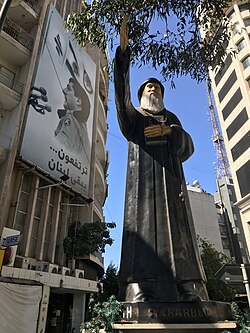
Key Facts
- Location: The highest point of Beirut, centered on the hill of Saint Dimitrios.
- Demographics: A predominantly Christian district, with Greek Orthodox and Maronite Catholics forming a significant majority.
- Architecture: Renowned for its late Ottoman and French Mandate era villas and palaces.
- Landmarks: Home to the Sursock Museum, Sassine Square, and the Université Saint-Joseph de Beyrouth.
- Modernity: Features some of Beirut's tallest buildings, including Sama Beirut and SkyGate.
The Ottoman Era and the Rise of the Merchant Class
In the mid-nineteenth century, Beirut expanded beyond its ancient walls due to surging trade and immigration. During this period, wealthy Greek Orthodox merchant families—including the Sursock, Bustros, Badaro, Trad, Tueni, and Asseily families—moved from the cramped old city to the slopes of Achrafieh. These families, who amassed fortunes through tax collection, money exchanging, and the silk trade, constructed sprawling villas with vast gardens overlooking the port.
Among these architectural gems was the palace of Nicolas Sursock, built in 1912, which was later bequeathed to the Municipality of Beirut as a waqf (a charitable endowment) to become the Sursock Museum. Other notable residences included the Fadlallah Bustros Palace, which now serves as the Ministry of Foreign Affairs. This era also saw the relocation of key communal institutions, such as the Greek Orthodox Archbishop's palace and the Ecole des Trois Docteurs.
Beyond the bourgeoisie, Achrafieh became a sanctuary for Christian refugees fleeing inter-communal conflicts in Mount Lebanon and Damascus around 1860. Many of these settlers, such as Dimitri Youssef Debbas, eventually rebuilt their wealth and contributed to the district's growth.
Conflict and Transformation during the Lebanese Civil War
During the Lebanese Civil War (1975–1990), Achrafieh became a strategic heartland for Christian militias under the Lebanese Front. The district was separated from western Beirut by the Green Line, a buffer zone that divided the city. This geopolitical shift transformed Achrafieh from a primarily residential area into a self-sufficient commercial hub.
The area witnessed intense violence, including the Hundred Days' War in 1978. One of the most significant tragedies occurred in 1982 on Sassine Street, where President-elect Bachir Gemayel was assassinated by a bomb at the Kataeb office.
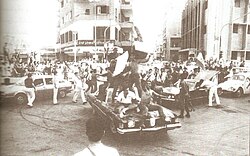
Contemporary Achrafieh: Urbanism and Resilience
In the post-war era, Achrafieh experienced several real estate booms. While the district retains clusters of historic buildings, many were replaced by high-rise tower blocks to maximize land value. Developers have branded the area around Sursock Street as the "golden triangle" due to its high development rights and population density.
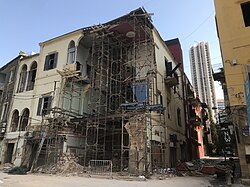
The district's heritage faced a severe blow during the 2020 Beirut port explosion, which devastated the northern sections of Achrafieh. In response, the government promulgated an emergency law to prevent land sales and evictions for two years, while organizations like the Beirut Heritage Initiative worked to restore damaged homes.
Today, Achrafieh is a center of education and culture, hosting the Université Saint-Joseph de Beyrouth and the MIM musée.
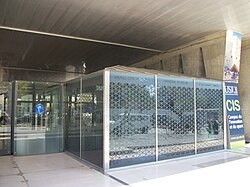
District Summary
| Category | Details |
|---|---|
| Primary Demographics | Christian (83.34%), Sunni Islam (11.45%), Shia Islam (3.77%) |
| Key Architectural Styles | Late Ottoman, French Mandate, Modernist High-rise |
| Major Institutions | Sursock Museum, USJ, ABC Achrafieh Mall |
| Defining Geography | Hill of Saint Dimitrios (Beirut's highest point) |
Frequently Asked Questions
What is the significance of the Sursock Museum?
The Sursock Museum is housed in a villa built by Nicolas Sursock in 1912. Upon his death, he left the property to the city as a waqf, ensuring it would serve as a public museum and preserving a prime example of the district's palatial Ottoman-era architecture.
How did the Lebanese Civil War change Achrafieh?
The war turned Achrafieh into a stronghold for Christian militias and separated it from western Beirut via the Green Line. This isolation forced the district to evolve from a residential suburb into a major commercial center.
What impact did the 2020 port explosion have on the area?
The explosion caused extensive damage, particularly in the northern parts of the district. This led to the implementation of emergency laws to protect residents from eviction and sparked grassroots efforts to restore historic heritage buildings.
Who are some of the notable people from Achrafieh?
The district has been home to various influential figures, including former President Bachir Gemayel, businessman Carlos Ghosn, singer Nancy Ajram, and journalist Gebran Tueini.